

The early Hart of the NHRA
Don Garlits and Darrell Gwynn; their lives in words and photos in new books

Random ramblings and rumblings, the sequel
Random ramblings and rumblings
Memories of Englishtown
-
Remembering Steve Ambrose
Right back where we started from: Winternationals is back at No. 1
Meet Larry Wood: The man whose designs launched a million hot rod dreams
Can you imagine a toymaker designing your Top Fueler? 'Snake' and 'Mongoose' could
For the love of old drag racing photos
The ultimate Funny Car winners quiz
Still popular after all these years: Catching up with fan favorites Eddie and Ercie Hill
Eddie Hill, the early years
55 years ago, Don Garlits forever changed the look, feel, and future of Top Fuel racing
On a roll: A look at some all-time great NHRA Drag Racing success streaks
- ad
NHRA's Top 75 Moments: Bernstein, 'Big,' and Shirley reflect on making history
Funny Car set to turn 1,000: A look back at the milestone races along the way
Beyond the Top 75s ...
Wait ... Jim Head was in a 1960s surf band promoted by a drag racing legend? Yep.
More Martin memories
The Popular Hot Rodding Championships put U.S. 131 in the national spotlight
Friends we lost in 2025
Re-telling NHRA history: The 75th anniversary book and other special projects
It was John Force's world, and we were all thrilled to be living in it
The Joyce of Drag Racing Photography
- ad
Two legends: 'Big' and Bakersfield
When did we start doing that? Tracking some of the biggest changes in our sport
From 10-time dominators to one-time winners, a history of Indy Top Fuel champs
Legend to legend: Don Prudhomme on Don Garlits, Indy, and other great takes
NHRA Rookies of the Year: A look back at where some fabulous careers began
Random ramblings and rumblings, the sequel
My recent Random Ramblings and Rumblings column drew a huge response, not just for format but for content, and, like all good originals, there needs to be a sequel, so here it is. For the record, this won’t be the normal format going forward, just when I have a handful of things I need/want to share that aren’t enough for their own columns.
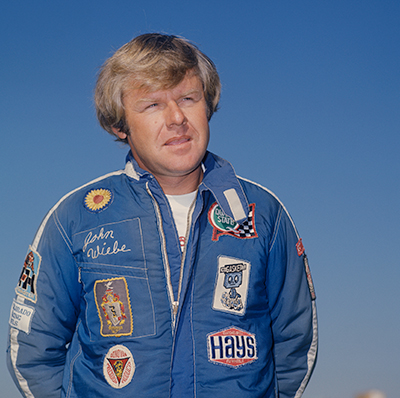
Anyway, sad to have to start this one on a bummer note, but the passing of Top Fuel great “Kansas John” Wiebe Aug. 16 at age 84 weighed heavily on a lot of us. Another amazing legend from drag racing’s Camelot era is gone.
I initially only knew Wiebe from the pages of my favorite magazines as his racing career ended a half-decade before I got to NHRA National Dragster, but, as has wonderfully happened to me many times since starting this column almost 20 years ago now, we became friends because of my interest in his career.
As with Richard Tharp, Roland Leong, and so many other legends who accepted me as one of their own, my relationship with Wiebe grew after I wrote an in-depth column about his career back in February 2015.
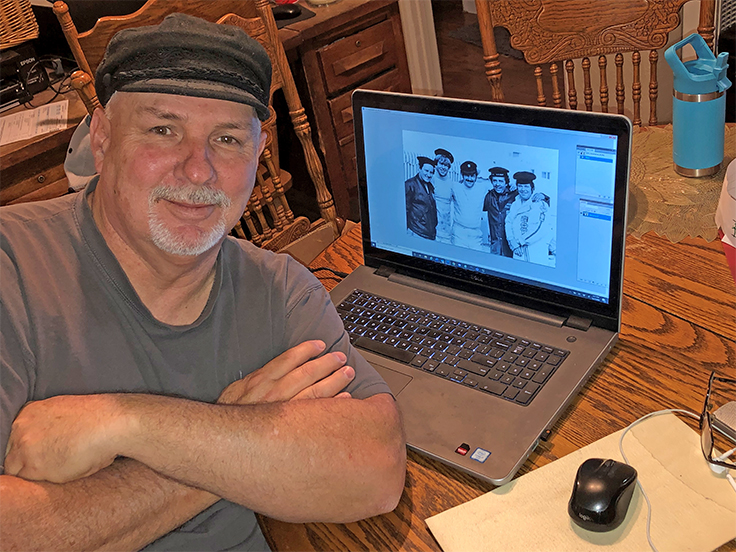
We traded emails and phone calls — he loved to share funny memes he found on the internet — and he even sent me one of his most precious treasures, the “Greek Fleet” hat that he, Chris Karamesines, Bob Creitz, Don Cook, and Jim Nicoll had worn back in the early 1970s.
But compared to a couple of guys I spoke to this week, I hardly knew him at all. I had seen a Facebook post from a guy named Martin Libhart, who not only was an excellent drag racing photographer but said he and Wiebe had been friends for more than 60 years. I messaged him and asked him to call to talk about his good friend, and he did.
I had known from my earlier interview with Wiebe that he had owned a service station in his hometown of Newton, Kan., but what Wiebe had modestly left out was how big a deal he was in that town. By Libhart’s account, he was Newton’s version of American Graffiti’s John Milner, known and revered by all.
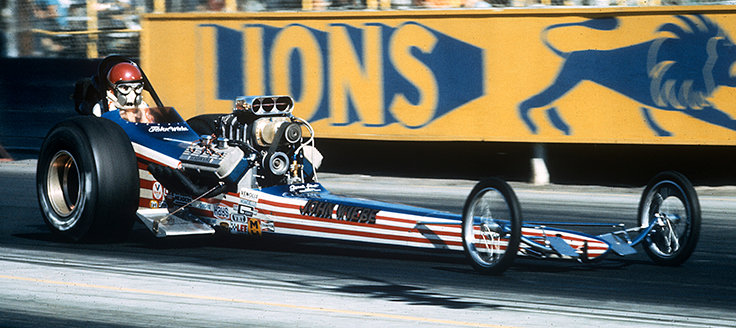
“My dad owned a bowling alley in Newton, right across the street from John’s gas station," recalled Libhart. “John built a metal building next to it, and that's where he'd go out and work on his dragsters. I was only about 10 at the time, and he was 18, but we got along because I was really into cars, too. I'd hang out at the station, or wherever he was working on the car. We just got to know each other.
“Everyone in Newton knew John Wiebe, and sometimes about 1 o'clock in the morning, he'd call the police department — at that time, Newton had like three policemen on duty at night — and tell them, ‘Hey guys, in 30 minutes, I'm going to make a pass down First Street,’ and the three cops would come out just to watch.”
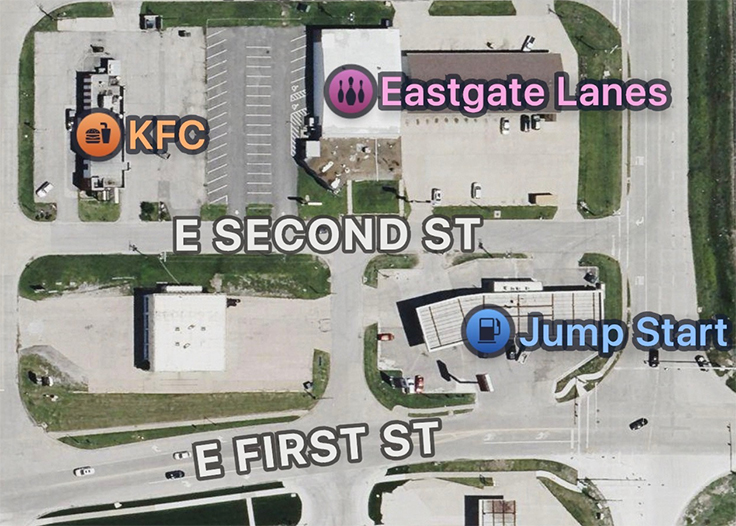
Here's a map that shows the scene. Eastgate Lanes is still there, and Wiebe's station across Second Street is now a Jump Start station. His makeshift test track on First Street is right behind that.
When Wiebe and I had talked about his sudden decision to quit racing in 1977, he spoke of it in general terms, but Libhart filled in the heartbreaking details.
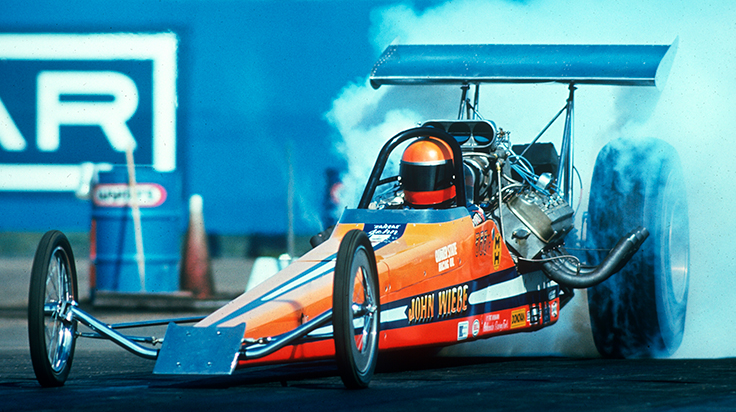
“Back in the day, John was match racing all over,” he shared. “He’d be in South Carolina on a Wednesday and in California on Sunday. He and his two buddies would just drive around the clock. Every Sunday night, John would find a coin-operated phone — we didn’t have cellphones, of course, back in those days — and he'd call home and talk to his wife, Loretta. He called home one night, and his daughter answered — she was like 4 years old at the time — and they talked for a couple of minutes, and he said, ‘OK, put your mommy on.’ He heard his daughter walk away, and heard his wife say, ‘Who is it?’ and his daughter said, ‘I don't know.’
“John heard that and immediately went back and told the guys, ‘That's it. I'm done. I'll get you jobs on other crews. I'll do everything I can to help you. I'm done,’ and that was the last he ever raced.
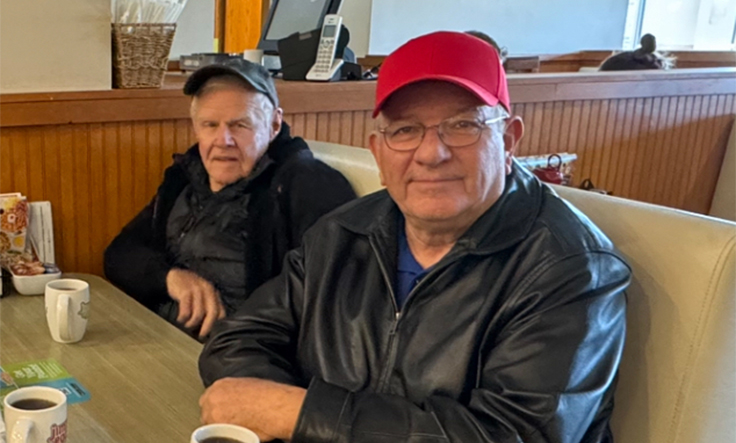
"John and I have remained friends the whole time. We'd still get together and go to McDonald's and get coffee or whatever, eat a hamburger. Mainly, he loved their coffee. We'd meet there once a week, and he'd have his coffee and pancakes and just sit there and talk about drag racing. That's me in the red ball cap with John."
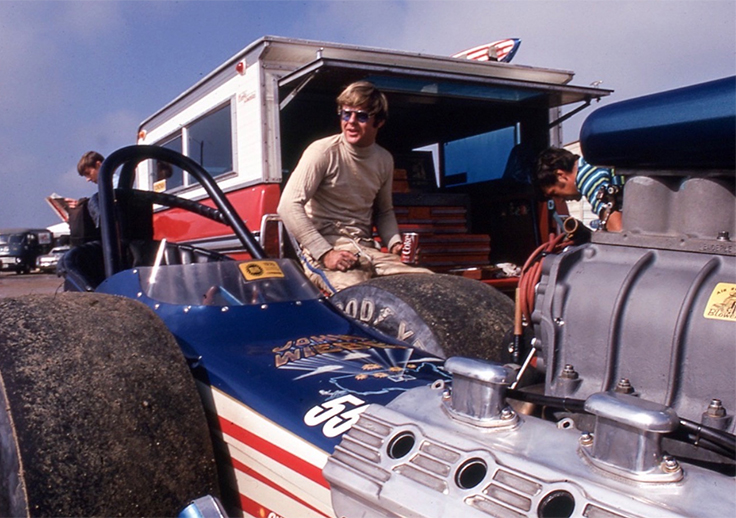
The other guy who knew Wiebe very well was our own “Big Daddy” Don Garlits. While the duo didn’t battle each other much on the NHRA circuit, they went at it hammer and tong in AHRA competition. I talked to “Big” on Wednesday, and he was still mourning the loss of his friend.
“He was still a young guy,” said Garlits, and I guess when you’re 94, 84 does seem young. “I talked to him on the phone regularly. We were really good friends. Most of those AHRA finals were between Wiebe and me, believe it or not, and I still have his last front-motored car in my museum.
“He was an extremely sportsmanlike racer. He never, ever tried any dirty tricks. He went to the line when he was supposed to go to the line, and nobody ever had any trouble with him. He won his races because his car was the fastest. It wasn't because he used trickery.
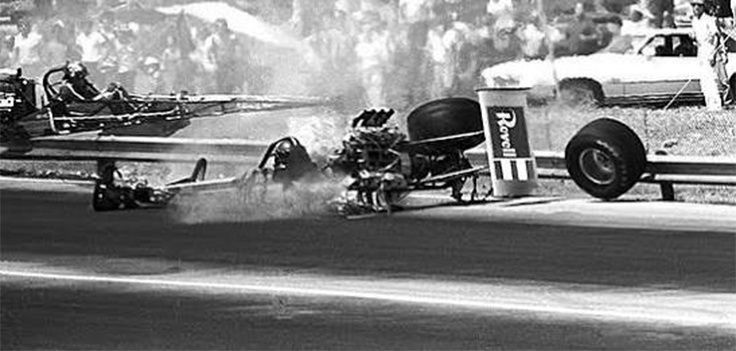
“I think the only time that we ever had words was when he had the bad wreck at Tulsa [1973 National Challenge] with Jeb Allen. He broke his leg, and they painted his name on James Warren's car, and they gave him Wiebe’s points, and that damn thing went right to the final round at Fremont before I won. He really put my feet to the fire. I didn't like AHRA for doing it because I didn't think that the points should completely go to another driver and another car, but it made for a hell of a show, and I mean the stands were full, and then the only thing that [AHRA President] Jim Tice cared about was butts on the boards. He didn't care whether you liked him or not."
I asked how his rivalry with Wiebe compared to his NHRA and match race feuds with Shirley Muldowney. There was no comparison.
“Shirley and I, that was a very contentious, competitive deal,” he said. “We had lots of arguments, and our crews had arguments. It wasn't until after she had the bad wreck at Montreal that I softened up. I was kind of ashamed of myself after that for being such an asshole sometimes, and I swore that from that day forward I would never be mean again. And we got along real good after that.
“Against Wiebe, it was a rivalry, but a friendly one. He was a super gentleman. I don’t think I ever even heard him use the F word.”

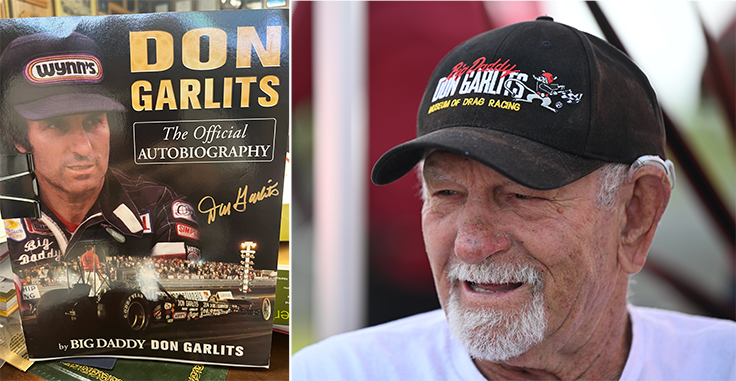
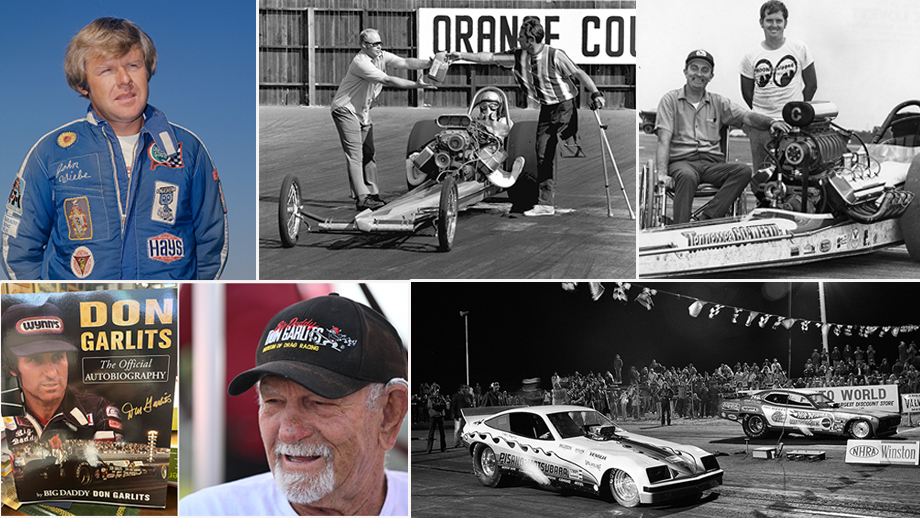
While I had Garlits on the line, we chatted about his new book, Don Garlits, The Official Autobiography, which I mentioned here last time. We had a nice interview about it that I’ll share the Friday after Indy in a column that also will include more info about Darrell Gwynn’s new book, Fortunate Son, from an interview we did recently.
A few spoilers for you on the Garlits book: It’s not just about his racing (although there’s plenty of that), but also about his whole life, tracing the Garlits family back to its origins in Garlitz, Germany (a town founded by his great, great, great, great, great grandfather hundreds of years ago; true fact!) and all of his upbringings, brushes with death, and his fascination with precious metals and, yes, aliens. I can’t wait to read it. He’ll have about 100 copies on hand in Indy to sell and autograph. Be there!
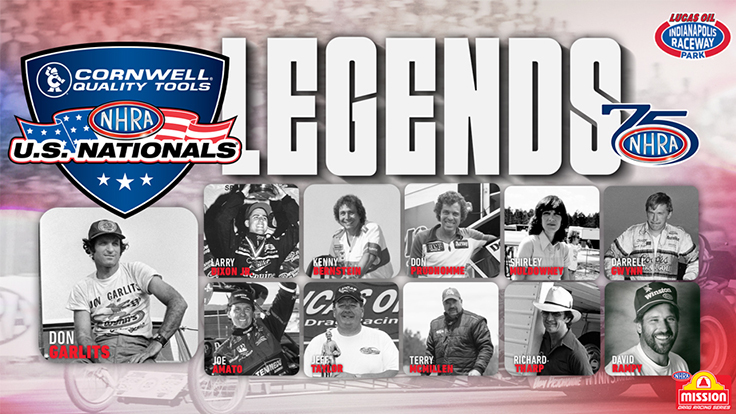
Speaking of Indy (starts next week!), there’s an all-star cast of legends coming, led, of course, by Garlits, on hand for the NHRA 75th Anniversary season celebration of the Big Go. Between the legends NHRA has booked in and those who wanted to be presented with Top 75 Drivers, Top 50 Sportsman Racers, and Top 25 Alcohol Drivers awards, you’re not going to be able to walk but a few feet before bumping into one of them.
In addition to Garlits and Gwynn (who also will have his book for sale), we’ve got Don "the Snake" Prudhomme, Joe Amato, Shirley Muldowney, Kenny Bernstein, Richard Tharp, Larry Dixon, Ken Veney, Frank Manzo, David Rampy, Jeff Taylor, David Nickens, Tony Bartone, Steve Torrence, Terry McMillen, Linda Vaughn, George Bryce, Rick Johnson, Tommy Johnson Jr., Al Segrini, and more. Bring your autograph books, especially those treasured (and almost gone) NHRA 75th Anniversary books. You’re sure to end up with more autographs than a high school yearbook.
Among those being saluted for their Top 75 Drivers honor are the late Bob Glidden, who owned Indy (nine wins!) and will be represented by son Billy, and Top Fuel Motorcycle legend Elmer Trett, whose family will be there. Hard to believe that it was exactly 30 years ago that we lost Trett at the 1996 U.S. Nationals, where we also lost Blaine Johnson and where Tony Schumacher made his Top Fuel debut. So much history!
And speaking of a long time ago in Indy, I’ve heard separately from both Bill Nelson and Bill Wendt, who first attended the Nationals back when it was in Detroit and have not missed one since, and both will be making their 67th straight appearance at the Nationals. Here’s the story I wrote about them a few years ago.
Also harkening back to the last Ramblings column, I got a lot of feedback on the whole Chuck Finders “peg leg” driver subject. I got pointed to a whole lot of info about the accident that cost him his leg, much of it on a Chuck Finders memorial site that his son created.
Finders lost his leg in an accident in late August 1977, and his son reports that Garlits was at the track when it happened, ran to the wreck, then ran back to the tower and told everyone to pray for Finders because he didn't think he would survive.
He did recover, and, like Garlits after his infamous maiming at Lions Drag Strip in 1970, Finders dreamed up and built a Fiat Topolino equipped so that he could continue racing.
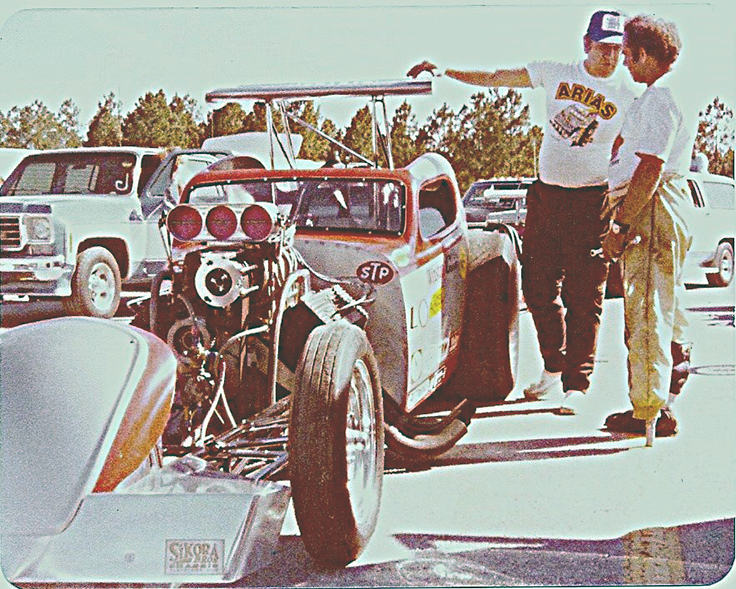
Longtime Florida pal Steve Gruenwald sent along this photo he took of Finders and Jerry Gwynn in the staging lanes at the 1980 NHRA Gatornationals. “I believe he had a fire boot with a prosthesis in it attached to his clutch pedal and he would slide his leg into it and drive!” he recalled.
Former SoCal Funny Car Jeff Courtie, who has become another great friend after we "met" for a story I wrote on him, said that his fellow 1970s flopper rival Joe Winter also was a one-legged workhorse after losing his left leg to bone cancer and drove the car via hand controls. “He ran with Frank Pedregon Sr. for a while as both were real low-buck guys and had that in common,” said Courtie. “Joe later died from the cancer.”
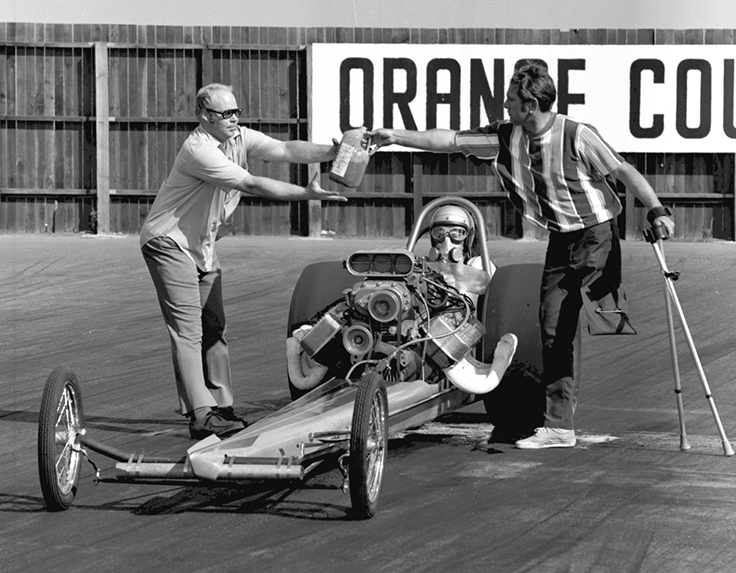
The great Steve Reyes shared this photo of Winter as he worked with Kenny Logan in 1970. Ironically, Logan would lose both legs and a hand in a terrible rollover crash two years later at Orange County International Raceway.
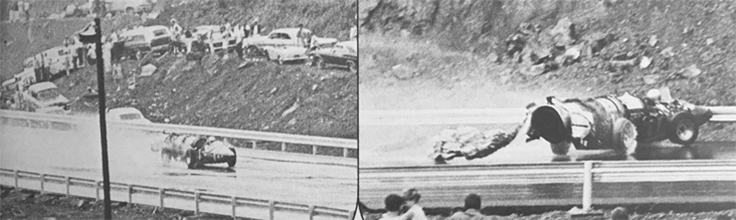
Others were also quick to bring up the story of jet-car great Doug Rose, who lost both of his legs below the knees in a July 1966 accident after the Green Monster hydroplaned on a wet track and slammed into the guardrail. The story goes that Rose did not realize the extent of his injuries and idled the car back up the track. Rose was undaunted and continued to race jet cars for 50 more years until he lost his life in the Green Mamba jet during an exhibition in Michigan in August 2018. You can read my tribute to Rose here.
One enduring story passed down for ages about Rose was that he liked to freak out waitresses at restaurants, perhaps complained about his late food, then would take a steak knife and jab it into one of his (fake) legs to (ahem) make his point, all in good fun, of course.
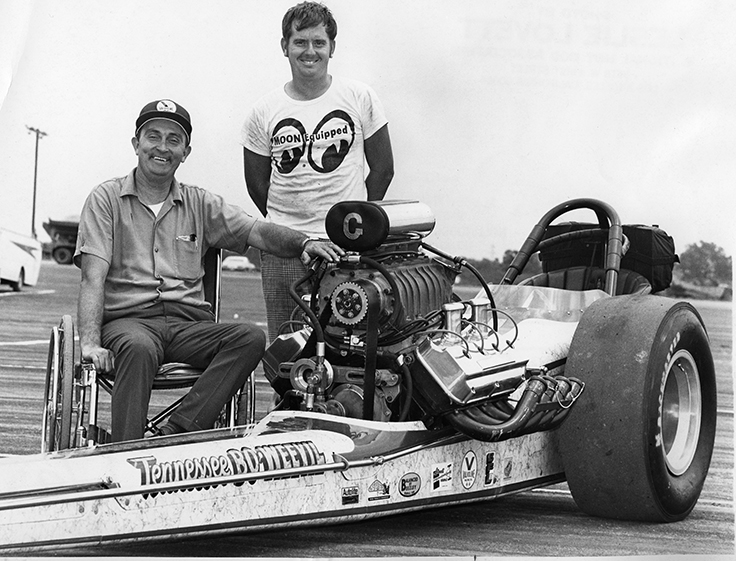
Still others talked about racers who carried on despite disabilities, like Raymond Godman (paralyzed by a sniper’s bullet in the Korean War), who owned and tuned the Tennessee Bo-Weevil car; NorCal Top Fuel team owner Bill Wishart, who was shot in the back when he was 12 and went Top Fuel racing with “Wild Bill” Alexander after he got his settlement when he turned 21; and, of course, Gwynn, who heroically carried on as a team owner after his 1990 accident in England.
Unrelated to the original ramblings column was a message I received from Tal Barratt that sent us both down the rabbit hole. I love a good mystery.
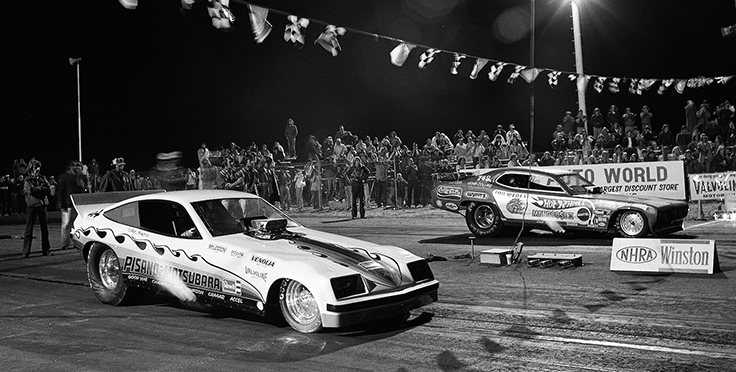
He sent me a smaller version of this photo he’d seen posted by Richard Shute on the Auto Imagery Facebook page that was labeled as 1976 at Sacramento Raceway, which I totally get.
There’s Jake Johnston in the pretty Pisano & Matsubara Monza, which debuted that year (preceded by the Vega in 1975; even though Monzas first showed up in 1975, P&M kept the Vega and Johnston took over driving for Sush Matsubara in early 1974 after Matsubara broke his leg in a pre-Winternationals dirt bike accident). But what the heck is it doing alongside a 1971-72 vintage “Mongoose” Funny Car?
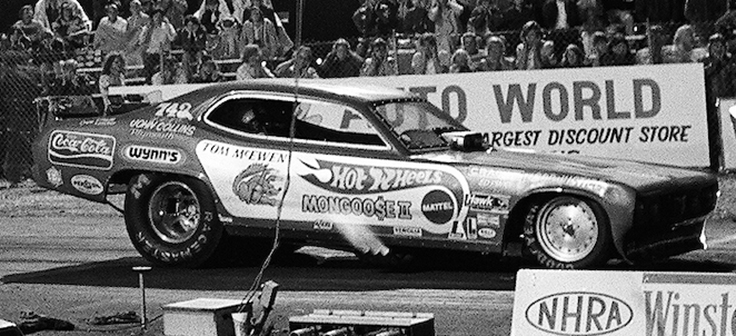
By 1976, McEwen and team driver Collins had the Navy/English Leather paint scheme. I was able to download a high-resolution copy of the photo from the Auto Imagery site and zoom in enough to see the 742 car number that says it's Collins (McEwen was, of course, 713). So the only thing I can think of is that the other body was damaged (in a crash? a fire?) and this was the only backup that ‘Goose had? Anyone know anything? (Turns out it's the final round of the Division 7 points meet, won by Johnston; thanks, Todd Veney!)
OK, enough ramblings. Time to get packed for Indy!
Phil Burgess can be reached at pburgess@nhra.com
Hundreds of more articles like this can be found in the DRAGSTER INSIDER COLUMN ARCHIVE
Or try the Random Dragster Insider story generator