

The early Hart of the NHRA
Don Garlits and Darrell Gwynn; their lives in words and photos in new books

Random ramblings and rumblings, the sequel
Random ramblings and rumblings
Memories of Englishtown
-
Remembering Steve Ambrose
Right back where we started from: Winternationals is back at No. 1
Meet Larry Wood: The man whose designs launched a million hot rod dreams
Can you imagine a toymaker designing your Top Fueler? 'Snake' and 'Mongoose' could
For the love of old drag racing photos
The ultimate Funny Car winners quiz
Still popular after all these years: Catching up with fan favorites Eddie and Ercie Hill
Eddie Hill, the early years
55 years ago, Don Garlits forever changed the look, feel, and future of Top Fuel racing
On a roll: A look at some all-time great NHRA Drag Racing success streaks
- ad
NHRA's Top 75 Moments: Bernstein, 'Big,' and Shirley reflect on making history
Funny Car set to turn 1,000: A look back at the milestone races along the way
Beyond the Top 75s ...
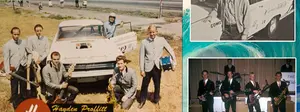
Wait ... Jim Head was in a 1960s surf band promoted by a drag racing legend? Yep.
More Martin memories
The Popular Hot Rodding Championships put U.S. 131 in the national spotlight
Friends we lost in 2025
Re-telling NHRA history: The 75th anniversary book and other special projects
It was John Force's world, and we were all thrilled to be living in it
The Joyce of Drag Racing Photography
- ad
Two legends: 'Big' and Bakersfield
When did we start doing that? Tracking some of the biggest changes in our sport
From 10-time dominators to one-time winners, a history of Indy Top Fuel champs
Legend to legend: Don Prudhomme on Don Garlits, Indy, and other great takes
NHRA Rookies of the Year: A look back at where some fabulous careers began
Still popular after all these years: Catching up with fan favorites Eddie and Ercie Hill
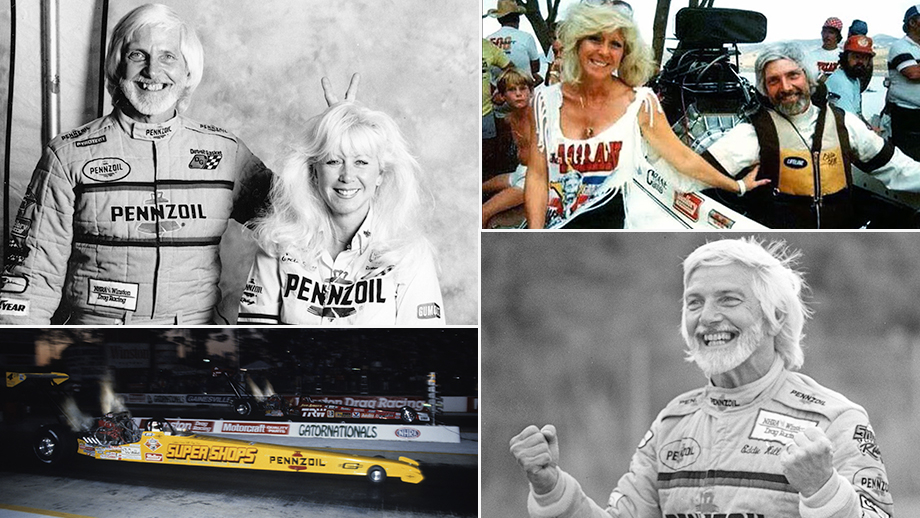
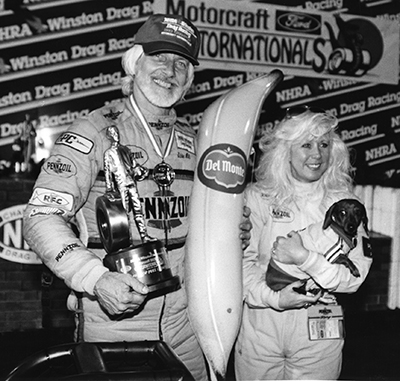
It has been more than 25 years since Eddie Hill last powered down the dragstrip in his bright yellow “Nuclear Banana” Top Fueler, but the scrappy Texan, wife Ercie, and their memorable menagerie that included a dauschund ("Hot Dog") and a Siamese cat ("MonkeyBat") remain forever in the hearts of racing fans who witnessed their magical dozen years in the 1980s and '90s.
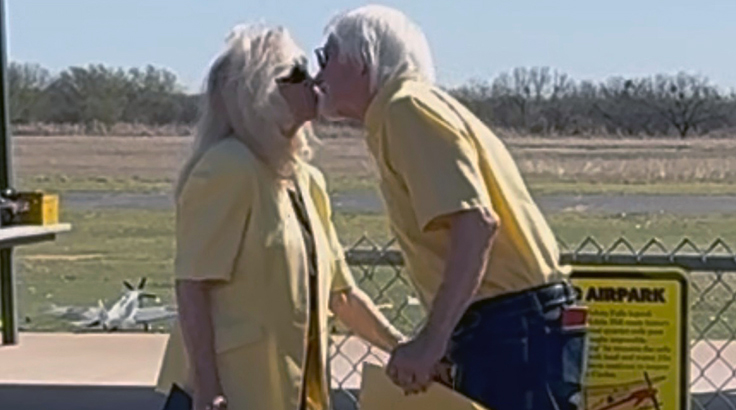
Hill, who just turned 90, and Ercie are still alive and well in Wichita Falls, Texas. The recent naming of a park for remote-controlled airplane flying in his honor brought him back into my orbit after they sent me a news story about it, and because I hadn’t really spoken to them in almost a decade, it felt like a good time to catch up with them and do a deeper dive into their time at the drags and shine some light on some lesser-known facts about their racing.
This is not the encyclopedic Eddie Hill life story — though that surely would make a great movie — but just some fun moments in history that I asked them about.
A FAST START
In various forms of motorsports, Hill has won trophies in eight different decades, from motorcycles to drag boats, two stints in drag racing almost 20 years apart, and then a successful road-racing career after he left the straight and narrow.
Modern drag racing fans know Hill’s impressive record from 1985 through his retirement in 1999, which includes the sport’s first four-second Top Fuel run and the 1993 NHRA world championship, but his racing began long before that.
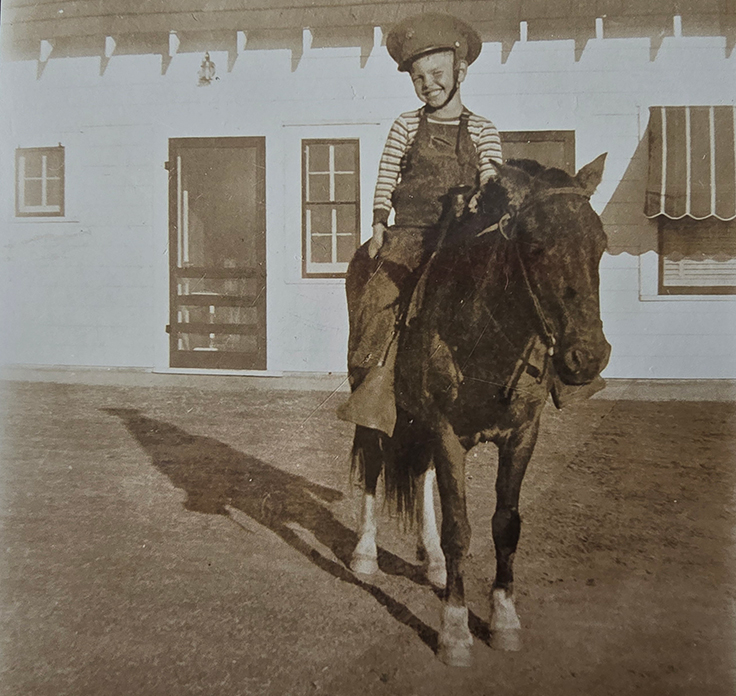
“I started racing when I was about 8 or 9 years old,” he told me. “I had a Shetland pony, Peanut, and I used to go a quarter-mile down the highway and wait for the city bus to come by at full speed, and I'd leave from a standing start and try to beat him back to the house about a quarter-mile away. So that started way before I was 10 years old, and I never quite got over it.
[See more amazing young Eddie Hill photos here]
“Starting with my first trophy earned with a Cushman motor scooter in 1949, I always wanted to win. It's probably want-to more than anything else, but we've just always had a strong desire to be the fastest guy there, or wherever I wanted to play, and it worked out.”
‘BIG DADDY’ AND ‘THE FOUR-FATHER'
“Don Garlits has been my hero since the get-go, and I always tried to pattern myself after him: Do your own design work and build your own cars and paint them and haul them and tune them and drive them, so that's always what I want to do. I admire that so much of him.
"In the early days, I built all my own cars. I had an electrical conduit bender because I couldn't afford a regular tubing bender, but it worked on the size I was using, and I welded my cars together using muffler moly back in the early days, and then gradually went on to chrome moly."
THE DOUBLE DRAGON IN INDY
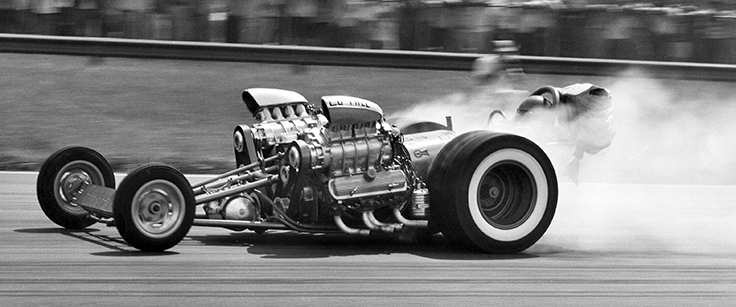
One of Hill’s most memorable cars in the 1960s was the Double Dragon, twin supercharged Pontiac powerplants mounted side-by-side in a 92-inch chassis with four rear tires, two on each side, for traction. The car’s claim to fame was digging divots into the starting line at the 1961 Nationals. I’d heard the lore and asked Eddie for the details.
“If I remember right, that asphalt was a fresh layer, and the car weighed 2,200 pounds and had four slicks on the back," he said. "I think it grabbed up a divot of that fresh asphalt, flipped it back. I think they flipped it back in place and tamped it back down.
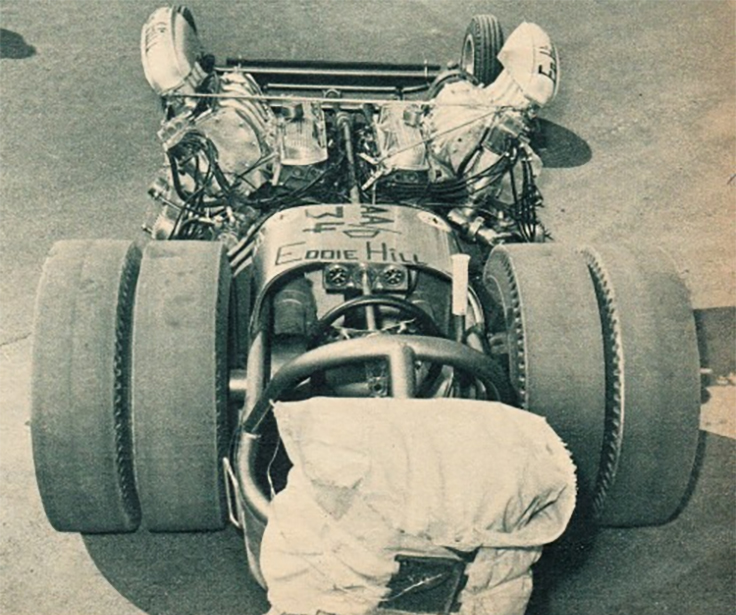
“I had made a run or two and went up to the starting line, and Buster [Couch, chief starter] came over and grabbed me by the ear and dragged me over and said, ‘Look what you did to my starting line. This is brand new,’ and he said, ‘Don't run here again. You move over, and you run over here next time,’ and he made me line up in a different spot."
Hill got out of drag racing in 1966 after a big fire that not only damaged his engine but also severely singed his wallet.
TAKE ME TO THE WATER
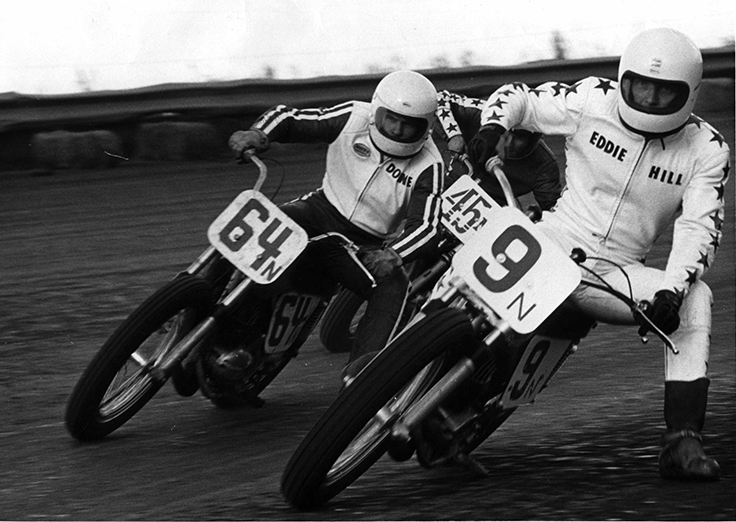
To recover financially, Hill opened a motorcycle dealership, Eddie Hill’s Fun Cycles, in Wichita Falls, Texas, which he still operates today — it’s the oldest one in Texas — and it wasn't long before the competition bug bit again and he raced in all forms of motorcycle competition: short track, hare scramble, motocross, cross country, and road and drag racing. In 1972, Hill was the Texas road-racing champion, but by 1974, after having exhausted the fun of outrunning the local racers and with no time to race nationally against the professionals, Hill sought another outlet to fulfill his need for speed and G forces.
Hill attended his first drag-boat race in Austin, Texas, in 1974, and less than a month later, he was racing his own boat.
"Once I hit the water with the boat, I never went back to motorcycles," Hill recalled. "The power, speed, and acceleration were all things that I had missed since I quit drag racing."
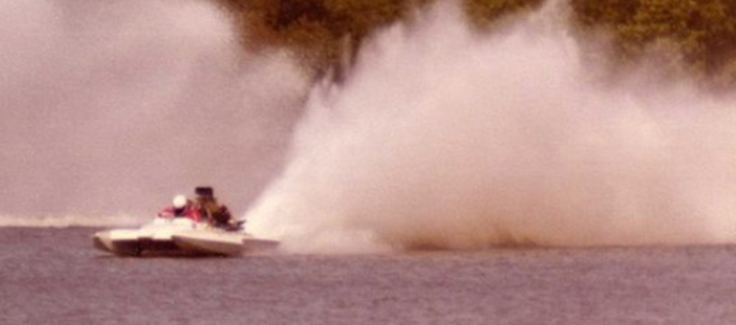
Hill won in his first time out in Oklahoma City in a non-blown gas hydroplane, and at his third race, he set the class speed record. He switched to nitromethane in 1976 and accumulated world records and won championships like they were going out of style.
From 1978 to 1984, Hill’s blown-fuel hydroplanes won 55 of 103 races, and won every major race at least once, and won the biggest race, the National Drag Boat Association Nationals, four times. He was the American Drag Boat Association (ADBA) world champion four times and the Southern Drag Boat Association top points earner for five consecutive years.
WHEN EDDIE MET ERCIE
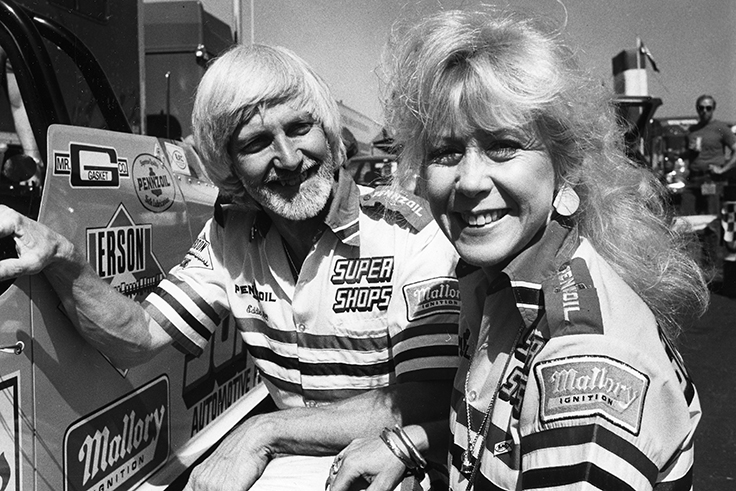
In the history of the sport, there have been many memorable husband and wife couplings that became familiar to fans — Wally and Barbara Parks, Don and Pat Garlits, Don and Lynn Prudhomme, Jim and Alison Lee, and John and Laurie Force all come rapidly to mind — but few were as inseparable as Eddie and his platinum blonde goddess, Ercie, and their “meet cute” is as epic as their now 42-year marriage.
Ercie was just a country girl from Nashville, Tenn., but a boating enthusiast when “the Texan” came to her neck of the woods, to High Point, N.C., to compete in a drag-boat event in the early 1980s.
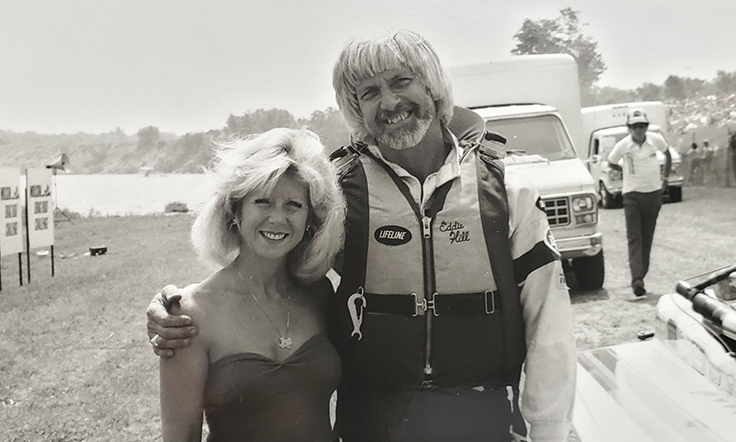
“I was a member of a boat club where I lived and was there with a group of people, and we were just kind of walking around looking at the boats, and I happened upon him, and he was strutting around, looking awfully handsome,” she remembered. “I asked him for his autograph and if I could have my picture taken with this boat. He said, ‘Sure,’ and we talked a little bit. When I got back home, I sent him a letter with all the pictures of his boat that I had taken, and I told him if he ever needed somebody to do PR, I could do that and a little bit of mechanical work, too.
“I never did hear from him, but I honestly didn't expect to. He was married at the time — which I did not know — and his wife kept my letter from him for two years. When they divorced, she put my letter and the pictures that I had sent on top of the TV with her wedding ring, so he called me. I thought it was some of my goofy friends pulling a prank on me, and he had a hard time convincing me this was really him, but after two dates, we decided we never wanted to be apart again.”
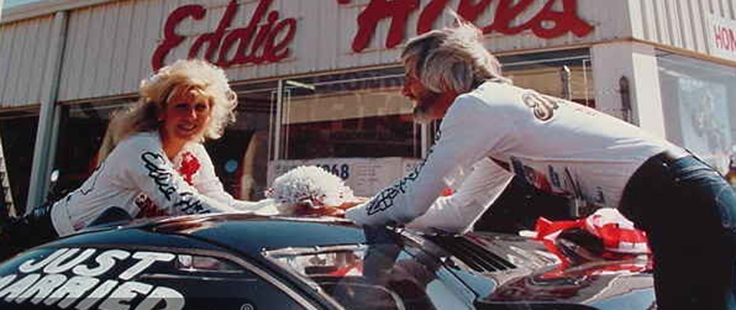
Eddie and the woman that he affectionately calls “Babycakes” were married on Valentine’s Day 1984 and have been inseparable.
“Eddie always made sure that my name was on the car equal in size to his. When we first started out, it was just Eddie and me and no help. I'm not anybody's idea of a mechanic, trust me, but I had to learn to do what I could, to take up the slack so he could work on the car, and I always tried to be his other set of hands and eyes.
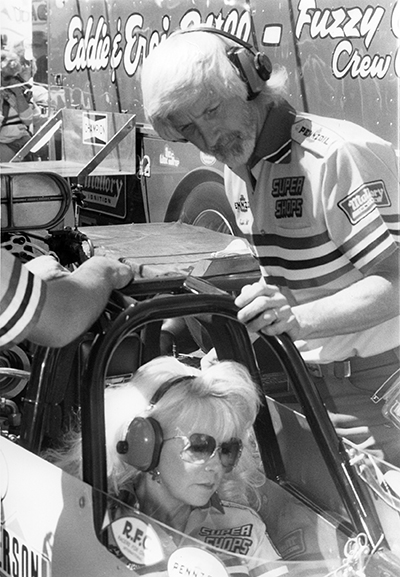
“Sometimes I got to sit in the car if we warmed it up, and I got to sit in the car as we pulled it back from a run, but I never wanted to take the ride. I enjoyed more than anything else the camaraderie that we had with the other racers and with the fans. The fans were fantastic, and we always had fun with different groups of people that would come to the races, and we enjoyed Racers for Christ. When we first started the Sunday services, I think in 1985, there were eight of us who were [there], and by the time we ran our last race in 1999, I think there were over 400 on Sunday that came to services, so that meant a lot to us."
“Ercie was co-owner and backup girl and kept an incredible record of over 300 separate items of information gathered by the on-board data recorder during every run the dragster ever made,” Eddie added proudly. “This, in addition to being a personnel manager, business manager, bookkeeper, paymaster, logistics coordinator, nurse, public and sponsor relations, etc.”
ENTER ‘THE FUZZMAN’
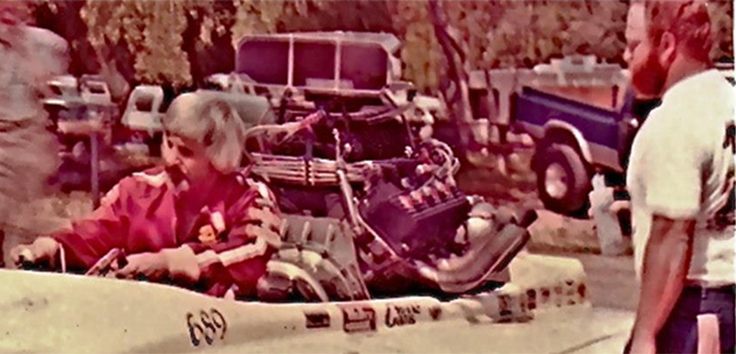
Terry “Fuzzy” Carter, the Hills’ red-haired and red-bearded right-hand man and top wrench, joined the team in their boat-racing days (above) and into their return to Top Fuel, and he became a familiar sight on the starting line and in the pits with his wife, Jana. The Carters were there for all the glory days, but that was never really the plan.
“Fuzzy was a truck driver out in West Texas,” said Hill. “He worked for a guy named Gary Martin, who sold used oil field pipe and equipment. He was a good old boy, and he saw us racing back when we were so broke — we were probably the brokest Top Field team ever for a while — and he said, ‘Hey, I'll help you if you want some help. I'll put you in an 18-wheeler and furnish the driver,’ and I said, ‘Sure, I can't beat a deal like that.’ For a while, ‘Fuzzman’ just drove the truck, loading it and unloading it and everything, and then one time I said, 'Hey, Fuzz. I need a break. Would you mind taking the spark plugs out for me?’ He said, ‘Sure, I can do that,’ and one thing led to another. Finally, I started letting him work on the engine, too, and that was the hardest decision I ever made, when I finally turned over the bottom end and torquing the heads to Fuzzy.
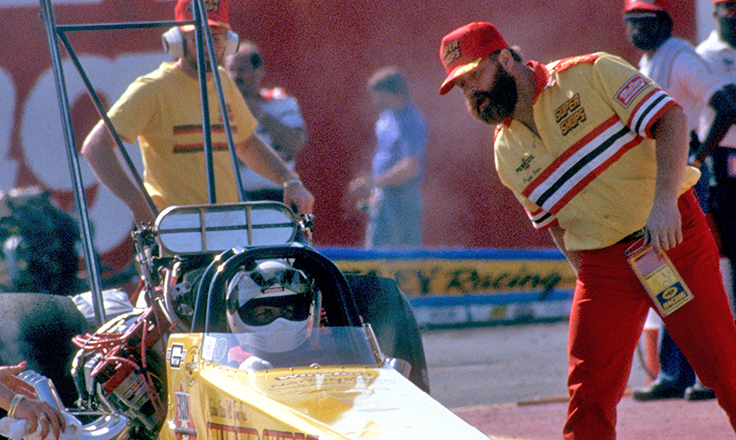
“I had never let anybody else do anything that was critical, and I finally figured out that the engine didn't really care who did it, just as long as it was done right, so I showed him exactly the way I wanted to do it, and he was a good learner and did it exactly the way I wanted. Never screwed up. And so I got comfortable with letting him handle that stuff, and then I concentrated more on the tuning, and he was in charge of taking it apart and putting it back together.”
Even though Hill was making all of the tuning calls, Carter was often referred to as the team’s crew chief, but he was probably more of what we would call “car chief” today.
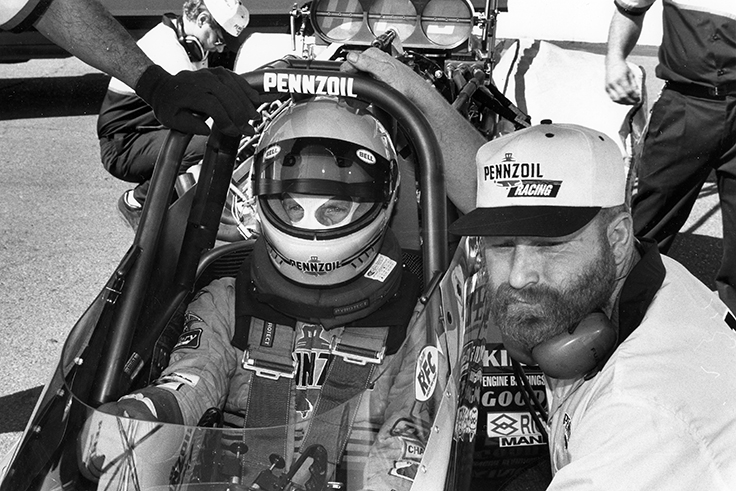
“Fuzzy called himself a foreman — that was his term, not mine — because he took whatever tuning changes that I came up with and gave it to the appropriate crewmembers, or did it himself," explained Hill. "We were tickled to have him call him crew chief, because that's kind of a prestigious title, and in fact, I think he was named crew chief of the year one year.
“But I was owner, driver, tuner, and selected every single part of the dragster that was available to be bought, and designed and fabricated the parts I wanted, if they were not commercially available. What I remember about those years is being in my computer/tuning office in our transporter, studying all the data and trying to hurriedly make whatever tuning changes I thought the car needed to win the next round. I called for adjustments or changes to the fuel system, supercharger overdrive ratio, clutch weights and/or timers, ignition timing, etc.”
BOAT CRASHES HURT
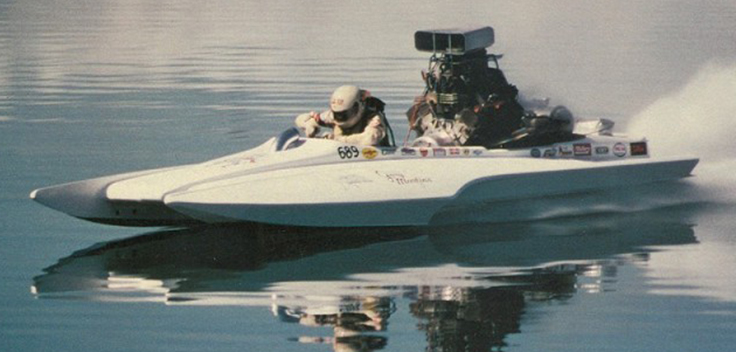
As dominant as Hill was on water, he also had some scary moments, the worst of which came in October 1984 on Firebird Lake outside of Phoenix.
“It blew a blower off down in the lights somewhere around 200 mph, and the sudden loss of power turns that propeller into a little rudder, and it turns a boat sideways. And when it turned sideways, the little blade that we put on the bottom of the sponsons to give it a little direction turned sideways, and it flipped the whole boat over and put me out in front of it.
"Crashes on water are worse than on asphalt because, for one thing, when you hit the water, you sink in enough that it tries to grab you and spin you. When I hit the water, it’s trying to whirl me around. I tried to ball up, to keep it from pulling off an arm or foot, but every time I'd hit it, it whirled me so that it slung my arms and legs all out again, and I just went on. The guys who were watching said they thought I bounced about nine times before I finally went in. It took my Aggie ring off my finger — it’s probably still out there in the bottom of the lake — and it blew my shoes off, blew my face shield off, and I bled out of my eyes. My eyes were blood-red for a long time. Boat racing was fun as long as everything worked right, but, boy, it sure got ugly when it didn't.
“I started counting the people in Top Fuel boats that I had lost, and I counted up to 13 and didn't count anymore. I still think about our old friend Jimmy Wright every time I hear 'Hotel California' on the radio. That's what he called the place where he lived, and he was such a neat guy. We were really broke most of that time, and he knew that, and he’d put us up at his place so we didn't have to pay for a motel. We sure miss him.”
THE COMEBACK
Hill decided it was time to head back to the asphalt and purchased from Dan Pastorini the Dago Red dragster originally owned by airplane-racing giant Frank Taylor and driven to a 257-mph national speed record by Rocky Epperly. It was the best car available at the lowest price — it was already several years old — but it was far from the perfect fit.
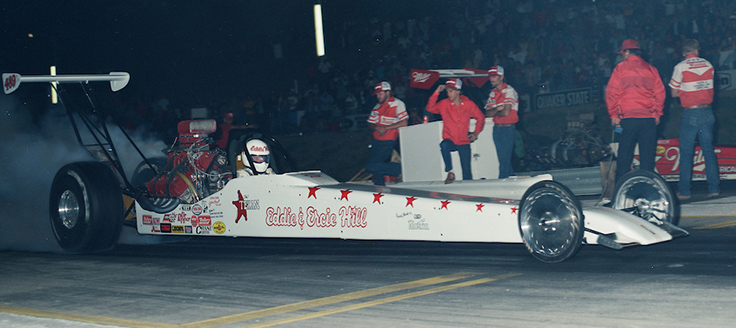
“Rocky was a small guy, and that car was so tight and was built around him,” Hill remembered. “I don't know if you ever saw a picture of me in that car, but my shoulders are all crunched forward, and I was really cramped in there, but we got by.” (We did see it, thanks to this great Auto Imagery photo)
Carter had dredged the remains of the boat from the bottom of Firebird Lake, and they cleaned up the engine as best they could and put it in the dragster. "The magnesium parts continued to deteriorate for a long time due to acid in the lake water," remembered Ercie. "It was not pretty."
Not that the comeback was easy or fast …
“I was out for a long time until I came back with the rear-engine cars,” he remembered. “I first went to Amarillo [Texas] to renew my license and ran way off the end of the track. We looked very amateurish. I did what was essentially a quarter-mile burnout from my first run, and ran off out in the weeds out there because I had a boat parachute on it that time that wasn't adequate. [Division 4 Director] Dale Ham wasn't really proud of my trying to renew my license. He said, ‘I'm going to go ahead and sign off on you, but please go somewhere and do some testing and get a little better before you go to a national event’ … which we didn't do. We went to Denver for our next, but when I was on the starting line up at Denver, my face shield fogged up at night when I was staging, and Buster flipped up my face shield, wiped the inside of my shield, and sent me. If he could have reached, I believe he would have patted me on the butt, too."
The Hills didn’t come close to qualifying in their return at the 1985 Mile-High Nationals, posting a best of just 6.61, 14th out of 14 cars trying to make the eight-car show. They were 11th out of 11 for the eight-car field in Brainerd, 23rd of 26 cars trying to make the 16-car field in Indy, and 11th out of 13 cars trying for the eight-car field in Reading.
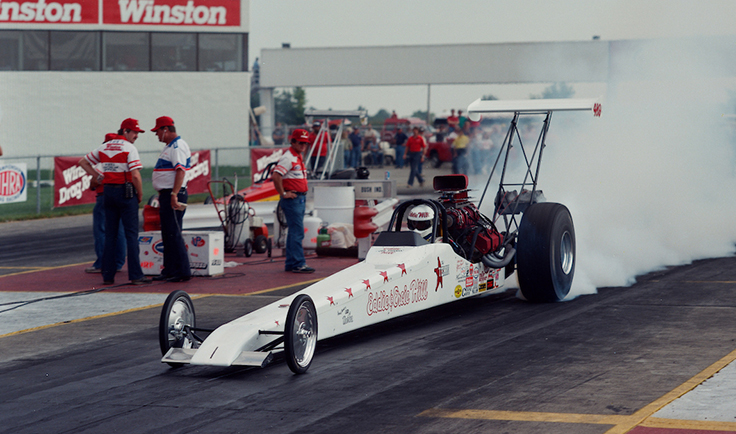
“When we went to Indy to try to qualify, we didn't make it, and we had used up all our money. We were planning on using our qualifying money to get home. This was back in the days before credit cards or anything like that, and we literally did not have enough money to put gas in the truck. We were sitting there, loaded up, ready to go, pointed toward the exit gate, trying to figure out how we were going to get home, and one of the NHRA guys, Mike Dollins, came running up and said, ‘Eddie, wait, wait, don't go yet. You won the e.t. pool, 375 bucks,’ and that's what we used to get home.”
They finally cracked the field in Phoenix, qualifying 14th, but lost in round one to Bill Mullins.
“It was a long time before we ever qualified or that we didn't have to be pushed off the racetrack,” he admitted.
THE TURNAROUND
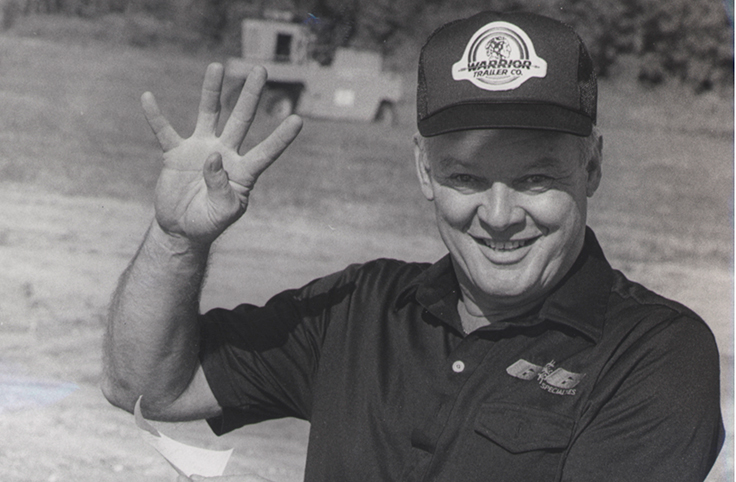
1986 wasn’t much better, missing the field at the year’s first four events (Pomona, Gainesville, Atlanta, and Baton Rouge, La.) before qualifying No. 9 in Columbus, back in the day where the No. 1 qualifier raced No. 9 in round one instead of No. 16 as they do today, and Gary Ormsby beat them, but not by much.
It was fellow Texan Gene Snow who got them pointed in the right direction.
“At the Gatornationals, we didn't even have a spare spark plug,” Ercie remembered. “It was gruesome. We made a run and hurt the engine, and we were so lost. Eddie said, ‘This is it. We quit. We don't have any money. We don't even have a spare piston.’ He took one of the pistons out of the engine and was holding it and just shaking his head, and was so despondent. And I said, ‘Let me have that piston,’ and I went next door, where Gene Snow was parked, and Larry Meyer was his crew chief at the time, and I showed them the piston. I said, ‘Mr. Snow, we are so lost; we don't know what to do. This just came out of the engine. Can you look at it and give me a clue what's wrong?’
“He took the piston and shook his head, gave it to Larry. Larry whistled really loud, and he said, ‘I hadn't seen a piston burned up like that in a long time.’ He said, ‘You're not giving it enough fuel.' Gene came over and offered to sell us an engine and a baseline tune-up.”
“Gene rescued us from obscurity, got me a basic tune-up,” Eddie agreed. “I had been trying to run my boat tune-up, and it just did not work, which was a big surprise to me because the Top Fuel car needed so much more fuel. Gene said he'd give me a tune-up, but I had to do everything he told me before he'd sell me an engine. We wound up selling a couple of motorcycles, so I had just enough to buy one engine.”
They qualified No. 9 again in Englishtown, and Hill’s hero, Don Garlits, was No. 1 and should have been their first-round date, but Garlits couldn’t make eliminations after his wild blowover in qualifying. The Hills, however, couldn’t even beat unknown No. 17 qualifier Jerry Marconi, who scored the first and only round-win of his short career over Hill.
Between NHRA and IHRA competition over two seasons, Hill lost 15 straight first rounds before he finally won one.
DENVER 1986
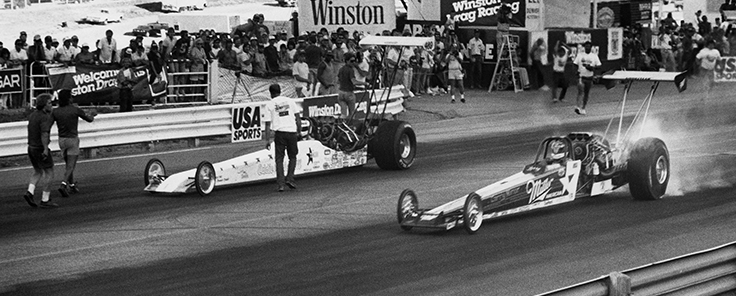
On the one-year anniversary of his return, Hill went all the way to the final round in Denver. From the 15th spot, he set down some of the best names in class history — Gary Ormsby, Shirley Muldowney, and Joe Amato — to reach the final against Larry Minor. Hill even had lane choice. Then disaster struck.
“I lost a bearing in the reverser, and the car wouldn't back up,” he lamented. “We tried everything, but it wouldn't go, and then Scott Kalitta ran up there along with a bunch of other people, trying to push the car back. I kept trying to get it in reverse, but every time I'd try that, it'd lock up and stop, and one time Scott tripped and fell and bumped his nose on the top of the car.
“Larry waited and waited and waited — bless his heart — trying to give me time to get up there, but we didn't make it, and he went ahead and made a solo. After it was over, I went over to Larry to apologize and thank him for waiting. He told me later that it spooked him when I came up because he thought I was coming up to hit him.
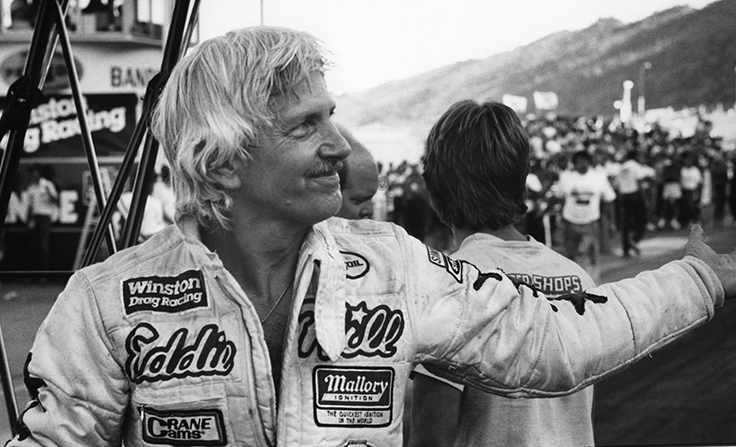
“I was sitting in our pits afterwards on a little Honda ATC 70, and I was actually crying because I had that race won and then didn't get it. And Joe Amato — bless his heart — found me and put his arm around me and said, ‘That's OK, man, I know how bad it feels, but you're gonna win your share and hang in there.’ And I thought that was awfully cool.”
The Hills started winning rounds with semi-regularity, set the national speed record in the fall of 1987, and were runner-up at the 1987 Dallas and Phoenix events, but that first win — a feeling with which Eddie had been so familiar his whole racing life — continued to elude him.
A SUPER OPPORTUNITY
“I’ll never forget, it was the last race of the year in Pomona in 1987, and God woke me up at three o'clock in the morning. He said, ‘Hey, Eddie, if you did make it to the big time, could y'all handle yourselves properly and be a good example?’ I woke Babycakes up, and we talked about it for a good while, and decided, 'Yeah, we think we could handle ourselves properly and be good examples for the folks.' We got up and went to the track, and the Super Shops guys came to us and offered us a sponsorship for 1988, and a few minutes later, the Pennzoil guys came up and offered us a deal, so both of our sponsorships happened within hours. I guess that setting the speed record as a privateer before that race showed the guys that we had potential.
“That’s still the only two-way conversation I've ever had with God, but that was the start of the whole thing.”
THE FIRST FOUR
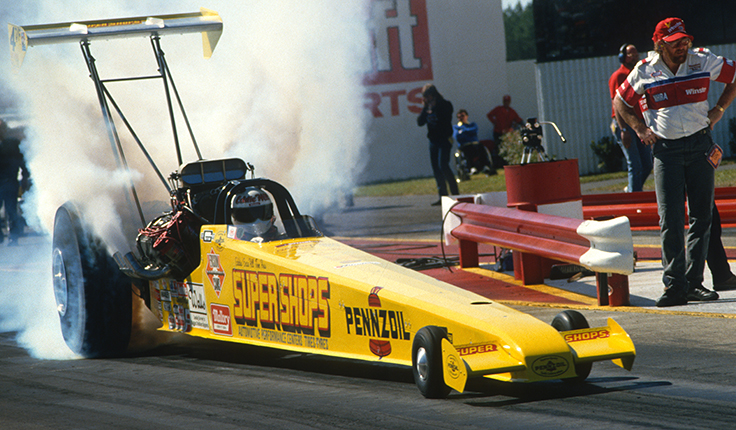
It didn’t take long for the Hills to maximize exposure for their new sponsors, winning at the Gatornationals in March 1988, beating Dick LaHaie, Jack Ostrander, Frank Bradley, and, in the final round, Joe Amato, and reset the national e.t. record to 5.06
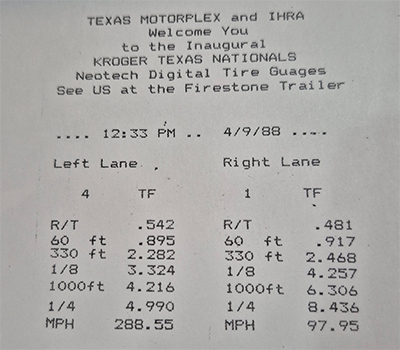
That was March 20, and three weeks later, the Hills cemented their names into drag racing history with the first four-second Top Fuel pass, April 9, 1988, at Texas Motorplex.
“When we're all headed to Dallas for the all-concrete track, all of us in Top Fuel expected the first four to happen there, and whoever got in the staging lanes first would be the first one to do it," said Hill. "For some reason or other, we fumbled a little bit and let Darrell Gwynn get in line ahead of us. We thought, ‘Oh, there it went. It's all over,’ but they had to shut it off on the line."
Hill, who had to borrow a rear wing from Gene Snow, ran 5.13 in Thursday’s lone session and a 5.047 in Friday’s first run and a 5.15 in the afternoon. It was on their first run Saturday that history was made with the historic 4.990 clocking — 4.9 seconds on 4/9. It was perfect.
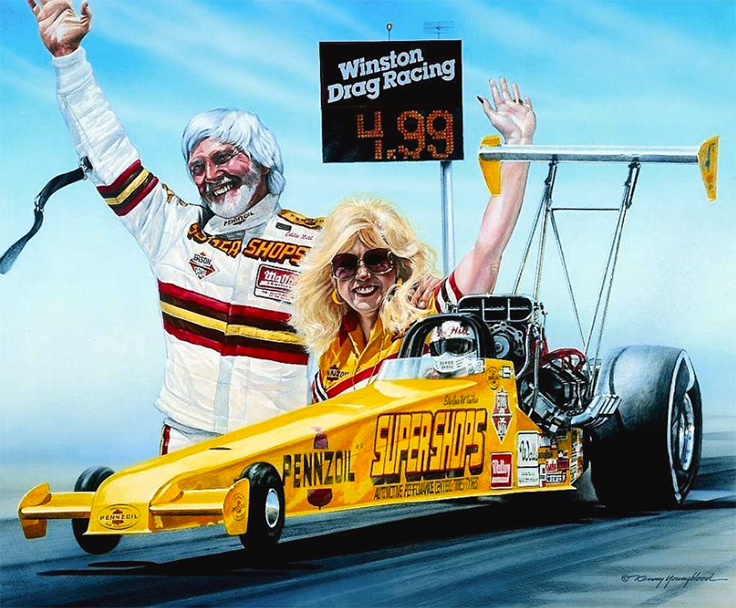
“We had been running good enough to do it for a while, but the thing kept dropping cylinders down there at about 1,000 feet,” Hill remembered. “I was talking to Mike Thermos of NOS, and he said, ‘You can't run it leaner than it is up to 1,000 foot, but if it needs to be leaner down there, let me send you a little lightweight solenoid that you can plumb into your high-pressure system and put a little jet in there to lean it out a little bit,’ and that's what I did. And on that run, sure enough, when we got down there just before 1,000 feet, just before the problem would happen, I punched that [leanout] button, and it didn't drop a hole, and went on through there, and I knew from the ride that we had done it.
“We were mobbed, as you can imagine, and we signed autographs for eight solid hours.
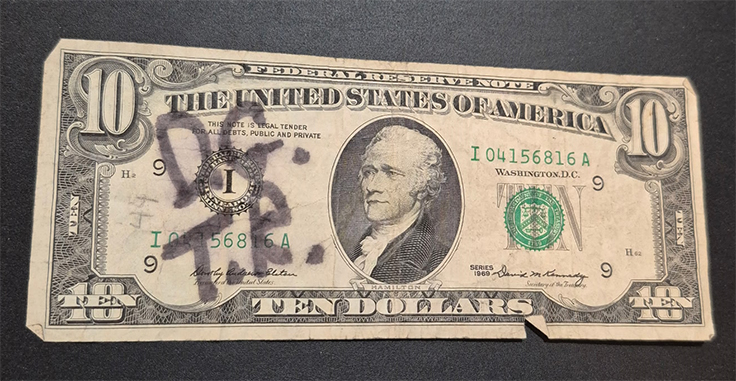
“Darrell Gwynn and Tim Richards had a bet on who would run the first four, and Darrell bet on us, and Tim, of course, bet on himself and Joe Amato. Darrell won the $10, and after the run, he came over to give it to us, but I asked him and Tim to initial it. We still have it.”
THE POMONA FLIP
The famed 4.99 car, which went on to reset the national record to 4.930 in winning the Supernationals in Houston in October, was heavily damaged in a wild blowover after a front-wing malfunction during qualifying at the 1989 Winternationals.
“David [Uyehara, chassis builder] had built a deal where there was a slotted adjuster where you loosen then tighten a bolt to adjust the wing wherever you want it. I had run that thing for a full year before with no problem, but that day, it didn't work, and it went from full downforce to full upforce all at once, right at 1,000 foot.
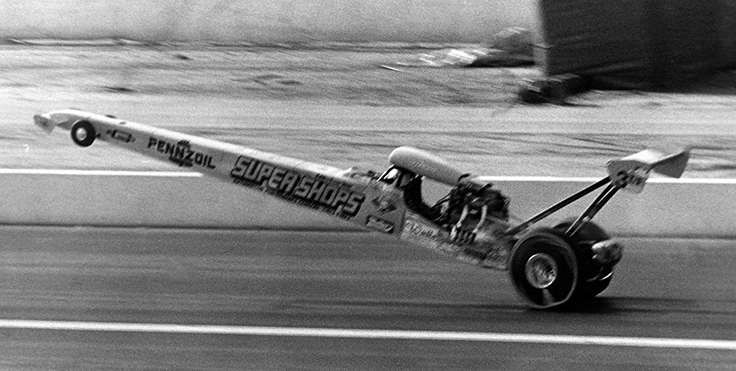
“I shut it off, and it seemed like it hesitated for a nanosecond right when I shut it off, and then there it went, and there was no saving it. I remember it seemed like it was an incredible amount of hang time. As I was hurtling through the air, I had time to think, ‘If I hit those steel poles that hold up the scoreboard, I wonder if that's going to hurt or if the lights are just going to go out.’ I had time to think about what it was going to feel like to die, and that's too much hang time.
“It pitched one of the rear wheels off at the highest part of the arc there, and we turned around backwards in mid-air, and the first thing that hit again was the front end of the car, and it broke the fuel tank and hurt the back end. I was sliding backwards down there in the shutdown area with the other loose wheel way up in the air through the landing pattern for Bracket Field [airport]; I could have shut down a plane if it was in the pattern.
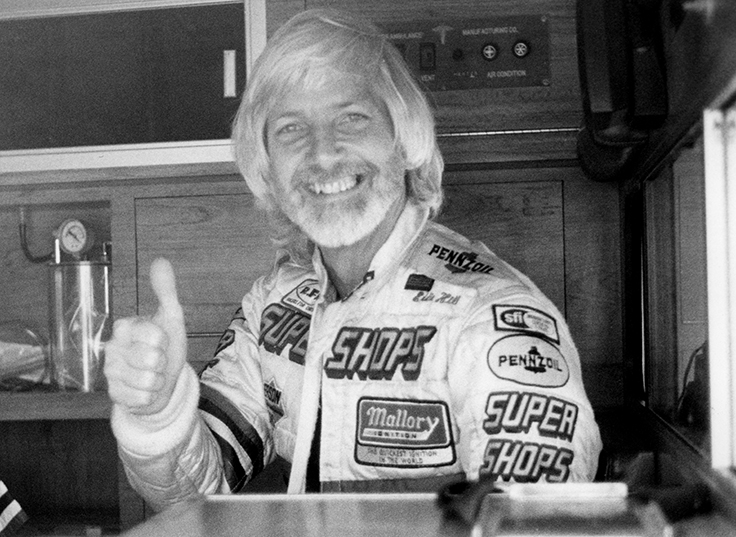
“I remember sitting in the back of the ambulance, and Joe Amato was hanging on the fence. I hollered over that I was OK, but he wouldn't leave until I walked over there and assured him that I was fine.”
'THE EDDIE HILL RULE'
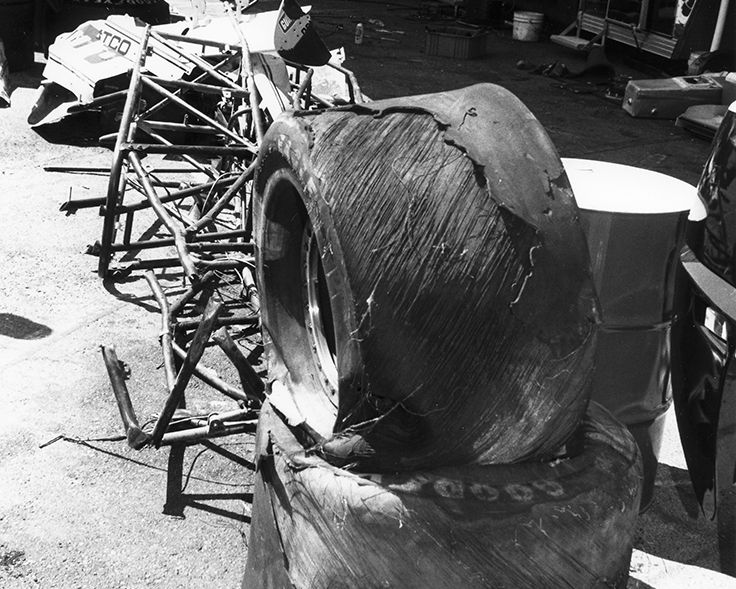
Four years later, Hill won the Top Fuel world championship during a five-win season in 1993, would gain Winternationals redemption by winning the 1995 event, then conquered the mountain in Denver again in 1996, but that was his last win as things started to go sideways.
On a low qualifying run at the Sonoma Nationals in 1997, severe vibration broke the car apart at the top end. NHRA rules at the time did not allow the insertion of a backup car to run eliminations. That rule was later changed and is now known as “The Eddie Hill Rule.”
“We put a brand-new car together for Seattle, which was the very next weekend, and we took what was left of the other car with us, but it wasn’t really fixable, and we left it wadded up in a dumpster, which was a shame.”
END OF THE ROAD
Two years later, an incorrectly cast engine block “shattered like glass” during a qualifying pass, and the force of the explosion compressed Hill’s spine at the L1 vertebrae, causing him intense pain.
I wrote all about it nine years ago in a column called Eddie Hill’s Last Ride, which it was. "My last ride ever at a dragstrip was out of there in an ambulance … like it also was at my last drag boat race!” he noted.
TURNING CORNERS
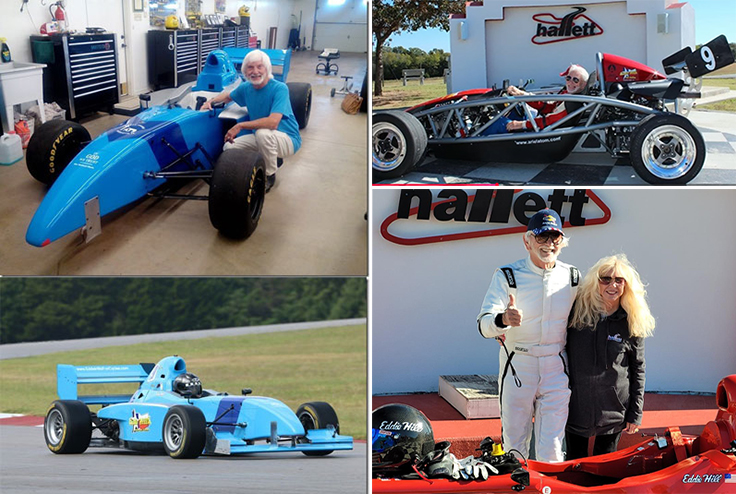
A few years later, the competition bug bit Hill again, and this time, he tackled road racing, frequenting Hallett Motor Racing Circuit, a 1.8-mile, 10-turn road-racing course located 35 miles west of Tulsa, Okla.
Hill won the yearly championship in FAA (Formula Ariel Atom) four straight years (2013-2016) and then graduated to a Pro Formula Mazda, which Ercie bought for him, and then a Formula B with a Kawasaki 1000cc engine.
“We haven't been for the last four years,” he acknowledged. “We won the last race, and since then, all our open winners have had a major upgrade and attempt at the overall track record up there that's held by an Indy car with Arie Luyendyk; we were like 144 mph on the fastest straight away. I had a rather long downtime for knee replacement, and we've had a hard time getting the ambition to load everything up and go again, although the cars are completely ready.”
FLYING HIGH
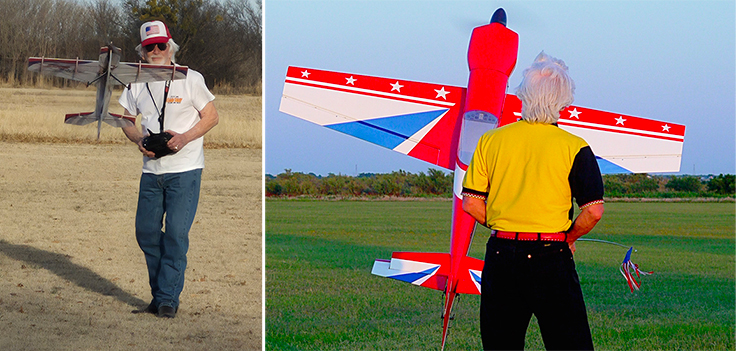
In the meantime, Hill has a new passion: Flying radio-controlled model airplanes.
“We've got a big fleet of those,” he said. "Some of them are as big as 40% of full size, and several of them are one-third of full size. We go out there two or three times a week when the weather permits and have a good time.”
And, yes, race fans, he’s still burning nitro.
“I generally run about 30% nitro in some of them and the rest methanol and some oil on them for the two strokes," he said. "Then I have some big gas ones, 150cc two-cycle twin engines, and they run on just gasoline with oil mixed in with them, so I've got a pretty good variety of planes.
HOME ON THE RANGE
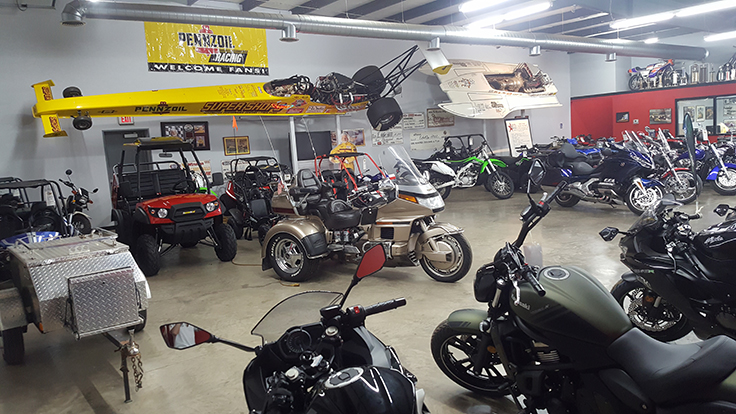
The Hills have their famed 4.99 car and the 229-mph boat on display at Eddie Hill's Fun Cycles dealership in Wichita Falls, where the Hills are the toast of the town.
“The city fathers are kind of proud that Wichita Falls is the permanent home of the only drag racing team that's ever won the championship on land and water,” he said proudly.
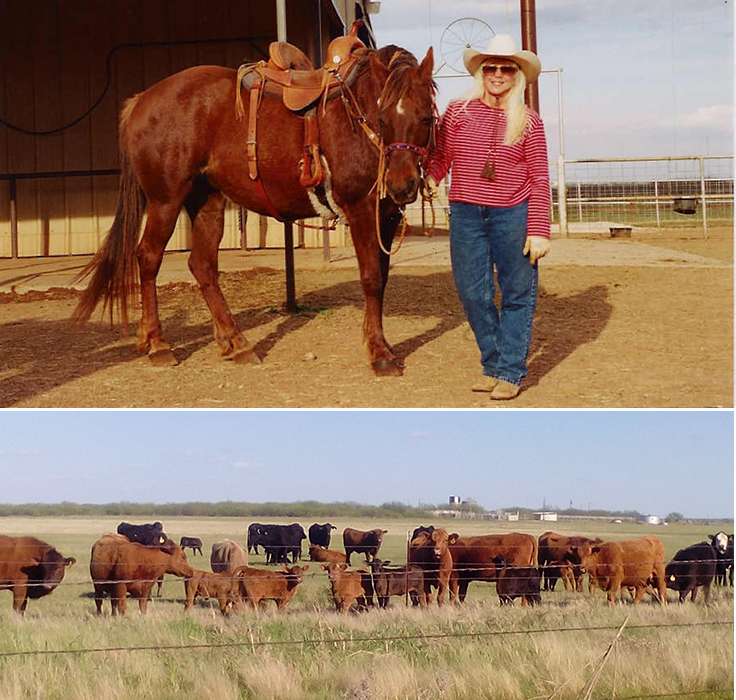
“We are living in the dream home we built on our 500-acre ranch outside Wichita Falls. Ercie raises Red Angus cattle and Tennessee Walking Horses. We have about 50 head of cattle, five horses, three donkeys, and five dogs. E-I-E-I-O!
“We live a clean life and eat right and exercise, and most of all, we still like to go out and have fun. I think that’s a great motivator to keep your health if you have something that you get up in the morning and want to go do, and you're looking forward to doing it. I think that the psychological part of being healthy goes a long way right now.
“I can't put into words how much fun we have doing that, and how pleased and blessed we were to have all the awards and the accomplishments and everything that the good Lord's given us. It’s just been an incredible ride, and it's almost hard to believe that I'm 90. I'm still having this much fun every day. We’ve had success at basically everything we've tried to do," including their business, which is more than 60 years.
"And so my coffee cup says, ‘Delight yourself in the Lord, and he'll grant you the desires of your heart.’ And that sure works for us.”
Phil Burgess can be reached at pburgess@nhra.com
Hundreds of more articles like this can be found in the DRAGSTER INSIDER COLUMN ARCHIVE
Or try the Random Dragster Insider story generator