

Don Garlits and Darrell Gwynn; their lives in words and photos in new books

Random ramblings and rumblings, the sequel
Random ramblings and rumblings
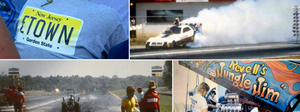
Memories of Englishtown
Remembering Steve Ambrose
-
Right back where we started from: Winternationals is back at No. 1
Meet Larry Wood: The man whose designs launched a million hot rod dreams
Can you imagine a toymaker designing your Top Fueler? 'Snake' and 'Mongoose' could
For the love of old drag racing photos
The ultimate Funny Car winners quiz
Still popular after all these years: Catching up with fan favorites Eddie and Ercie Hill
Eddie Hill, the early years
55 years ago, Don Garlits forever changed the look, feel, and future of Top Fuel racing
On a roll: A look at some all-time great NHRA Drag Racing success streaks
NHRA's Top 75 Moments: Bernstein, 'Big,' and Shirley reflect on making history
- ad
Funny Car set to turn 1,000: A look back at the milestone races along the way
Beyond the Top 75s ...
Wait ... Jim Head was in a 1960s surf band promoted by a drag racing legend? Yep.
More Martin memories
The Popular Hot Rodding Championships put U.S. 131 in the national spotlight
Friends we lost in 2025
Re-telling NHRA history: The 75th anniversary book and other special projects
It was John Force's world, and we were all thrilled to be living in it
The Joyce of Drag Racing Photography
Two legends: 'Big' and Bakersfield
- ad
When did we start doing that? Tracking some of the biggest changes in our sport
From 10-time dominators to one-time winners, a history of Indy Top Fuel champs
Legend to legend: Don Prudhomme on Don Garlits, Indy, and other great takes
NHRA Rookies of the Year: A look back at where some fabulous careers began
NHRA national event history: A look at the tracks and stories that drove the sport
NHRA national event history: A look at the tracks and stories that drove the sport
In my last column celebrating the Seattle national event, I mentioned its 42-year, five-decade run as among the longest of NHRA national event venues. A few of you called out on the accuracy of that stat, but even more asked for a true accounting of the long and wonderful longevity of some of NHRA’s most storied facilities, so here I am, calendar and abacus in hand to lay the proof down.
Hey, it’s what I do.
Anyway, here’s a look at the Top 10 most frequented national event venues in NHRA history.
POMONA (106 races)
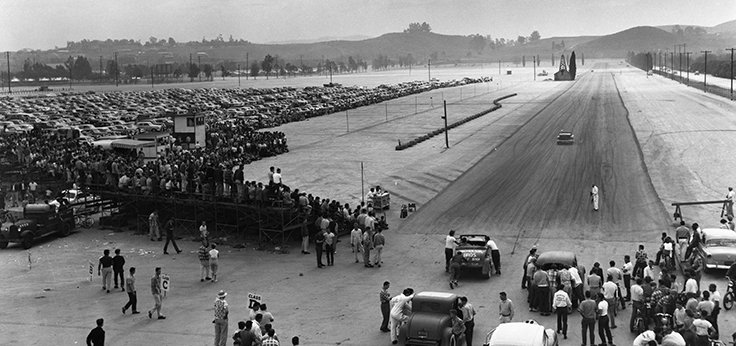
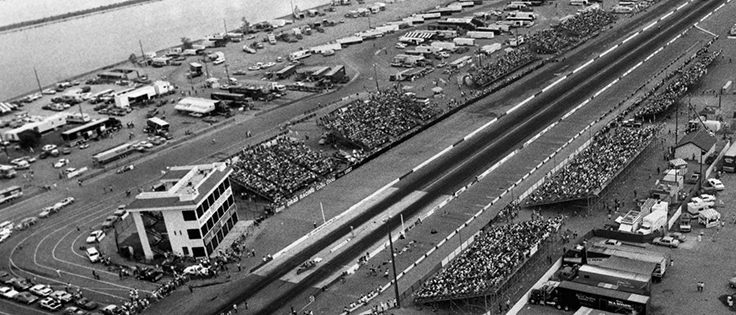
It should probably come as no surprise that Southern California’s grand old dame holds the No. 1 spot, having hosted the NHRA Winternationals since 1961 and the NHRA Finals since 1984. Visualized by the Choppers Car Club (which rebranded itself as the Pomona Valley Timing Association for a better look) and with the backing of Pomona police chief Ralph Parker and his emissary, Bud Coons, they brokered a deal with the Fairgrounds to pave an asphalt strip, eight-tenths of a mile long and 70 feet wide, down the western side of the Fairgrounds. The city paid for the paving out of its own pocket, with the agreement that the Choppers would repay the city out of the net profits realized by the operation of the strip. [Read more about Pomona's birth]
The site of the first NHRA-sanctioned event (April 1953) has hosted 65 straight Winternationals, including 2021’s COVID-19-delayed event that was moved to the end of July due to local health mandates and became part of a new-look Denver-Sonoma-Pomona Western Swing when Seattle was unable to host an event (more on that later). The 2021 event was the first time since the race’s inception that it did not kick off the season, as that position has gone to Gainesville Raceway the last five seasons.
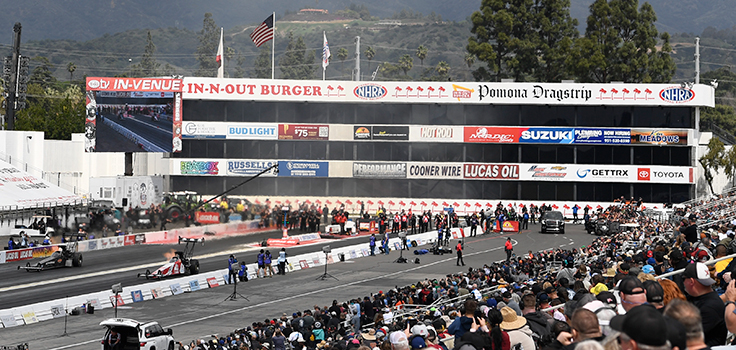
The World Finals had bounced around from Tulsa, Okla., to Dallas to Amarillo, Texas, to Ontario and then Orange County International Raceway before landing in Pomona after OCIR’s 1983 closing. The Finals were conducted every year in Pomona for the next 36 years until 2020, when COVID shut down the region and the Finals were held in Las Vegas, before returning to Pomona for the last four years, the last two branded as the In-N-Out Burger NHRA Finals at In-N-Out Burger Pomona Dragstrip.
The Pomona track also hosted the NHRA 50th Anniversary Nationals in the summer of 2001 during NHRA’s 50th anniversary celebration. Who knew that 20 years later we’d be running in Pomona again in the summer?
Some signature moments
- Don Prudhomme first career win (1965 Winternationals)
- Bill Jenkins wins first Pro Stock race (1970 Winternationals)
- Don Garlits first rear-engine dragster win (1971 Winternationals)
- Tony Schumacher and “the Run” (2006 Finals)
- Doug Kalitta wins Top Fuel championship in final round (2023 Finals)
INDY (69 races)
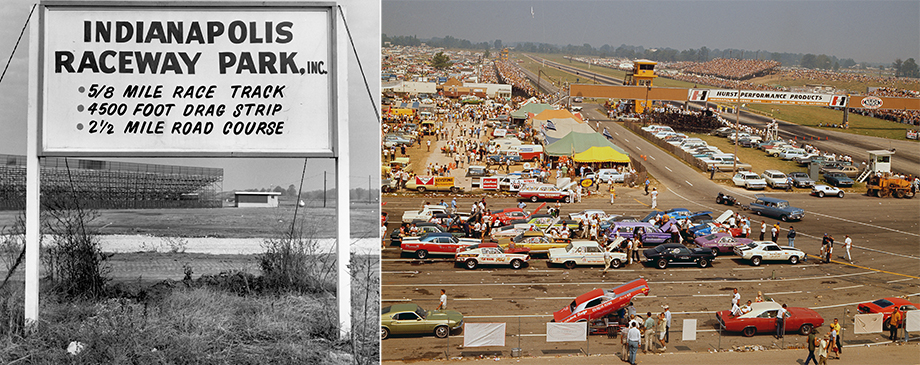
Like Pomona and the Winternationals, fabled Lucas Oil Indianapolis Raceway Park has hosted its signature event, the NHRA U.S. Nationals, since 1961 when the event found its permanent home after previous stops in Great Bend, Kan., Kansas City, Mo., Oklahoma City, Oka., and Detroit.
In 1958, Tom Binford, Frank Dickie, Roger Ward, and Howard Fieger each invested $5,000 to purchase a 267-acre farm about seven miles from the Indianapolis Motor Speedway. Construction was completed in the fall of 1960. As legend goes, during the 1960 Nationals in Detroit, a handshake agreement between Binford and NHRA founder Wally Parks under a tree in Detroit Dragway's pits promised that the event would move to the Indianapolis track in 1961 for at least three years.
That three-year initial pact became a lifelong association with the event that has continued without fail for more than 60 years. It will host its 65th U.S. Nationals in a few weeks to match the Winternationals total.
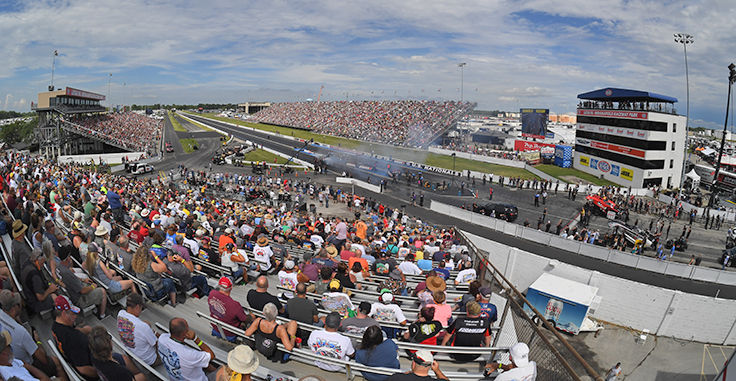
In 2020, after the NHRA season (and the world) stopped cold in March due to COVID, the Indy track hosted NHRA’s “Return to Racing” in mid-July with the E3 Spark Plugs NHRA Nationals, the first of three straight events at the NHRA-owned facility that allowed the sanctioning body complete control over everything from pre-entry temperature checks to crowd numbers to mandatory masking.
A week later, the track hosted the Lucas Oil NHRA Summernationals and then, a few weeks later, the Dodge NHRA Indy Nationals, which was held three weeks before the U.S. Nationals.
If you want to add SPORTSnationals events to the count (and I do), add two more races to include when the Sportsman-only affair was hosted in Indy in 1983 and 1984 before returning to its roots in Bowling Green, Ky., in 1985.
Some signature moments
- Don Garlits wins Top Fuel, then shaves (1967)
- Jim Nicoll crashes in Top Fuel final (1970)
- “Mongoose” beats “Snake” in Funny Car final (1978)
- Shirley beats Connie to win Top Fuel (1982)
- Ron Capps wins in "Snake” tribute Funny Car (2023)
GAINESVILLE (56 races)
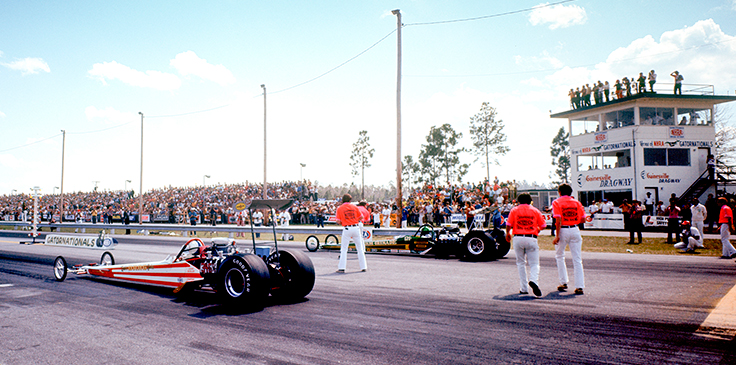
The one and only home of the fabled Gatornationals is Gainesville Raceway, where the race was born in 1970 and where history has repeatedly been stamped into the record books. Florida’s crown jewel dragstrip has undergone a lot of changes in the five decades since it opened on Dec. 7, 1968, 15 months before it first hosted the Gatornats. Built at a cost of $600,000 (more than $5.3 million in 2025 money), the 200-acre facility boasted a 5,000-foot-long dragstrip, and owner Jim Raulerson owned an additional 400 acres for future expansion.
The race was forever billed as “the East Coast opener,” always following the Winternationals on the schedule every year from 1970 through 1988. In 1989, NHRA inserted the Houston-based NHRA SuperNationals in the second slot for a year, then also moved the Phoenix event from the end of the schedule to the beginning, so that the 1990 season started with Pomona, Phoenix, Houston, and then Gainesville, and then NHRA flip-flopped Houston and Gainesville in 1996.
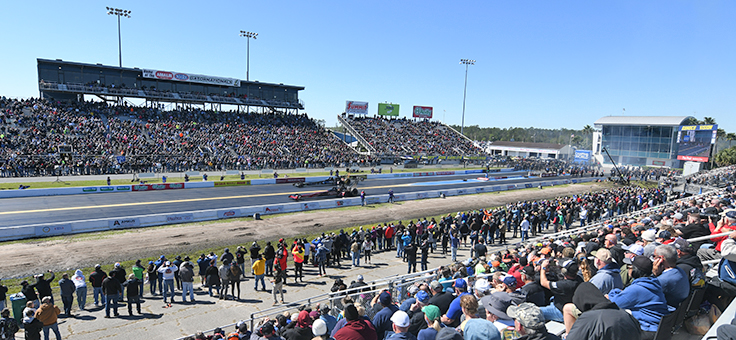
In 2001, Gainesville was still Race 3 (after Pomona and Phoenix), but it got rained on and didn’t complete until April. Somehow, the Gatornationals in April seemed very weird, but that was nothing compared to 2020, when the race was run in September due to COVID-19. Race teams had just shown up in Gainesville in March when COVID shut down everything, and it was many months before we put the Gatornationals in the books.
- Shirley Muldowney beats Don Garlits in Top Fuel final (1982)
- Joe Amato, Kenny Bernstein crash 260-mph barrier (1984)
- Darrell Gwynn’s final Top Fuel win (1990)
- Kenny Bernstein runs first 300-mph pass (1992)
- Hector Arana Jr. makes first 200-mph bike run (2018)
LAS VEGAS (53 events)
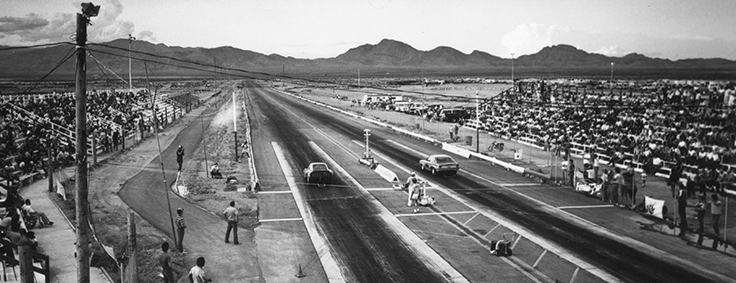
The relatively young Strip at Las Vegas Motor Speedway is high on the list because, like Pomona, it has hosted two races a year for the past 24 seasons. The Strip was "born" from the humble roots of the Las Vegas Speedrome dragstrip and road course in 1972. The large 1.5‑mile superspeedway we know today debuted in September 1996, following a major $72 million build. In 2000, the dragstrip was "relocated" and rebranded as “The Strip at Las Vegas Motor Speedway.”
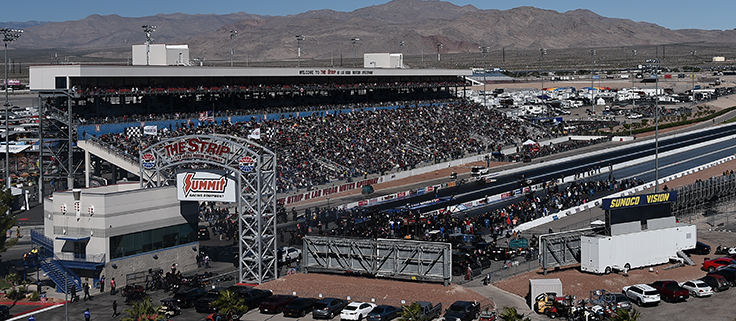
The Strip’s first national event was in the fall of 2000, and the spring race joined the lineup the following season. Four-wide competition at the spring race began in 2018, but there was no 2020 spring race due to COVID-19, and the fall race that year, dubbed the Dodge NHRA Finals, as previously mentioned, was the finale of that troubled season, marking the first time since 1974 that the season did not wrap in California.
The Strip has also hosted four SPORTSnationals events, in 2012, 2013, 2014, and 2020.
Some signature moments
- Kenny Bernstein wins Top Fuel, son Brandon takes TAD (2001 spring)
- Erica Enders wins race, Pro Stock Challenge (2014, 2015 spring)
- Cruz Pedregon’s top-end wheelie (2016 fall)
- Tanner Gray becomes the youngest NHRA Pro winner (2017 spring)
- Tony Stewart scores first NHRA win in TAD (2023 fall)
ENGLISHTOWN (48 races)
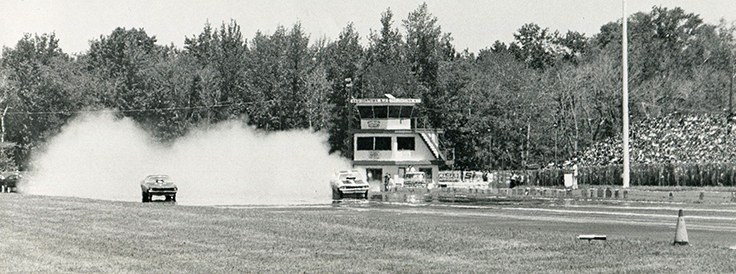
Old Bridge Township Raceway Park (nee Madison Township Raceway Park) opened in July 1965, built by brothers Vinny and Louis Napp on a former farm in Madison Township, N.J.
Although colloquially known as Englishtown or, simply, E-Town, to racers and fans, the track was not even located in the city of Englishtown, N.J., yet had an Englishtown mailing address because that post office was closer than the Madison Township annex. After a 1975 voter referendum changed Madison Township to Old Bridge Township (to avoid confusion with another New Jersey town named Madison), the track followed suit in renaming itself sometime in the 1980s.
The track, of course, is most closely associated with the always-sweltering NHRA Summernationals, which it began hosting in 1971, but that event was neither the first Summernationals (York U.S. 30 Dragway in York, Pa., first hosted the event in 1969 and 1970) nor its first national event (it hosted the NHRA Springnationals in 1968 after it moved from Bristol).
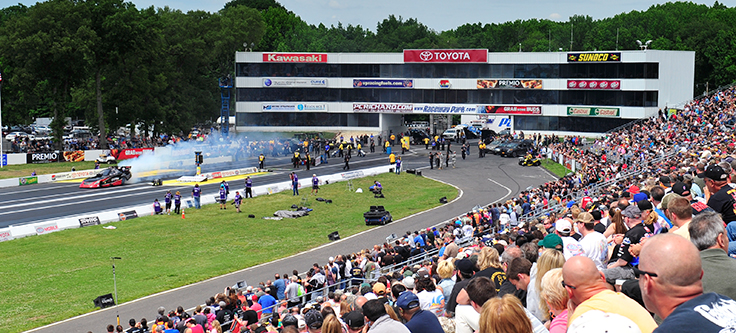
The Summernationals name remained in action until 1992, when it was moved to more hospitable climes in May, which meant that it leapfrogged ahead of the Columbus, Ohio-based Springnationals on the calendar, and, well, we just can’t have summer before spring, right?
The event became the NHRA Mopar Parts Nationals and stayed that way until 2000, when Matco took over sponsorship of the E-Town event. At that point, the race became the NHRA Matco Spring SuperNationals (because Matco already sponsored the late-year event named SuperNationals in Houston).
The Topeka event took over the Summer Nationals name in 2002 then rebranded it as the NHRA Kansas Nationals for 1993, and the Napp family wasted no time immediately reclaiming the name for its 2013 event, and all was well and right again in the NHRA universe until the facility got out of the drag racing business and into the car-storage business in early 2018, breaking hearts up and down the Jersey Shore and, indeed, across the NHRA universe.
Some signature moments
- Eighteen-year-old Jeb Allen becomes the youngest Top Fuel winner (1972)
- “Jungle Jim” Liberman’s lone Funny Car win (1975)
- Mark Oswald betters Don Garlits’ 1975-record e.t. of 5.63 (1982)
- Don Garlits' blowover wheelstand (1986)
- Kenji Okazaki becomes NHRA's first Japanese winner (1997)
DENVER (44 events)
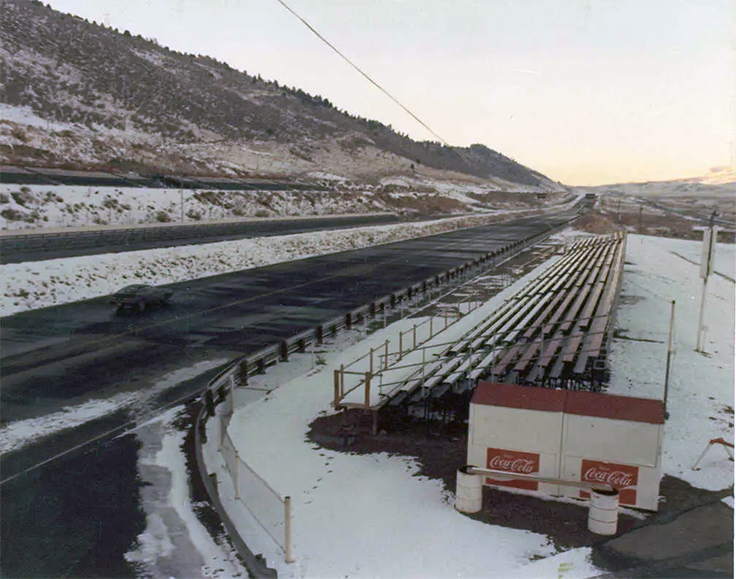
In 1957, John Bandimere Sr. found property along the Hogback ridge near Denver to build a track intended as the “Safety Proving Grounds of America.” The eponymous result — Bandimere Speedway — opened in 1958 and became an NHRA member track in 1968. Nearly a decade later, in 1978, the track hosted the NHRA Mile-High SPORTSnationals, an event to gauge spectator interest in the area. The very religious Bandimere family insisted on a Saturday finish. It must have done well because a year later, the Mile-High Nationals were born.
Although it’s no longer on the NHRA schedule, having closed and been sold in 2023, Bandimere Speedway in Morrison, Colo., located less than 20 miles from downtown Denver, holds a special place in NHRA annals. Other than Indy, Pomona, and Seattle, it’s the only other track to hold races in six different decades (1970s-2020s). Located at 5,817 feet of altitude, the Mile-High Nationals was an appropriate name for an event whose scenery and design were as breathtaking as the thin altitude.
Everything was swell for the first decade, so swell that the family decided to upgrade the facility, to the tune of approximately $4.2 million, in an overhaul that was so extensive that the 1988 event was canceled.
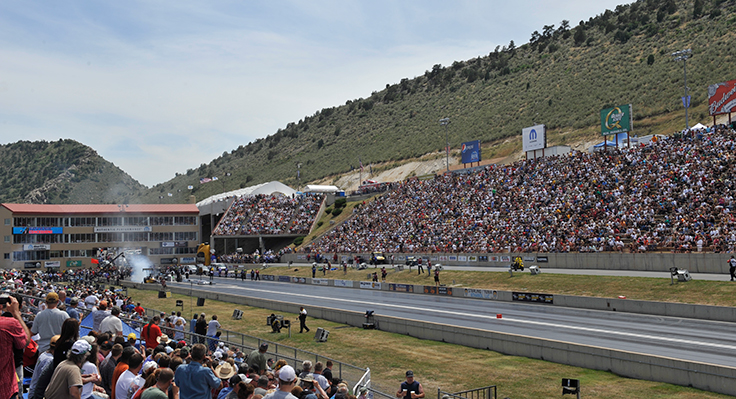
When it returned to the tour the following year, it was the first leg in the new and grueling Western Swing that, after leaving the Rocky Mountain high, headed west to Seattle and Sonoma.
The family continued to upgrade the track, adding a Top Eliminator Club in 1994, and not only upgraded to an all-concrete racing surface in 2008 but also embedded the first-ever track cooling system under the launch pad that was extended to 300 feet in 2014.
Although the race remained a fan favorite and an always-intriguing puzzle for the tuners, surrounding home development began to crowd the facility, and the land was reluctantly sold after the 2023 season to vehicle auction company Copart. The Bandimere family recently acquired 114 acres near Hudson, Colo., for a new multi-use motorsports facility. Construction hasn't started yet, and no firm timeline is available, but it would be a welcome return to a wonderful tradition.
Some signature moments
- Randy Humphrey ends Bob Glidden's winning streak (1979)
- Lori Johns makes first mile-high four-second run (1991)
- John Force makes first mile-high 300-mph pass (1998)
- Allen Johnson wins Pro Stock seven of 10 years (2007-16)
- Site of the first live NHRA on FOX broadcast (2016)
BRAINERD (42 events)
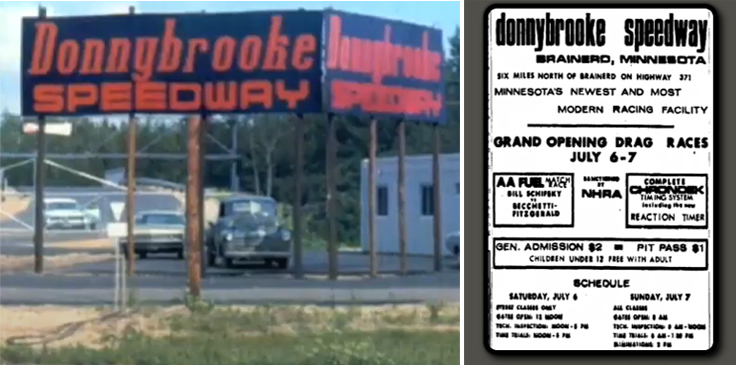
The track we know now as Brainerd International Raceway was created in 1968 when George Montgomery carved a three-mile racetrack through a wooded area on the south side of North Long Lake in northern Minnesota and dubbed it Donnybrooke Speedway, in honor of local road racers Don Skogmo and Brooke Kinnard, who had been killed in separate racing accidents at Road America near Elkhart Lake, Wisc. Donneybrooke first hosted just road racing, then added drag racing in 1969. It was renamed Brainerd International Raceway in 1973 by new owner Jerry Hansen.
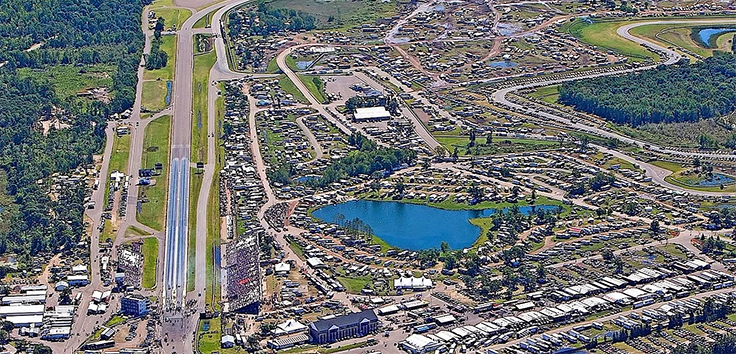
Major improvements were made in the early 1980s — ownership acquired the bleachers, suites, and concessions from Met Stadium in Bloomington (longtime home of the NFL’s Minnesota Vikings and MLB’s Minnesota Twins) when it was torn down in 1981 — and in 1982, the track hosted the first NHRA Quaker State NorthStar Nationals. Donald J. Williamson, often referred to as “The Colonel,” bought the track in 1994, and briefly sponsored it through his Colonel’s Truck Accessories brand before Lucas Oil took over for its long and continuing sponsorship in 2003. The track, favored by fans for its raucous camping area known as “the Zoo,” is now owned by the Copham family, who bought the track in 2006, saving it from possible redevelopment.
Like many tracks, it did not host a 2020 edition due to COVID-19, but it returned in 2021 and will celebrate its 43rd running in two weeks.
Some signature moments
- Shirley Muldowney beats Gary Beck in first Top Fuel final (1982)
- Future Pro Stock star Jason Line wins in Stock (1992)
- Edmond Richardson Stock/Super Comp double (1999)
- Site of Eric Medlen’s first Funny Car win (2004)
- Bob Bode wins first and only Funny Car Wally (2010)
SEATTLE (42 events)
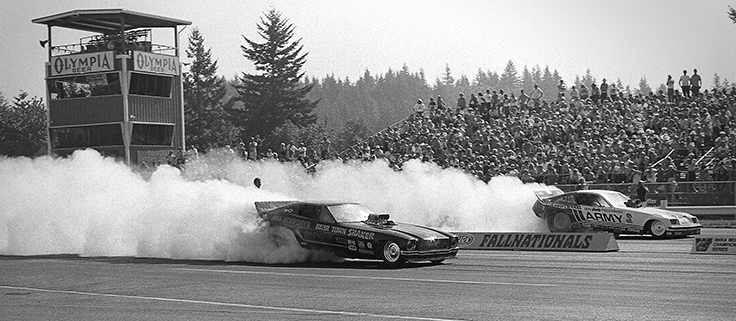
Built in 1959 by the Fiorito family and opened in 1960, the track now known as Pacific Raceways started life as Kent Pacific Raceways (as it's located in Kent, Wash.), then became Seattle International Raceway in 1969, and blossomed under the ownership of renowned promoter Bill Doner and then Jim Rockstad.
The facility, which also houses a 2.25-mile road course, hosted significant USAC, Trans Am, and SCCA events and was a hub of Northwest racing for decades. It landed its first NHRA national event, the NHRA Fallnationals, in 1975. The often-weather-challenged event, which held a pivotal spot on the schedule as the season's second-to-last event, lasted until 1980.
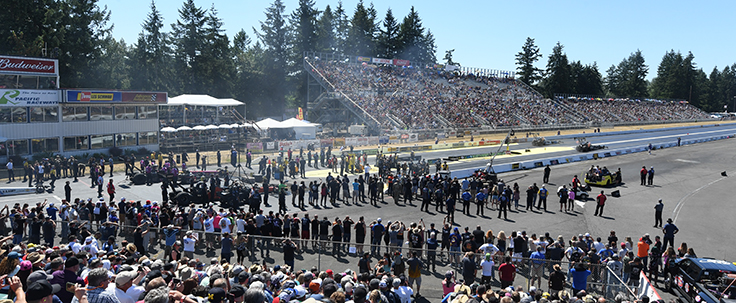
The track returned to the NHRA schedule in 1988 as the NHRA Seafair Nationals as part of the area's vast Seafair celebration that also included the famed hydroplane boat races on nearby Lake Washington.
The Fiorito family regained control of the track in 2002 when the previous leases expired, and the first thing they did was return to the track's name of Pacific Raceways (minus the Kent part). The track became a key cog in the three-race Western Swing, alternating between being the second and third stops after Denver.
Racing was contested every year up through 2019, but was paused for the 2020 and 2021 seasons due to COVID, and resumed in 2022.
Some signature moments
- Joe Amato first to sweep Western Swing (1991)
- Michael Brotherton wins Top Fuel after qualifying crash (1992)
- Ron Capps scores first career win in Top Fuel (1995)
- Siblings Shelly and Randy Anderson both win (1996)
- John Force scores 150th career win
DALLAS (42 events)
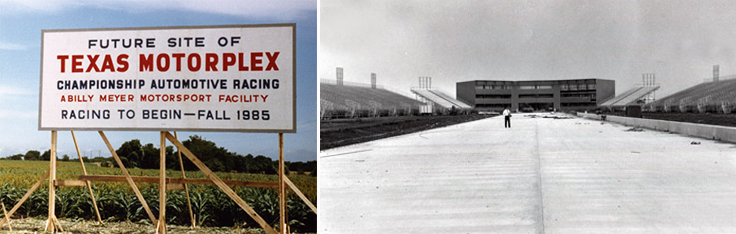
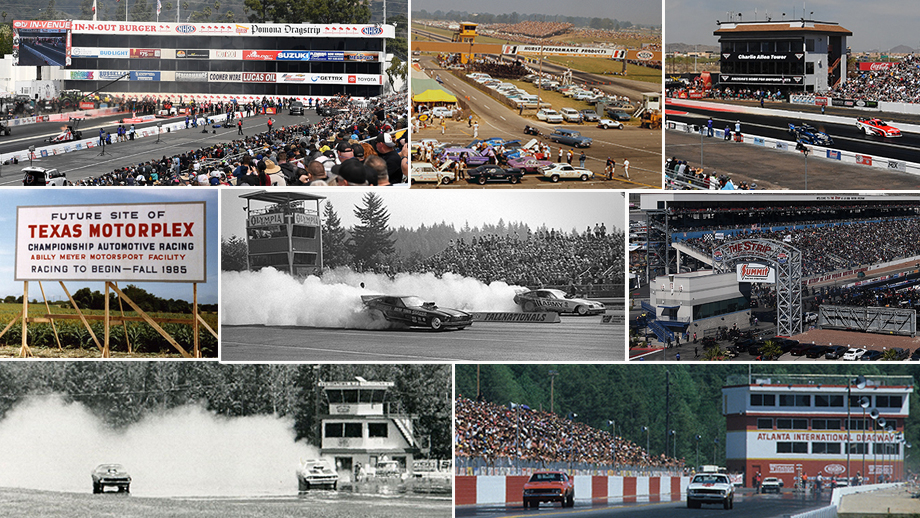
Built by Funny Car racer Billy Meyer in Ennis, Texas, in 1986 as the first modern all-concrete quarter-mile and a blueprint for every future “supertrack” [Read the origin story here]. Texas Motorplex has hosted a fall NHRA event every year since 1986, with the exception of 1988, when it was an IHRA track when Meyer bought IHRA. (At NHRA National Dragster, we were allowed to refer to it only as "a track outside of Dallas" in reporting on Eddie Hill's barrier-breaking four-second run at that event).
Originally known as the NHRA Chief Auto Parts Nationals at its 1986 NHRA debut, the fall event went through some other branded names until 1999, when it became the FallNationals, a name that remains today.
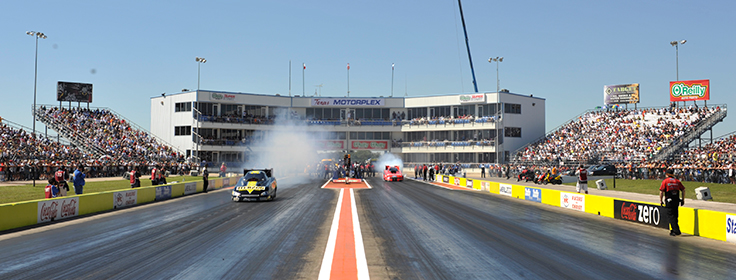
The track also hosted a spring event (the NHRA Lonestar Nationals) for four years (1997-2000), making it one of the few tracks to host two events in the same season.
Prior to the Motorplex, the Dallas area hosted the NHRA Springnationals (1969-71) and the NHRA World Finals (19689 and 1970) at Dallas International Motor Speedway in Lewisville, Texas, about 60 miles away from the Motorplex, but we’re not counting those five races here.
Some signature moments
- Site of Bob Glidden’s milestone 50th win (1986)
- Eddie Hill's first four-second run (1988 IHRA event)
- Wild Funny Car final between Cruz Pedregon and John Force (1992)
- Site of Don Prudhomme’s 49th and final win (1994)
- Bob Vandergriff Jr. wins Top Fuel after 13 runner-ups (2011)
PHOENIX (40 events)
When the late, great Orange County International Raceway was forced to close at the end of the 1983 season, after three years hosting the NHRA World Finals, owner Charlie Allen took that template east to Chandler, Ariz., just outside of Phoenix, and built his new dream track in 1984 and christened it as Firebird International Raceway.
The track got its first national event the following year, when it became the NHRA Fallnationals and, like its Seattle-based predecessor of the late 1970s, was scheduled as the second-to-last race of the season.
The race was moved to the second race of the season in 1990 and branded as the NHRA Arizona Nationals for two years until a series of branded sponsorships (Motorcraft-Ford, Ford Quality Care, ATSCO, Checker Schucks Kragen, and Lucas Oil Slick Mist) took over.
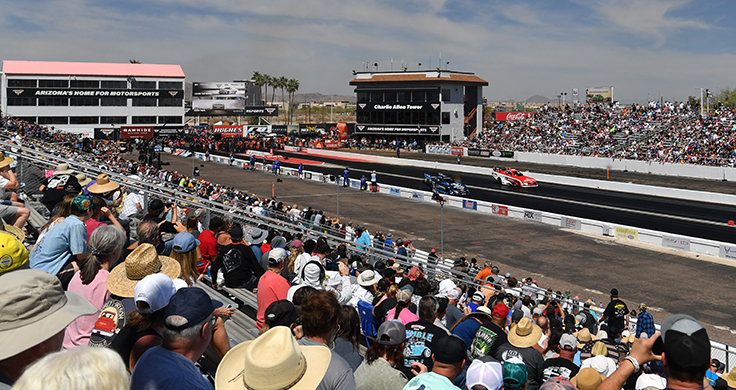
The track also hosted an important pre-season test session ahead of the Winternationals.
Allen lost the lease to the track in 2013, and the track was rebranded as Wild Horse Pass Motorsports Park by the lease holder, the Gila River Indian Community.
The race became the Arizona Nationals again in 2020, and it was, in fact, the last event completed that year before the COVID shutdown. The 2021 event was canceled, and though the track appeared to be threatened by highway development after the 2023 event, it was saved by the Gila River Indian Community officials after an outpouring of support from the NHRA community and was renamed Firebird Motorsports Park.
Some signature moments
- Shirley Muldowney’s final Top Fuel win (1989)
- Pat Austin’s Top Fuel/Alcohol Funny Car double (1992)
- For that matter, the entire race (1992)
- John Force won the event seven of eight years (1994-2001)
- Tony Schumacher breaks 330-mph barrier (1999)
ATLANTA (40 events)
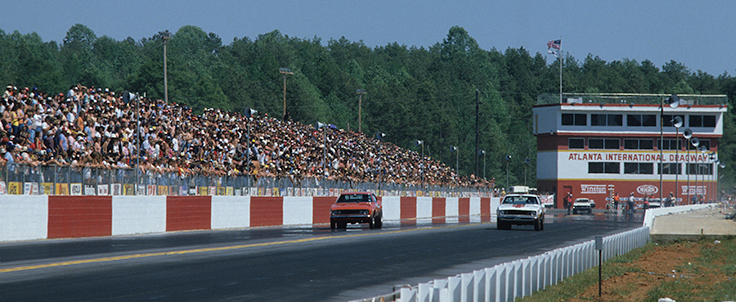
When the NHRA Southern Nationals debuted on the NHRA national event schedule at Atlanta International Dragway (later shortened to just Atlanta Dragway) in 1981, the cute promo tagline was “It’s gonna be a peach, y’all,” and for 40 years, it was.
Atlanta Dragway (actually located on the outskirts of Commerce, Ga., more than an hour north of Atlanta proper) was built in 1975 by Gene Bennett on graded red clay property that originally was intended to be an airport. When the track opened, it actually used the airport’s timing tower as its control tower.
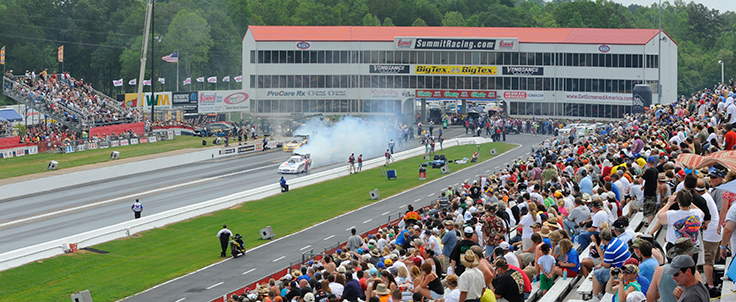
It was later acquired by infamous promoter Norman “Moose” Pearah in 1980 and became an NHRA-sanctioned track, hosting the NHRA Southern Nationals annually starting in 1981. Pro Stock driver Gary Brown led a consortium that purchased the track in 1987 and did some massive upgrades, incuding the now-mandatory VIP tower behind the starting line, and even rebranding the track as “the new Atlanta Dragway.”
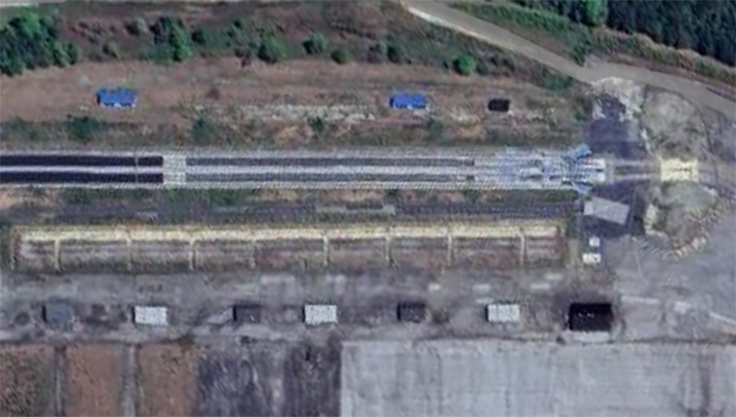
The track was purchased by the NHRA in 1993 and hosted its final Southern Nationals in 2021 before NHRA sold the property. The new owners demolished the track-spanning tower and the bleachers (above), but little other redevelopment work has taken place despite numerous announcements for business and mixed-use developments.
- Lucille Lee becomes the second female Top Fuel winner (1982)
- Former NFL quarterback Dan Pastorini wins Top Fuel (1986)
- Del Worsham becomes the youngest FC winner (1991)
- Ashley Force becomes the first female Funny Car winner (2008)
- Doug Kalitta wins dead-heat (.0000-second) Top Fuel final (2016)
So, there you have it, a look at the history of national events at some of NHRA's oldest and greatest dragstrips and stories that no doubt brought back instantaneous memories to those of you fortunate enough to have visited any one of them. Thanks for playing along.
Phil Burgess can be reached at pburgess@nhra.com
Hundreds of more articles like this can be found in the DRAGSTER INSIDER COLUMN ARCHIVE
Or try the Random Dragster Insider story generator