

Don Garlits and Darrell Gwynn; their lives in words and photos in new books

Random ramblings and rumblings, the sequel
Random ramblings and rumblings
Memories of Englishtown
Remembering Steve Ambrose
-
Right back where we started from: Winternationals is back at No. 1
Meet Larry Wood: The man whose designs launched a million hot rod dreams
Can you imagine a toymaker designing your Top Fueler? 'Snake' and 'Mongoose' could
For the love of old drag racing photos
The ultimate Funny Car winners quiz
Still popular after all these years: Catching up with fan favorites Eddie and Ercie Hill
Eddie Hill, the early years
55 years ago, Don Garlits forever changed the look, feel, and future of Top Fuel racing
On a roll: A look at some all-time great NHRA Drag Racing success streaks
NHRA's Top 75 Moments: Bernstein, 'Big,' and Shirley reflect on making history
- ad
Funny Car set to turn 1,000: A look back at the milestone races along the way
Beyond the Top 75s ...
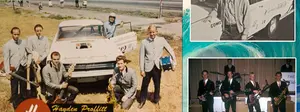
Wait ... Jim Head was in a 1960s surf band promoted by a drag racing legend? Yep.
More Martin memories
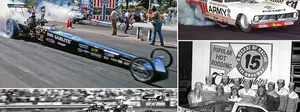
The Popular Hot Rodding Championships put U.S. 131 in the national spotlight
Friends we lost in 2025
Re-telling NHRA history: The 75th anniversary book and other special projects
It was John Force's world, and we were all thrilled to be living in it
The Joyce of Drag Racing Photography
Two legends: 'Big' and Bakersfield
- ad
When did we start doing that? Tracking some of the biggest changes in our sport
From 10-time dominators to one-time winners, a history of Indy Top Fuel champs
Legend to legend: Don Prudhomme on Don Garlits, Indy, and other great takes
NHRA Rookies of the Year: A look back at where some fabulous careers began
NHRA national event history: A look at the tracks and stories that drove the sport
When did we start doing that? Tracking some of the biggest changes in our sport
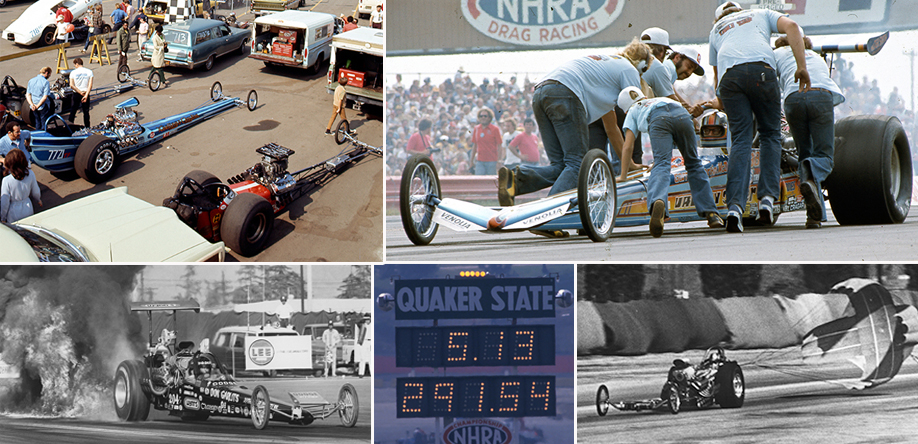
As NHRA approaches its 75th anniversary next season, it’s easy to forget that the many, many things that we take for granted in today’s highly refined events — timing systems, safety rules, points scoring, track layout, and so much more — are all well-realized products of someone’s plans and dreams.
Those of you who regularly pull up a barstool at this watering hole to listen to this humble barkeep weave the stories of our shared love of the sport know that my passion for this stuff runs long and deep, but as NHRA’s de facto historian, I’ve more deeply immersed myself the last two years to trace the smoking tire tracks that bring us to today’s world.
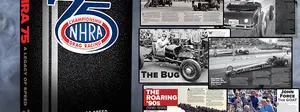
There is, as I’ve previously mentioned here, a forthcoming coffee-table-style book I’ve authored tracing the NHRA’s first 75 years, and there will be a companion website and much more to dig your teeth into in the coming months, and as I’ve been doing these deep dives into quarter-mile minutiae, I’ve been taking copious notes of NHRA firsts over the years.
I started compiling a list a few years ago, when “Fast Jack” Beckman, as good an historian as he is a Funny Car driver, would ask me things like “When did we shorten the speed traps?” or “When did we bring back points-and-a-half at Indy?”
So I thought that it would be a fun column and maybe help you win some wagers with your pals the next time you sit around the campfire and begin bench racing. It’s not a complete list of everything that ever changed, just some cool highlights. Some things have been around longer than you might have thought.
START TO FINISH
First Christmas Tree (1963)
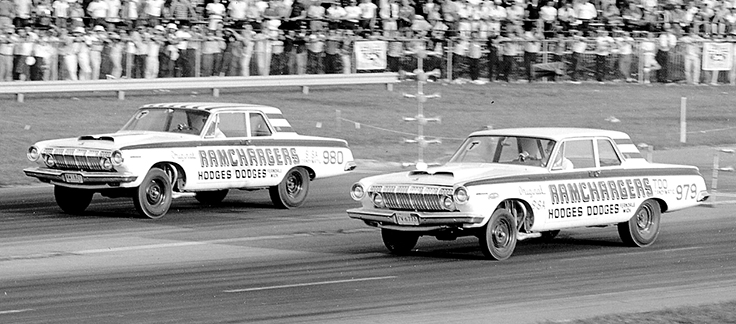
Most people already know this, but here we go again. The first use of a Christmas Tree to replace the traditional flag starter was at the 1963 NHRA Nationals in Indy. The pre-stage and stage lights and beams were introduced at the 1964 NHRA Winternationals, although they weren’t on the Tree itself, but rather positioned on the starting line itself.
First Pro start (1970)
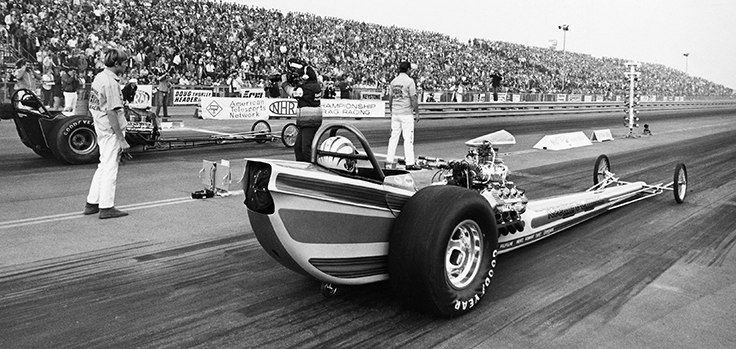
For the first seven years, every race started with a five-bulb countdown Tree, but NHRA started considering a new method after a rash of red-lights by Pro-class drivers. At the 1970 season-ending NHRA Supernationals at Ontario Motor Speedway, drivers in Top Fuel, Funny Car, Pro Stock, and Top Gas got only one bulb (the fifth and final amber) before the green.
True-speed readings (1971)
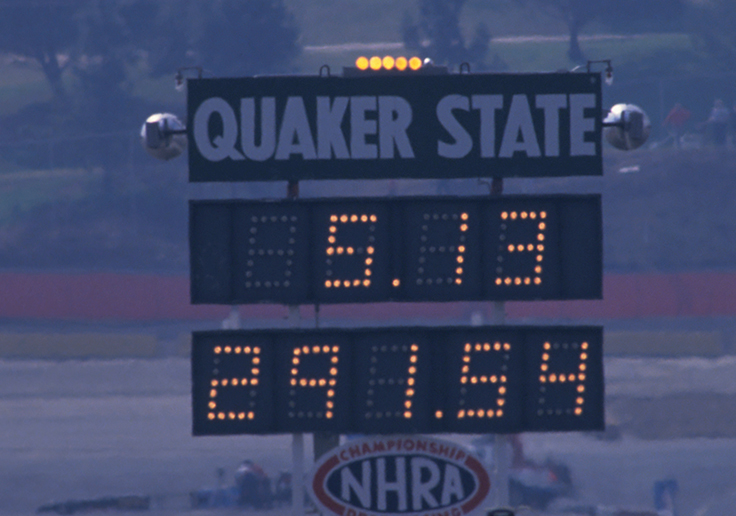
Chrondek introduced its latest timing equipment at the 1971 Winternationals. A built-in computer displayed the speed automatically to the tower announcers, eliminating printed conversion charts to which the announcers had to refer to glean speed based on the amount of time it took to cover the speed trap.
Correction factors introduced (1971)
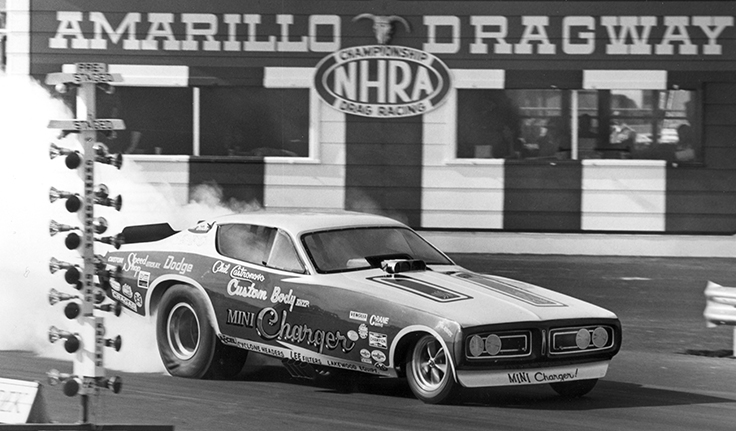
A correction factor was used for the first time in NHRA national event history during the running of the NHRA World Finals at the 3,700-foot Amarillo Dragway that would convert the performances to their sea-level equivalent for national record purposes.
True-win light on scoreboards (1981)
The win light on the finish line scoreboards became a “true-win” indicator, indicating to spectators if a driver red-lighted or broke out, debuted at the Winternationals.
Three amber Tree (1986)
The Tree was later shortened to three ambers at the NHRA Winternationals. This is the version of the Tree still in use today.
LED lights on Tree (2003)
The traditional incandescent lights on the Tree were prone to burnout and even breakage caused by the violence of the nitro cars, with officials changing an average of 20 bulbs per event. They were replaced by longer-lasting and more hearty LED bulbs at the 2003 Winternationals.
New pre-stage, stage indicators (2011)
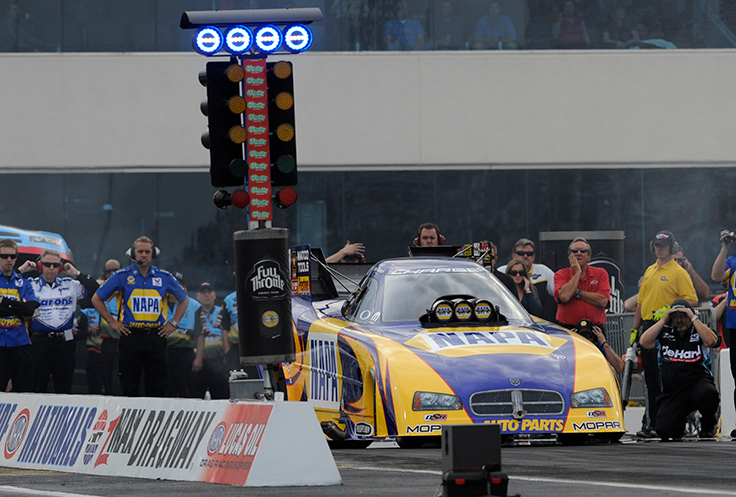
The Tree remained basically unchanged until the smaller yellow incandescent pre-stage and stage bulbs were replaced in 2011 with the current scheme of two semicircles comprising smaller blue LED lights, with the top half illuminated when pre-staging is complete and the bottom half when a car is fully staged.
.000-base reaction times (2003)
At the same time as the switch to the LED bulbs, the reaction-time base was changed from .400 to .000. The Tree still fired off at four-tenths of a second between final yellow and green, but where a .400 was a perfect reaction time, it now became .000. Red-lights, which previously were registered as simply .399 or lower, now got a negative number (such as -.001) to show the egregiousness of the foul.
Interval timing debuts (1988)
NHRA’s newly upgraded timing system sported some popular additions to kick off the 1988 season, providing for the first time not only elapsed time, speed, and reaction time, but 60-foot, 330-foot, and 660-foot clockings. Over the years, NHRA has added half-track speed and 1,000-foot timers.
Speed traps shortened (1989)
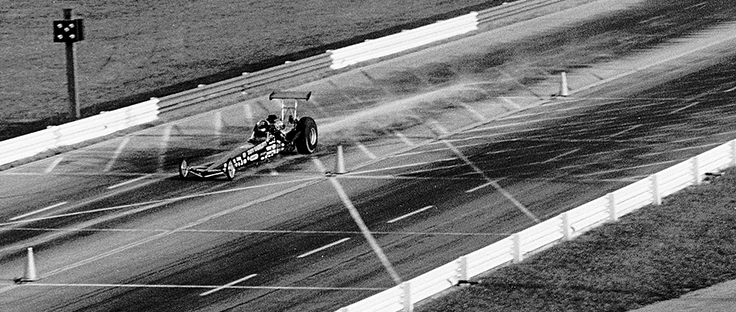
As speeds began to escalate towards the 300-mph mark, it became clear that some tracks that were built in the 1950s and 1960s, when even 250 mph was a dream, would be running out of shutdown space. Although the elapsed time clocks had always stopped at the finish line, for years, the speed traps were 132 feet long, starting 66 feet before the finish line and ending 66 feet after the finish line. To get a big speed, drivers would run it “out the back door,” still under power well past the finish line. Beginning with the Winternationals, NHRA shortened the trap in 1989 to where it now ends at the finish line, 66 feet after it began.
1,000-foot race distance (2008)
After the tragic death of Scott Kalitta at the 2008 Englishtown event, NHRA shortened the course for Top Fuel and Funny Cars from the traditional 1,320 feet to 1,000 feet beginning at the NHRA Mile-High Nationals.
SCORING POINTS
First world champ (1960)
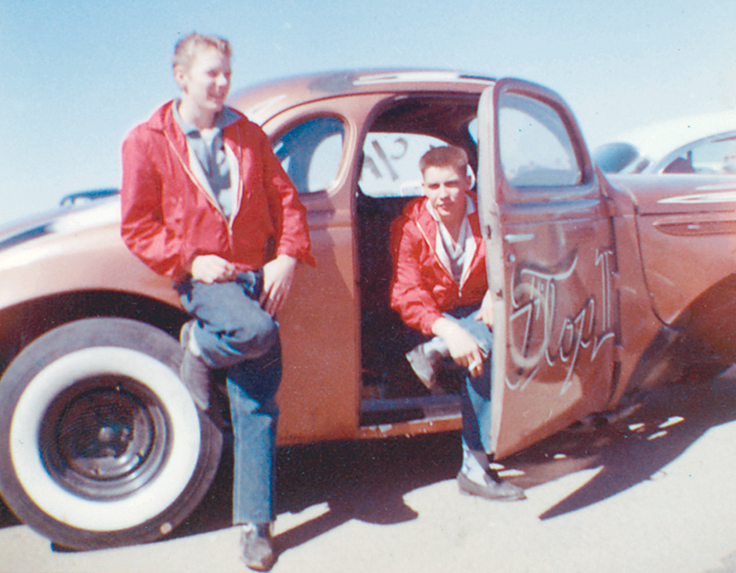
NHRA crowned its first world champion, Buddy Garner of Hobbs, N.M. The title was determined by the participant who achieved the most wins during the 26-week season. (For a complete history of how NHRA world champions have been crowned over the decades, see this article.)
World Finals qualifying (1971)
NHRA created an East/West conference structure in 1971. Divisions 1, 2, and 3 were in the Eastern conference; the remaining four divisions made up the Western conference. The top 16 points earners in each conference automatically qualified for the NHRA World Finals. The winners of the World Finals were the world champions. Prior to that, the 16-car fields for the World Finals were composed of the seven division champs, with nine spots open for qualifying among the 28 drivers who finished in the top five of each division.
Divisional points (1963)
NHRA announced the formation of a divisional points program, similar to today's NHRA Lucas Oil Drag Racing Series. Seven events were contested in each of NHRA's seven geographic divisions. Competitors who took part in the divisional series had to be registered with NHRA at a cost of $3.
National event points only (1985)
Prior to 1985, Pro drivers earned points toward a world championship at a combination of national and divisional events. In 1984, for example, racers could choose between counting points at any 10 of 12 national events on the schedule or at nine events (one of which had to be the World Finals) and the two half-points “pro bonus” events, the Popular Hot Rodding Championships at U.S. 131 Dragway in Martin, Mich., and the Super Stock Nationals at Maple Grove Raceway. The 1985 season was the first to determine championships based only on national event results.
Waive goodbye (1992)
NHRA got rid of the much-maligned waiver system for Sportsman drivers that allowed them to waive their points at a certain amount of events.
Points scoring changed (1995)
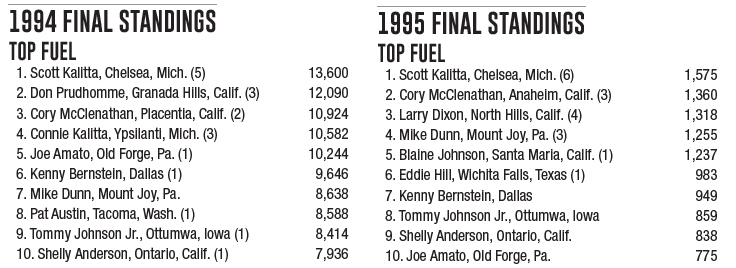
For years, a round-win at the Pro level was worth 200 points. Starting in 1995, NHRA dropped the final zero, and it became just 20 points. Scott Kalitta won the 1994 championship with 13,600 points and the 1995 crown with 1,575 points.
Qualifying-session bonus points (2010)
NHRA began awarding three points to the quickest driver in each qualifying session, two points to second-quickest, and one point to third-quickest.
Points and a half in Indy returns (2015)
For years, drivers scored 1.5x the normal points at the NHRA U.S. Nationals, conveying its importance (and also factoring in Top Fuel’s 32-car field). The practice was halted in 1988, then returned in 2015 and is still in place today in Indy as well as at the season-ending Finals.
The Wally (1969)
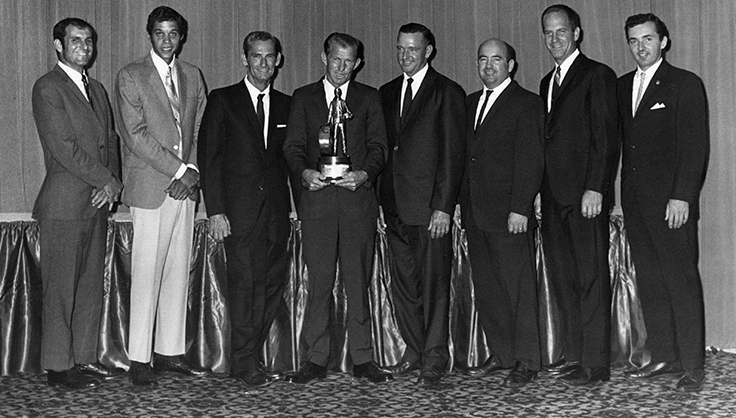
NHRA handed out the first “Wally” trophies — imagined and designed by NHRA founder Wally Parks and brought to life by the American Dragway Trophy Company of Chicago — at the 1969 Nationals in Indy. The event winners initially got the traditional old trophy in the winner’s circle, and the new trophy was handed out at the annual post-event banquet, with the first recipients being Top Fuel winner Don Prudhomme and the winners of the 14 previous Top Eliminator/Top Fuel titles at the Nationals dating back to the Great Bend, Kan., event in 1955, where Calvin Rice, pictured here holding the trophy, was the first Nationals champion.
QUALIFYING CHANGES
Unlimited qualifying runs end (1978)
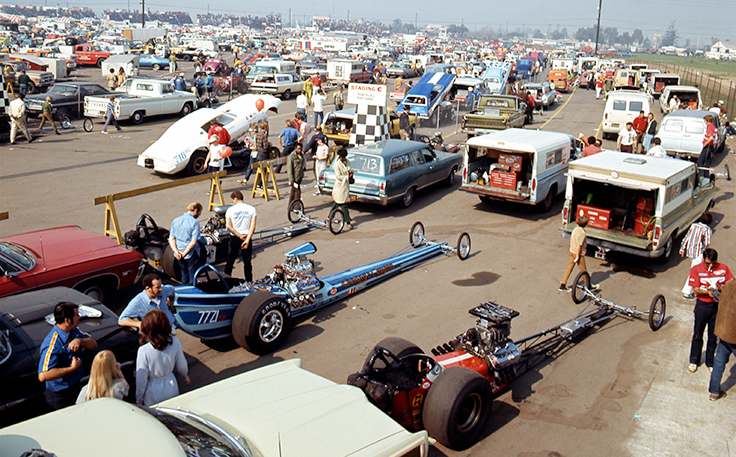
The longstanding “all you can eat” method of qualifying for Pro cars — which allowed them to make as many runs per day as time allowed — ended at the close of the 1977 season due to growing car counts. Although we weren’t yet to the point of defined qualifying sessions as we know them today, and drivers could still make unlimited runs on Thursday, after that, teams were allowed just two runs per day between 8 a.m. and 5 p.m.
Qualifying sessions begin (1980)
As monumental as this procedural change is, it took a surprising amount of research and consultation to narrow it down. Once NHRA got rid of unlimited runs, it followed suit behind AHRA and IHRA in creating time-specific sessions for the benefit of fans, officials, safety workers, and sanity.
According to fellow historian Bret Kepner, “The IHRA began two sessions per day in 1978, but the AHRA actually began a specific professional qualifying period, (8 p.m. on Friday and Saturday nights with unlimited runs until 11 p.m.), beginning in 1967. Teams were also allowed to make runs during the day, but the booked-in drivers were mandated to run at least once during the night sessions from 1967 through 1984.”
Fans at match races always knew when the nitro cars were going to run, but because of the unlimited runs rule, national event fans never did. You could be out in the pits and suddenly hear nitro cars fire on the track. Not very fan-friendly.
Although I could find mentions of “anticipated sessions” due to weather/temperature (nighttime in Denver and Englishtown), it looks like the 1980 U.S. Nationals was the first to get tightly regimented Pro sessions.
Thursday was 9 a.m. and 2 p.m., Friday was 1:30 p.m., and Saturday was 10:30 a.m. and 3 p.m. Top Fuel got one qualifying run Sunday at 11 a.m., followed by the first round late that day at 3 p.m. (because it was a 32-car field), while Funny Car and Pro Stock got sessions at 11:30 a.m. and 4:30 p.m.
It was such a success that it was also part of the World Finals program before becoming the norm starting in 1981.
Last 32-car Indy Top Fuel field (1980)
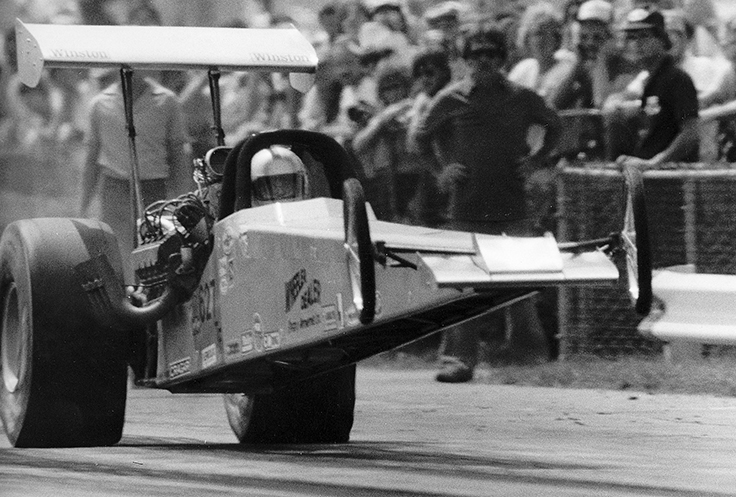
Interestingly, those 1980 U.S. Nationals were the last 32-car field in Indy. Terry Capp won the race. The bump spot, held by Junior Kaiser, was 6.603. The No.16 qualifier was Chris Karamesines at 5.923, a run that would have been 13th alternate in 1981’s 16-car field, which was won by Johnny Abbott.
16-car Top Fuel fields all races (1986)
For years, a number of lesser-drawing national events — including Baton Rouge, La., Montreal, Denver, and even Atlanta — sported just eight-car fields. Top Fuel’s mid-1980s resurrection of the class, buoyed by the return of Don Garlits, increased interest in the class and all 14 races of the 1986 season featured 16-car fields.
Defending event champs not seeded (1975)
As hard as it is to fathom, NHRA still had NASCAR-like provisionals through 1975, where the defending event champ was assured a spot in the field regardless of performance.
No more engine sharing (1995)
To combat what had become a somewhat common practice of sharing of engines in qualifying, NHRA developed a rule to prevent Pro Stock racers from using an engine that had been used in another car at the event.
No more alternates (1996)
NHRA announced that drivers outside of the 16-car qualified fields in the four Pro categories at national events would now be considered non-qualifiers instead of “alternates” to prevent qualifiers from selling their spots to those alternates.
NATIONAL RECORDS
Pro records at national events (1973)
Prior to 1973, drivers in Top Fuel, Funny Car, Pro Stock, and Top Gas could only set national records at divisional events or national opens.
More record changes (2016)
For years, drivers who set a national record got bonus points (200, then 20 with the scoring change), and it often impacted championship outcomes, most famously Tony Schumacher’s “The Run” in 2006. That changed in 2016, from which time no points were awarded.
NHRA also did away with the required 1% backup rule that had been in place for decades as a hedge against questionable e.t.s and speeds. The reasons for the change was probably two-fold: First, timing systems, while still fallible, were much more reliable. Second, there arose the possibility of confusion among the general public.
For example, there was a real possibility that Schumacher and Alan Johnson might not have been world champions on “The Run.” Allow me to explain:
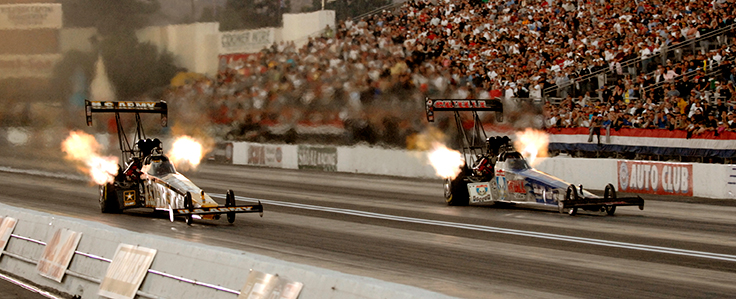
Doug Kalitta lost in the semifinals but had the points lead by nearly two rounds. To pass him, Schumacher needed to win the final round and break his own 4.437 national record to earn the bonus points to overtake Kalitta.
Schumacher had already made a 4.458-second in qualifying that could serve as the 1% backup requirement for the record, but they had to run quicker than 4.437 record but not faster than 4.414, which would be too quick for the 4.458 to serve as the record backup. In drag racing’s equivalent of a walk-off home run, Johnson tuned Schumacher’s Army dragster right into that narrow window with a 4.428.
If Schumacher had run 4.414 or quicker, NHRA would have to explain to the world how a driver just broke the national record with the quickest time in history but didn’t get the record due to the lack of a backup run.
SPORTSMAN CHANGES
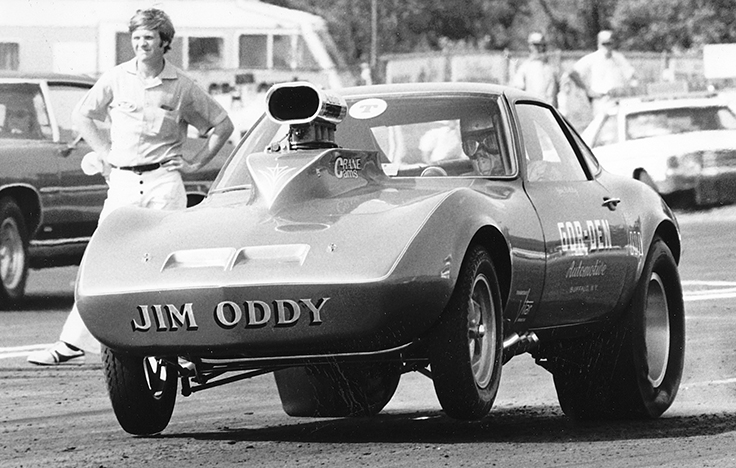
In 1971, NHRA established class minimums that were used as the basis for dial-ins at national and world championship events until they were exceeded. In 1976, NHRA released its new "index" numbers system in which, curiously, were not expressed in e.t.s. The eliminator's fastest class (such as A/Dragster in Comp) had an index of .00, B/Dragster's index was .25, and so on, reflecting their handicaps against one another in this no-breakout system. In 1976, the actual e.t. difference instead of a number represented the handicap start between two classes.
Beginning with the 1977 Cajun Nationals, NHRA instituted a new dial-in procedure for competitors in Super Stock and Stock, allowing them to dial under their class indexes for the first time. The 1977-ending NHRA Winston World Finals in Ontario, Calif., was the first national event to incorporate breakout racing with the use of the NHRA index system. The system had already been used in the 1977 regional points races.
Pro Gas, the forerunner to Super Gas, was showcased at the 1980 Winternationals and the 1981 U.S. Nationals on a 9.80 index and became a full eliminator in 1982 with the current 9.90 index. Super Comp followed two years later, also after a pair of exhibition events in 1892 and 1983.
RULES AND SAFETY
Lemme see your license (mid-1954)
After more than a year of “intensive investigation into the specific needs and requirements to achieve greater safety in the driving of high-performance cars,” NHRA announced the formation of a driver licensing program that started with Top Fuel and Top Gas, that mandated a license for competition. “Known, qualified, competent drivers will be the first to receive their license upon the recommendation of their home strip manager,” who, along with two other licensed drivers, had to approve new license seekers. It took many years before NHRA broadened its driver licensing program, requiring all drivers in Pro Stock and in the unblown Competition eliminator classes to be licensed, effective July 1, 1973. Previously, only drivers of supercharged and/or fuel-burning vehicles were required to be licensed.
Automotive engines only (1961)
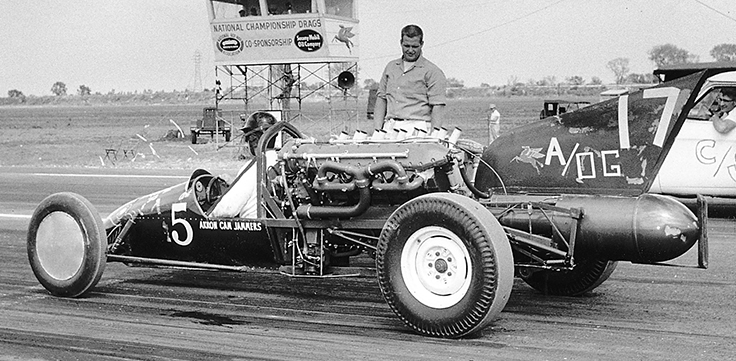
In the 1950s, it wasn’t uncommon to have race cars powered by surplus World War II fighter airplane engines. The 1961 rules restricted engines to automotive-type only, sidelining, among others, AA/Dragster speed record holder Art Arfons' Allison-powered entry, which ran 172.08 at the 1959 Nationals.
Upholstery required (1961)
A little less draconian than the engine rule, NHRA mandated upholstery in all cars in 1961, not for aesthetics but for safety: "The driver's seat in all cars in competition must be so constructed, braced, mounted, and upholstered as to give full back and shoulder protection to the driver in case of upset, spin-out, or collision."
Flame-proof driving suits (1963)
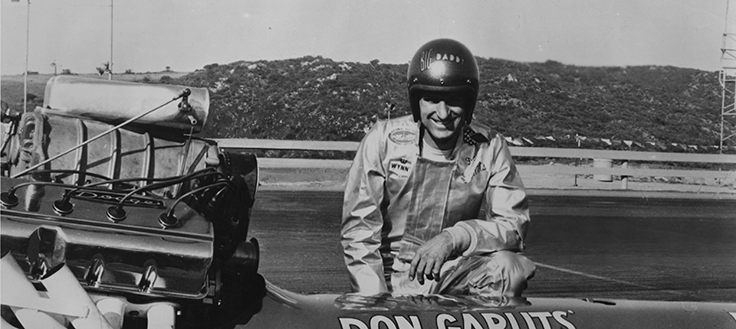
The days of drivers slipping into their fuel dragsters with little more than a T-shirt and perhaps a leather jacket ended in August 1963 as the rules for drivers of all fuel-class cars and supercharged gas machines at NHRA-sanctioned strips required “aluminized, reflective, heat-resistant, and flame-proof driving suits” that included pants, jacket, and face mask. This was done in anticipation of the end of the so-called “nitro ban” in 1964.
First catch net (1964)
A Drag Net unit, which had netting and an inertia reel to slow cars that were in trouble, was installed for the Winternationals as a safety feature.
Parachutes become mandatory (1966)
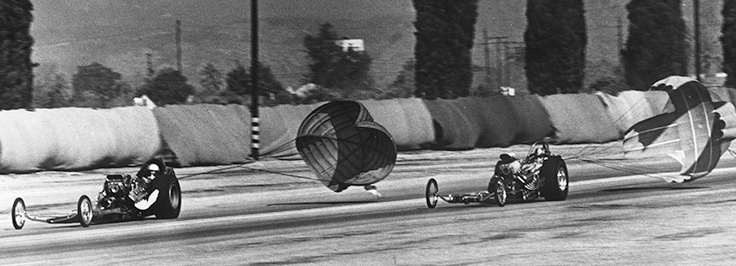
All cars in classes with a national record that exceeded 150 mph were required to have a parachute starting in 1966.
No more fire burnouts (1974)
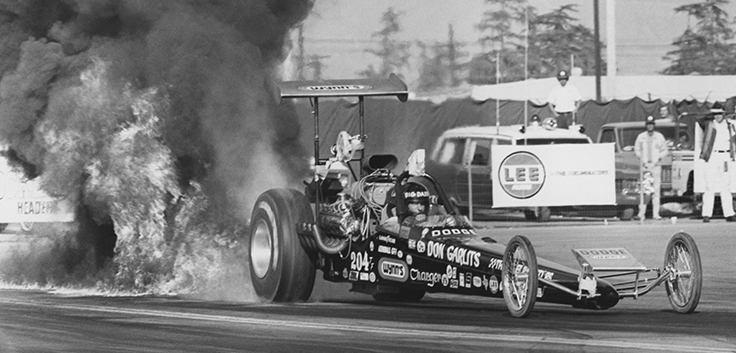
The practice of pouring gasoline (or other accelerants) in the burnout box to create a fire burnout was banned beginning with the 1974 season.
Push starts outlawed (1976)
Push starts, which had become as much a part of drag racing as the dragsters that defined the sport, were forbidden beginning in 1976. Remote starters had been around since the mid-1960s and were standard operating procedure for all Funny Cars since the emergence of the class.
The drama of seeing a car pushed to life down the return road or strip and that initiated a well-choreographed two-car ballet behind the starting line to pull into the beams was gone, and the rulesmakers were pretty stern in their recommendation.
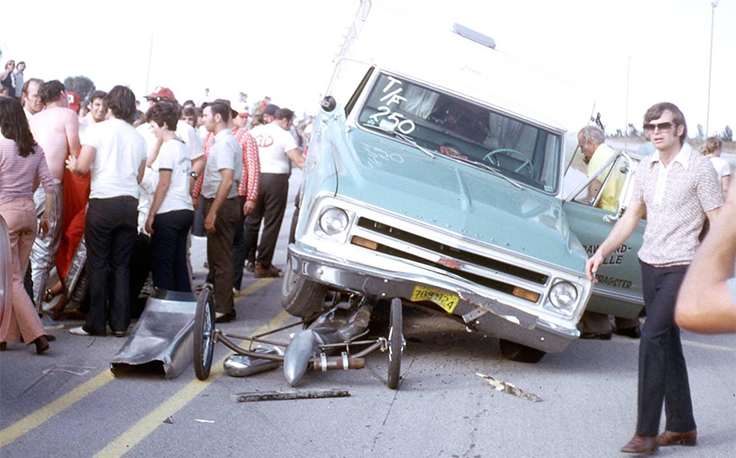
“The primary consideration for implementing mandatory self-starting is for reasons of safety. Race cars being pushed helter-skelter through the pits, push cars climbing up the back of race cars, and ‘desperation’ last-minute too-fast pushes will hopefully be a thing of the past, and something we'd just as soon not remember too fondly.” I bet Wally Parks wrote that.
Top Fuel arm restraints mandatory (1978)
Tumbling Top Fuelers were causing injuries as drivers’ limbs were exposed and injured. Dick LaHaie rolled two cars in 1975, including at the NHRA Gatornationals, where his left hand was severed (but successfully reattached), and again in Indy, where he rebroke the right arm that he also broke in Gainesville.
Reversers required (1980)
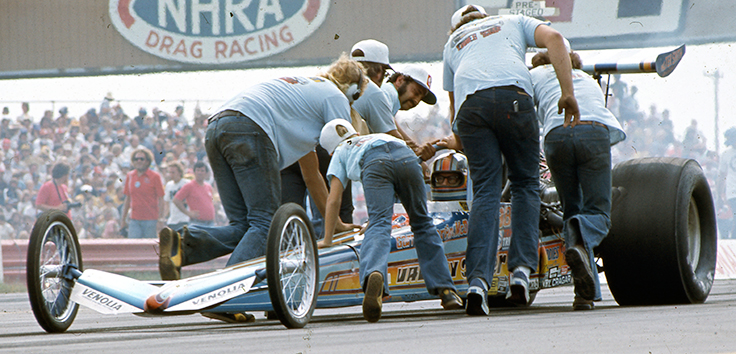
In another step to both increase safety and speed up the show, all cars were required to be self-reversing in 1980 (they were “suggested” in 1979). The momentary glory and thrill of helping push your friend’s dad’s Top Fueler back to the starting line after a burnout were gone.
Supercharger restraints (1982)
Supercharger restraints were required on Top Fuel dragsters beginning in 1982 and were later added to the Funny Car rules.
Computer-aided driver functions outlawed (1987)
NHRA rulemakers announced that computers could only be used for gathering and recording engine and driveline data, not for controlling driver functions.
3.20 is as low as you can go (1989)
Due to insurance concerns over Top Fuel speeds that were quickly approaching 300 mph due to experimentation with rear-gear ratios as low as 2.90, NHRA formed a Performance Limitations Task Force. It was later decided to limit Top Fuelers to a 3.20 rear-gear ratio.
Nitro percentage reduction (2000)
Following a number of explosive engine failures in 1999, NHRA limited the percentage of nitromethane in the Top Fuel and Funny Car classes to 90%.
FUNNY CAR SAFETY
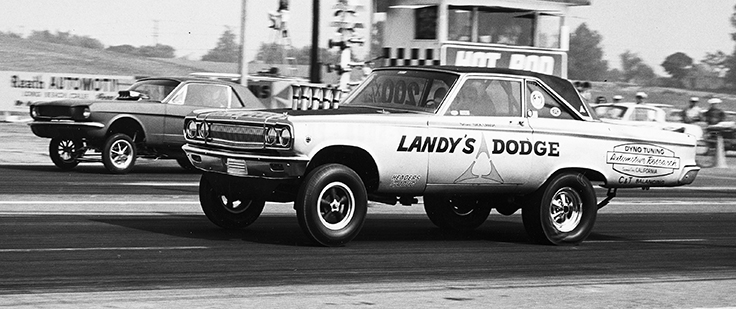
Funny Car safety could be its whole column, considering how far and fast the class has evolved. As originally penciled into life in 1966 in five weight-restricted flavors of Experimental Stock (XS), only the lightest, A/XS, was allowed the use of nitro, but blowers were not initially allowed. When blowers were allowed, the class became known as S/XS before it was dubbed Funny Car.
By June 1, 1970, the flaming floppers were out of control, and NHRA mandated that each car be equipped with at least five pounds of fire-suppressing Freon FE-1301. In 1973, this rule was amended to no less than 20 pounds, with a minimum of 15 pounds directed at the engine compartment and the other five at the feet of the driver.
Also in 1973, NHRA required "fire windows" in the firewall to warn the driver of fire and eliminated open valve-cover breathers, and the NHRA Safety Safari purchased specially constructed "Entry Suits" to extricate drivers.
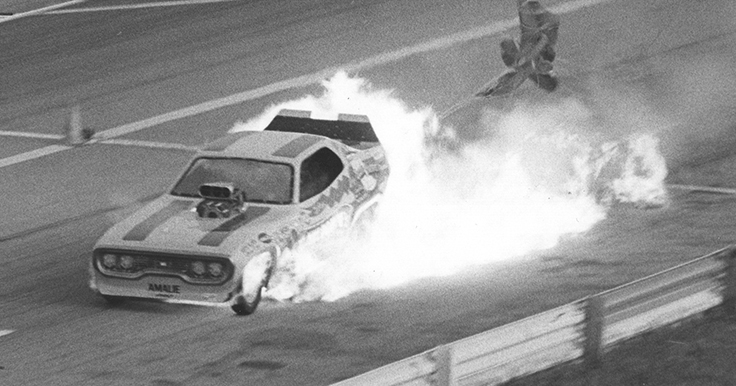
In 1977, NHRA mandated rooftop escape hatches and a decade later required hose-nozzle-sized holes in both side windows to allow rescuers to douse the driver compartment from the outside.
Well, that was fun! I could have gone on for thousands and thousands more words with every little bit of trivia I could find, but I just wanted to hit some of the highlights of some of the things we take for granted today and look back at some of the things that came and went.
Want another double dose of nostalgia. Check out these two columns I wrote way back in 2011: Things That Aren't Here Anymore and More Things That Aren't Here Anymore.
Thanks for reading. See you next time.
Phil Burgess can be reached at pburgess@nhra.com
Hundreds of more articles like this can be found in the DRAGSTER INSIDER COLUMN ARCHIVE
Or try the Random Dragster Insider story generator