

Don Garlits and Darrell Gwynn; their lives in words and photos in new books

Random ramblings and rumblings, the sequel
Random ramblings and rumblings
Memories of Englishtown
Remembering Steve Ambrose
-
Right back where we started from: Winternationals is back at No. 1
Meet Larry Wood: The man whose designs launched a million hot rod dreams
Can you imagine a toymaker designing your Top Fueler? 'Snake' and 'Mongoose' could
For the love of old drag racing photos
The ultimate Funny Car winners quiz
Still popular after all these years: Catching up with fan favorites Eddie and Ercie Hill
Eddie Hill, the early years
55 years ago, Don Garlits forever changed the look, feel, and future of Top Fuel racing
On a roll: A look at some all-time great NHRA Drag Racing success streaks
NHRA's Top 75 Moments: Bernstein, 'Big,' and Shirley reflect on making history
- ad
Funny Car set to turn 1,000: A look back at the milestone races along the way
Beyond the Top 75s ...
Wait ... Jim Head was in a 1960s surf band promoted by a drag racing legend? Yep.
More Martin memories
The Popular Hot Rodding Championships put U.S. 131 in the national spotlight
Friends we lost in 2025
Re-telling NHRA history: The 75th anniversary book and other special projects
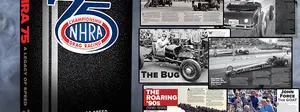
It was John Force's world, and we were all thrilled to be living in it
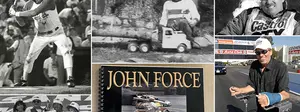
The Joyce of Drag Racing Photography
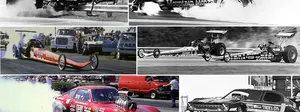
Two legends: 'Big' and Bakersfield
- ad
When did we start doing that? Tracking some of the biggest changes in our sport
From 10-time dominators to one-time winners, a history of Indy Top Fuel champs
Legend to legend: Don Prudhomme on Don Garlits, Indy, and other great takes
NHRA Rookies of the Year: A look back at where some fabulous careers began
NHRA national event history: A look at the tracks and stories that drove the sport
55 years ago, Don Garlits forever changed the look, feel, and future of Top Fuel racing
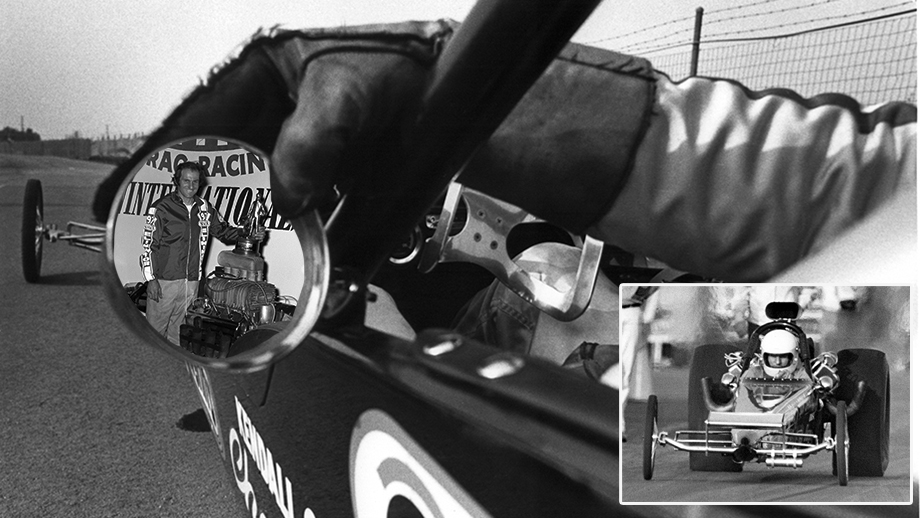
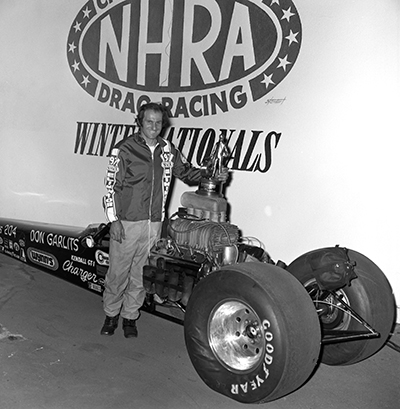
This year’s NHRA Winternationals will mark the 55th anniversary of Don Garlits’ seminal Top Fuel win at the 1971 race in a rear-engine car. NHRA on FOX announcer, podcaster, and fellow drag racing numbers freak Brian Lohnes reminded me of the stat when he asked me to take part in this week’s NHRA Insider podcast, so I dove back into my stats book for some trivia.
When it comes to numbers, I love 55. No, it’s not the year I was born (too early) or my age (too late). Maybe it’s because it’s the number I wore for decades while playing hockey — a blocky, solid, tough-looking but unflashy number that reflected the way I looked and played — or maybe it’s because of the 1955 Nationals, NHRA’s first national event, or maybe the game-changing ‘55 Chevy.
Anyway, if you’re reading this column, I probably don’t need to re-educate you about the circumstances behind Swamp Rat 14’s histrionics, but on the off chance you’re new to the topic or just want some detailed info, I will include a list of past columns on the subject at the bottom of this column.
The switch to rear-engine Top Fuelers is so seminal in our sport, forever changing the way that our premier class looks, that it’s worth a deep dive into the trivia books to salute it as the Winternationals looms next week.
NOT THE FIRST
Garlits' legendary Swamp Rat 14 gets all the kudos it rightfully deserves, but it certainly was not the first rear-engine Top Fueler or even the first to win a major event.
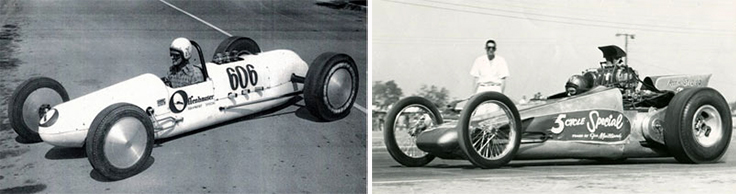
There were a lot of famous rear-engine cars in the 1950s and 1960s, like George "Ollie" Morris' Smokin' White Owl (above left), Ray Harrelson’s rear-engine belly tanker dragster, and the three Jack Chrisman sidewinders (above right), but they weren’t Top Fuelers. Swamp Rat 14 was preceded by a number of back-motored Top Fuel cars, including the STP Drag Wedge developed by Andy Grantelli and Dave Miller (mid-1969), Bernie Schacker's home-built rig (1970), and the Woody Gilmore-built, Pat Foster-driven car that crashed at Lions Drag Strip in just its second outing in December 1969.
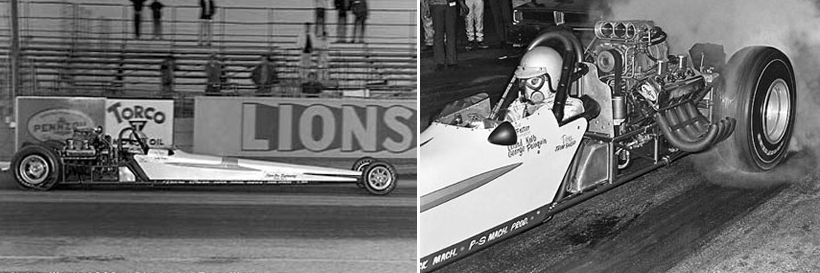
Gilmore, an IndyCar fan, had noted that the last front-engine car to run at the Indy 500 was in 1968 and was intrigued by the idea, and even had built a rear-engine Funny Car for Doug Thorley. Gilmore, who said late-1969 orders he had taken were canceled after the Foster crash, took what he learned from the Foster crash and built the Pawnbroker for Dwane Ong, which debuted at the 1970 March Meet and in August won the AHRA Nationals at New York National Speedway.
INTEREST SOARS
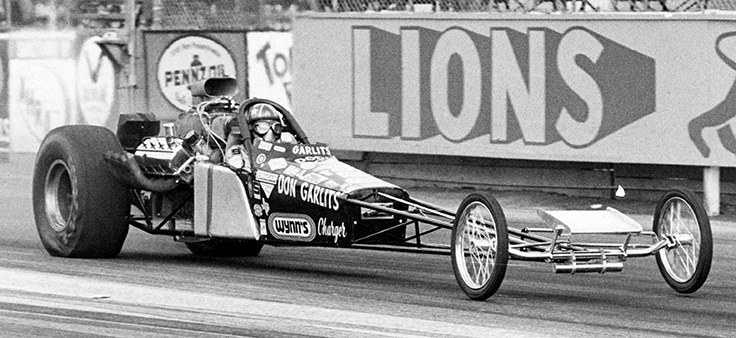
Garlits’ rear-engine machine was maligned by his front-engine foes when it debuted at Lions a few weeks before the Pomona race, but by the time he’d finished cleaning house at the Winternationals, the genie was out of the bottle.
Don Long told me a few years ago that he got an order for a rear-engine car from Tommy Larkin three days after Garlits’ Pomona win, but the first Long back-motored car didn’t debut until the next year. Back-to-back world champ Bennie Osborn (1967-68) was a surprisingly early adopter after his glory days in slingshots, as was Jim Nicoll, who had survived the wicked 1970 Nationals final-round crash and put Billy Tidwell in a new back-motored entry.
Mark Williams also built a rear-engine dragster for Dan Widner and Mike Dollins, who ran it infrequently before selling it to the Kaiser brothers, and Don Prudhomme and John Buttera had the Hot Wheels wedge under construction by the March Meet, which Garlits also won.
QUIZ TIME
A lot of Top Fuel drivers competed both with the engine in front and behind them, but only five of them won NHRA national events in both. Can you name them? Answer at the end of the column.
THE BACKUP PLAN
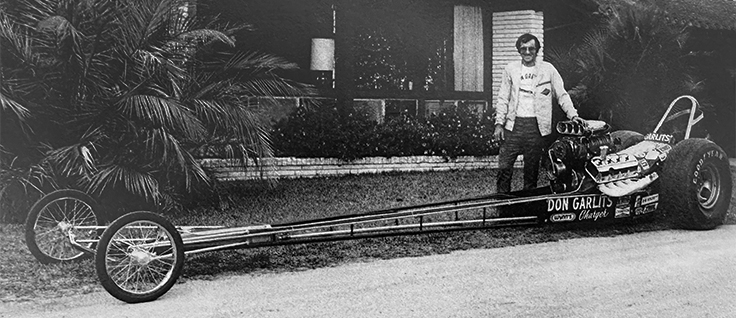
Even “Big” wasn’t 100% sure that the rear-engine car would work — he’d battled steering ratio challenges in testing — and had built another slingshot (Swamp Rat 15) as a fallback. His late wife, Pat, was not happy with him working on that car and told him in no uncertain terms that he had better get rid of it. “She told me to get back on the rear-engine project, that I owed it to my friends who had passed away [in slingshots],” Garlits told me a few weeks ago. A wife's love ...
The car was, however, taken to California inside the same trailer as the rear-engine car and sold to Goodyear as a display car. The car stayed on the show circuit for several years before being heavily damaged in transport and offered to Garlits. T.C. Lemons and Garlits fixed 'er up and loaned it to the Florida Sports Hall of Fame and then to Summit Racing, which had the car hanging from the ceiling of its showroom in McDonough, Ga.
WHAT HAPPENED NEXT
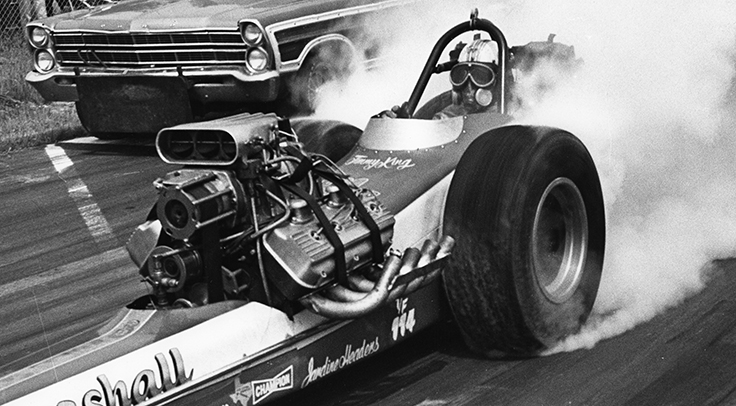
Garlits had the only rear-engine dragster at the NHRA Gatornationals, which was won by Jimmy King’s slingshot. Garlits, still running without a rear wing, qualified No. 1 (6.53 ahead of No. 2 Cliff Smith’s 6.57 in the Durel & Randazzo car) and beat future 1972 world champ Jim Walther in round one, but lost to Sarge Arciero in round two.
Garlits added the rear wing that has become required equipment for the last 55 years, qualified No. 1 and won the NHRA Springnationals in Dallas over John Wiebe’s slingshot, and then Arnie Behling (below) stunningly wheeled Bruce Dodd’s new Gilmore-built rear-engine car, tuned by John "Tarzan" Austin, to victory at the NHRA Summernationals. Garlits lost in round two to eventual runner-up Jim Harnsberger, who famously fell victim to heat prostration in the swampy Jersey summer weather and couldn’t run the final.
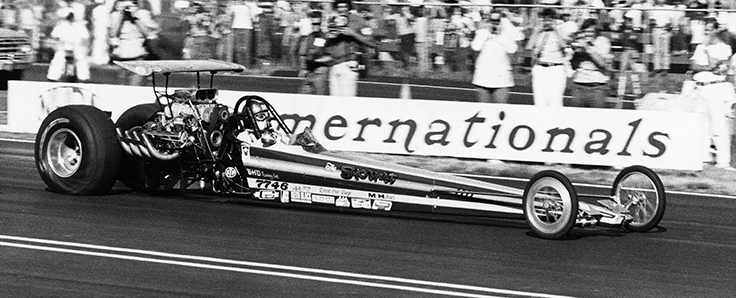
Despite three rear-engine wins in the first four events of 1971, front-engine cars weren’t giving in. They won the last four races of the year (and five of the seven since the Winternationals) with Pat Dakin (Montreal, which Garlits did not attend), Steve Carbone (Indy, in the great burndown final against Garlits), Gerry Glenn (Amarillo, Texas, and the NHRA World Finals on Garlits’ final-round red-light, making Glenn instead of Garlits the world champ), and Hank Johnson (Ontario Supernationals, which Garlits also bypassed).
So, Garlits scored two wins and two runner-ups and qualified No. 1 three times in the six races he attended in 1971 and likely would have been the world champ if it had been a points-scoring title. No wonder there was a rush for rear-engine cars ahead of the 1972 season.
1972: THE HANDWRITING IS ON THE WALL
Rear-engine cars won the first four events in 1972, with even slingshot-loving diehard Carl Olson making the switch in mid-1971 and then winning the '72 Winternationals. Garlits won his hometown Gatornationals, Chip Woodall drove Gene Snow’s dragster to victory at the Springnationals (now in Columbus, Ohio), and Jeb Allen became the sport’s youngest Top Fuel winner (18 years, 1 month, a record he still holds almost 54 years later) at the Summernationals.
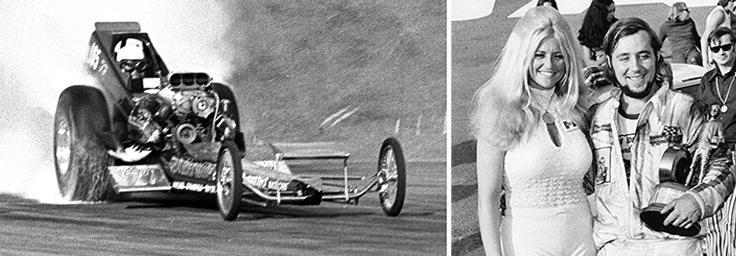
Twelve races after Garlits’ world-changing Pomona win, the final front-engine dragster victory was registered by Art Marshall at Le Grandnational in an ex-Don Prudhomme front-engine car. He won on surprising red-lights by Clayton Harris and Olson followed by Allen going up in smoke in his own water from an overheated engine in the final.
Here's a capsule look at the 1971 and 1972 seasons.
1971 | ||
| Venue | Winner | Car |
Pomona | Don Garlits | RED |
Gainesville | Jimmy King | FED |
Dallas-spring | Don Garlits | RED |
Englishtown | Arnie Behling | RED |
Montreal | Pat Dakin | FED |
Indy | Steve Carbone | FED |
Amarillo | Gerry Glenn | FED |
Ontario | Hank Johnson | FED |
1972 | ||
Pomona | Carl Olson | RED |
Gainesville | Don Garlits | RED |
Columbus | Chip Woodall | RED |
Englishtown | Jeb Allen | RED |
Montreal | Art Marshall | FED |
Indy | Gary Beck | RED |
Amarillo | Jim Walther | RED |
Ontario | Don Moody | RED |
After Marshall's win, the next 974 Top Fuel victories up through the recent NHRA Arizona Nationals have all been in rear-engine cars.
CHANGE IS HARD
Drag racers are nothing if not stubborn. When the Christmas Tree was unveiled in 1963, some racers hated it so much compared to the flagmen that they loved that they sometimes purposely mowed it down. The switch to sitting in front of the engine was also tough on some, even as they recognized the obvious safety benefits of not sitting behind a ticking time bomb or on top of the rear end with their legs straddling the potential buzzsaw of an exploding clutch.
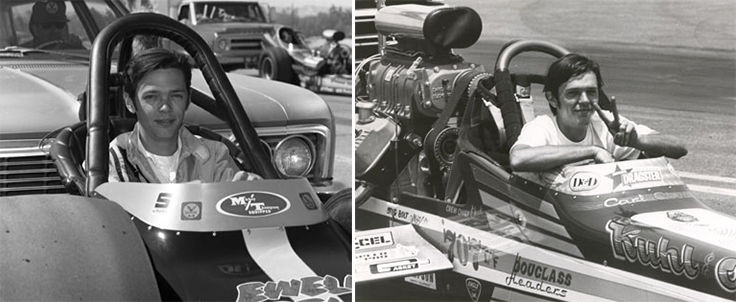
Olson, who made the switch in the summer of 1971, was obviously concerned about losing the thrill ride he’d so grown to love.
“The FED was an absolutely awesome ride, especially at night,” he told me. “With the front wheels dangling in the air, the tires hazing white smoke, and the engine belching huge nitro flames high into the air [only to watch them bend backward as the car gained momentum], followed by the almost assured loss of vision near the finish line due to various liquids gathering on one's goggles, it made for an experience second to none.
“To be perfectly honest, the RED wasn't nearly as thrilling as the FED, but the REDs were much more comfortable. Right at the top of the comfort list was the ability to actually see where you were going instead of looking directly at the back of a 6-71 supercharger and fuel injector. Also, no longer having your legs draped over the rear-end housing with the ring and pinion gears mere fractions of an inch from your private parts made things much more comfortable as well.”
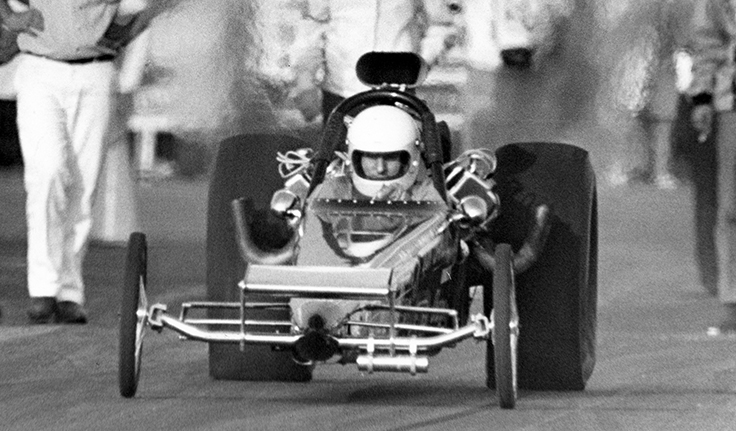
Garlits, of course, loved the view, and his fabled one-liner to crew chief T.C. Lemons about the unobscured vista always draws a laugh.
Garlits: “Saw a big ol’ 3/8-inch bolt layin’ down there in the lights.”
Lemons: “Oh, yeah?”
Garlits: “Yeah, fine thread.”
Prudhomme, who made his early bones in front-engine cars like the Greer-Black-Prudhomme machine and the Hawaiian, lamented the change to rear-engine cars for a more visceral reason.
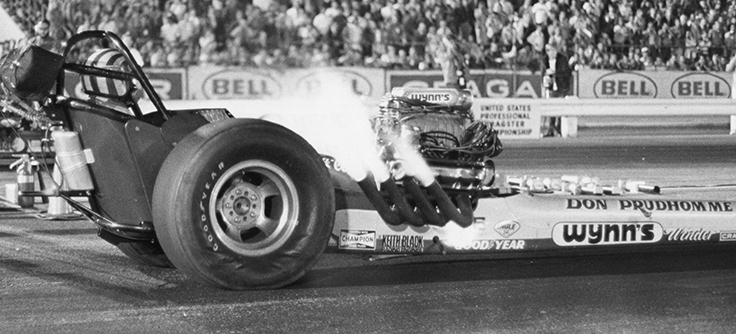
“The front-engine dragster, without a doubt, was the most thrilling, most fun thing you could ever possibly have,” he said. “The engine was right in front of you; you could see everything — the exhaust pipes, the blower. There were no starter motors or any of that jazz. The way you started them was push-start. A car or truck would be behind you, you’d get going, let the clutch out, feed a little fuel, shut it off, and hit the starter switch, and it would go bahhhh-bup-bup-bup and pull away and then start idling. It was a real turn-me-on-er. The girls fell out of the stands. It was pretty cool; I gotta tell you.”
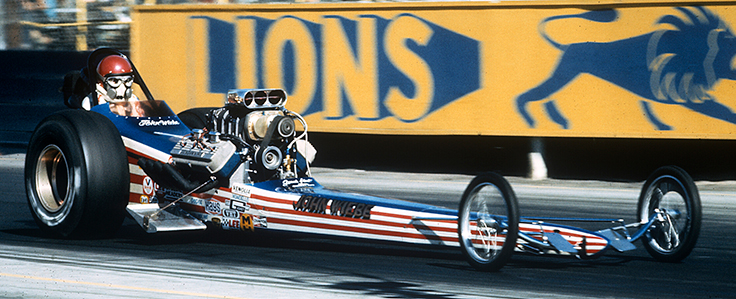
“Kansas John” Wiebe was one of the longest holdouts. Wiebe stuck with the front-engine design through the 1972 season and went winless in both NHRA and AHRA competition. Garlits, who had won the 1971 AHRA crown, won it again in 1972, and Wiebe finally relented and had Ed Mabry build him a rear-engine car for the 1973 campaign.
“Garlits told me that it took more power to run a rear-engine car [due to their weight], and my front-engine car was running just fine,” he told me in an interview years ago. “Maybe he just didn’t want me to run one. Plus, I knew there were some bugs with those cars, and I figured that I could always go that route once they worked out. I was a little stubborn. I wasn’t afraid to try things; try is one thing, change is another.”
In an early 1972 interview in Drag Racing USA, Wiebe also explained that he felt safer in the front-engine car, protected as such on the sides by the rear tires in the case of a wreck, and because his new 417 didn’t oil, he wasn’t worried about engine fires, one of the real and advertised advantages of the rear-engine car. ”Therefore, I will run this combination for the rest of the year until there’s a better way to improve,” he said.
As soon as he changed, he started winning again, scoring at the 1973 AHRA Grand Am at Green Valley in Texas, and not long after, he scored his first NHRA national event win, at the Springnationals in Columbus, where he beat none other than Garlits in the final.
THE PATH FORWARD
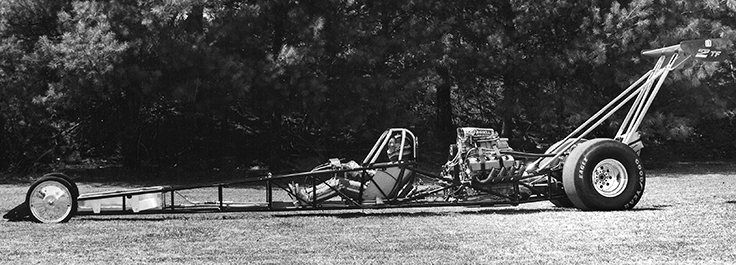
As I mentioned, every NHRA Top Fuel win since Aug. 15, 1972, has come in a rear-engine car, a total of 96 different winners in 974 events.
Although the design of the cars remains basically the same (although Garlits certainly worked to change that with his Wynn’s Liner and his sidewinder), other than the brief era of front-wheel pants, the silhouette of the class remained unchanged until 1984, when Joe Amato and Tim Richards lifted the rear wing that used to sit a foot or so off the rear tires to the sky-high and laid-back position we still see today.
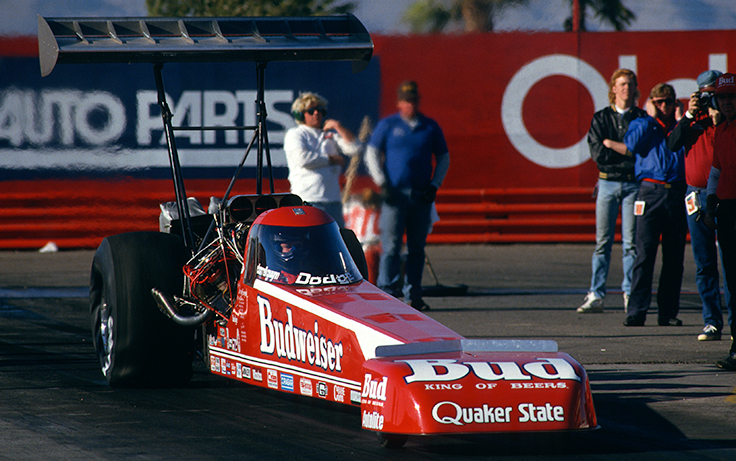
We saw a bigger but shorter aerodynamic push in 1986 with streamliners by Don Garlits, Gary Orsmby, Darrell Gwynn, and Amato followed two years later by the switch to high-gear-only drivelines (Gene Snow/Jim Head) and the lengthening of the chassis to today’s maximum of 300 inches (Frank Bradley’s Dave Uyehara-built car was the first). Cockpit canopies reurned in 2012 (credit Don Schumacher Racing), and while there have been countless smaller refinements in chassis and powertrain builds, the cars still pretty much look the same.
THEY WON IN BOTH
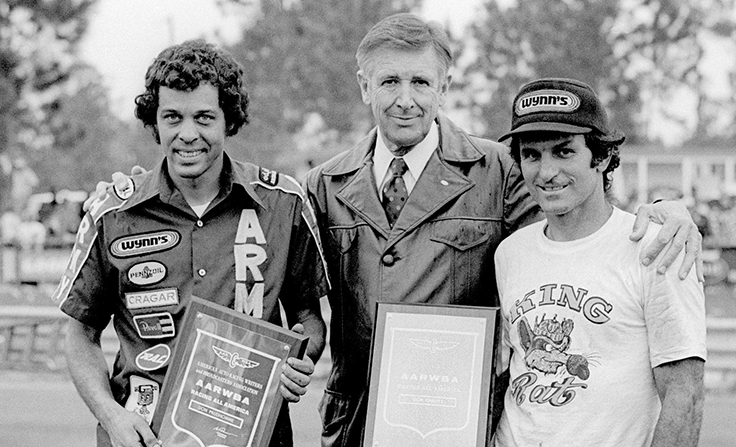
Earlier in the column, I challenged you to name the five Top Fuel drivers who had won NHRA national events in both the front- and rear-engine configurations.
Hopefully, it didn’t take you long to come up with the obvious two — Don Garlits and Don Prudhomme — but I’ll forgive you if you didn’t get the last three.
For the record, both Garlits and “the Snake” had five front-engine wins. Garlits added 30 more with the power behind him, while Prudhomme added nine more. Garlits went two seasons and change between his last victory in the slingshot (1968 Nationals) to his first with the Hemi out back (1971 Winternationals), but he was out of action most of 1970.
It took Prudhomme substantially longer, from his famed 1970 Indy win over Jim Nicoll until the 1991 Springnationals after returning to Top Fuel in 1990 after nearly two decades of Funny Car domination.
(Garlits and Prudhomme had a lot of similarities in their careers. Check out this fun column I did a few years ago.)
Connie Kalitta won the 1967 in a slingshot and nine more in rear-engined cars.
The other two, which even I was challenged to come up with, were James Warren and Pat Dakin.
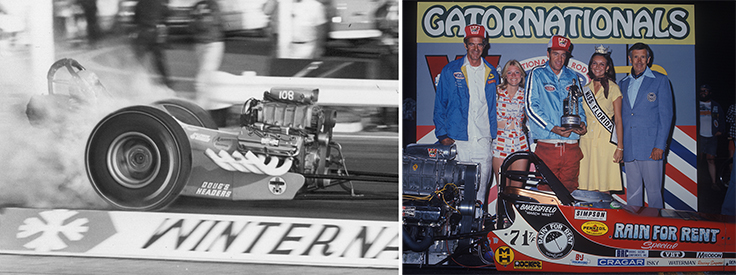
Warren and the West Coast-based Ridge Route Terrors team won the 1968 Winternationals with the power out front and the 1976 Gatornationals with the cackle out backle.
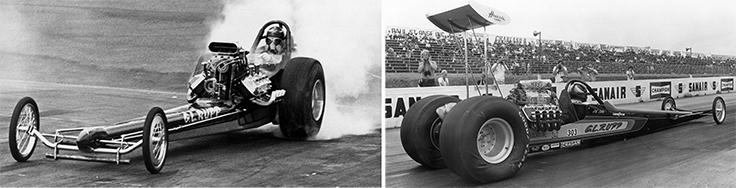
Dakin is the most interesting of the foursome. He won just two NHRA national events two years apart, both at the same track, winning Le Grandnational at Sanair International Raceway with his front-motored car in 1971 and then won it again in 1973 with the back-motored machine.
It has been a long, strange trip for drag racing’s most iconic class, and 55 years of rear-engine success will only continue into the future.
As promised, here are some links to additional columns I’ve written about the front-to-rear-engine change that should round out your knowledge and probably even win you a few bar bets. Thanks for reading.
- Front to back: The rear-engine transition
- Front to back: The rear-engine transition, Part 2
- Early rear-engine iron
- 'I was there:' Garlits debuts Swamp Rat 14
- Swamp Rat 14; the history of one of Top Fuel's most important cars
Phil Burgess can be reached at pburgess@nhra.com
Hundreds of more articles like this can be found in the DRAGSTER INSIDER COLUMN ARCHIVE
Or try the Random Dragster Insider story generator