

The early Hart of the NHRA
Don Garlits and Darrell Gwynn; their lives in words and photos in new books

Random ramblings and rumblings, the sequel
Random ramblings and rumblings
Memories of Englishtown
-
Remembering Steve Ambrose
Right back where we started from: Winternationals is back at No. 1
Meet Larry Wood: The man whose designs launched a million hot rod dreams
Can you imagine a toymaker designing your Top Fueler? 'Snake' and 'Mongoose' could
For the love of old drag racing photos
The ultimate Funny Car winners quiz
Still popular after all these years: Catching up with fan favorites Eddie and Ercie Hill
Eddie Hill, the early years
55 years ago, Don Garlits forever changed the look, feel, and future of Top Fuel racing
On a roll: A look at some all-time great NHRA Drag Racing success streaks
- ad
NHRA's Top 75 Moments: Bernstein, 'Big,' and Shirley reflect on making history
Funny Car set to turn 1,000: A look back at the milestone races along the way
Beyond the Top 75s ...
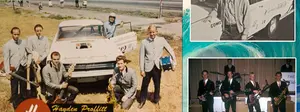
Wait ... Jim Head was in a 1960s surf band promoted by a drag racing legend? Yep.
More Martin memories
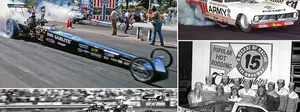
The Popular Hot Rodding Championships put U.S. 131 in the national spotlight
Friends we lost in 2025
Re-telling NHRA history: The 75th anniversary book and other special projects
It was John Force's world, and we were all thrilled to be living in it
The Joyce of Drag Racing Photography
- ad
Two legends: 'Big' and Bakersfield
When did we start doing that? Tracking some of the biggest changes in our sport
From 10-time dominators to one-time winners, a history of Indy Top Fuel champs
Legend to legend: Don Prudhomme on Don Garlits, Indy, and other great takes
NHRA Rookies of the Year: A look back at where some fabulous careers began
The early Hart of the NHRA
Throughout this 75th anniversary season, we’ve saluted many aspects of NHRA’s history, from acknowledging racers and performances and memorable moments, but as the year’s celebrations begin to wind down, we’re reminded of the many people who got us here.
Sure, we all know the story of NHRA founder Wally Parks dragging hot rodding out of the darkness and into the bright headlines, and along the way we’ve highlighted some of those who helped carry the ball forward, from NHRA presidents to division directors, track operators, and sponsors. From those early but long-lasting division directors like Bernie Partridge, Dale Ham, and Darrell Zimmerman to regional advisors, NHRA Safety Safari members, and the tribe that followed Parks’ lead made us what we are today, but I recently was reminded of a name perhaps not as well-known to today’s fans and racers despite the enormous impact he had in NHRA’s formative years.
Former NHRA Vice President and Competition Director Steve Gibbs dropped me a line and hoped we would recognize one of his heroes and mentors, Jack Hart. Of course, I had heard of Hart’s role with the NHRA, from his hiring in 1960 until his passing in late 1977, from many people, including Gibbs, but it wasn’t until I did a deep dive into the work of Parks' son, Richard, in “We Did It Our Way,” a painstaking recreation of memos and meetings kept by his father, that the scope of Hart’s work and influence became much more apparent, as he was involved in everything from policy-making, rules enforcement, and insurance to managing NHRA’s division directors and employee relations.
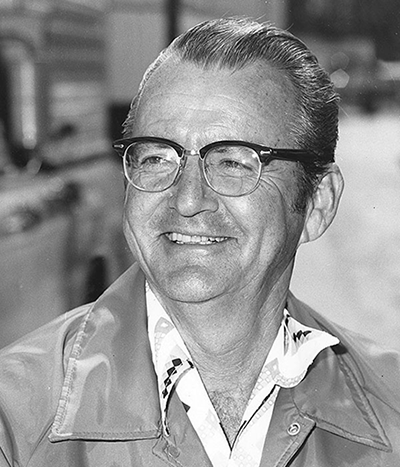
Few people embodied the spirit of hot rodding and drag racing's formative years quite like Hart. Charles E. “Jack” Hart was the son of a career military officer and spent his youth moving from state to state, growing up in Maryland, Kansas, and Texas after his birth in Boston on March 9, 1922. Hart pursued engineering studies at the University of Colorado and later at California State University, Fullerton, supporting himself through an extraordinary variety of jobs. Over the years, he worked as an accountant, surveyor, railroad mechanic, shipfitter, aircraft assembler, dairy worker, and even a musician.
Hart's path into drag racing began in Southern California during the early 1950s while operating a Texaco service station in Orange County that was a hangout for local hot rodders of all ages. Hart became one of the innovators and regular competitors at the legendary Santa Ana Drag Strip and built and raced machines that reflected the ingenuity of drag racing's early pioneers. One featured barbell weights mounted on the rear bumper to improve traction, while another, a flathead-powered Ford coupe, benefited from a repositioned body for improved weight transfer during acceleration.
Hart’s career took an unexpected turn in 1960 when he joined NHRA as advertising manager of the newly created National Dragster magazine. Parks had a talent for finding exceptional people to work for the association and hired Hart to sell ads because Hart knew everyone in the speed equipment business, giving him a big leg up on the task.
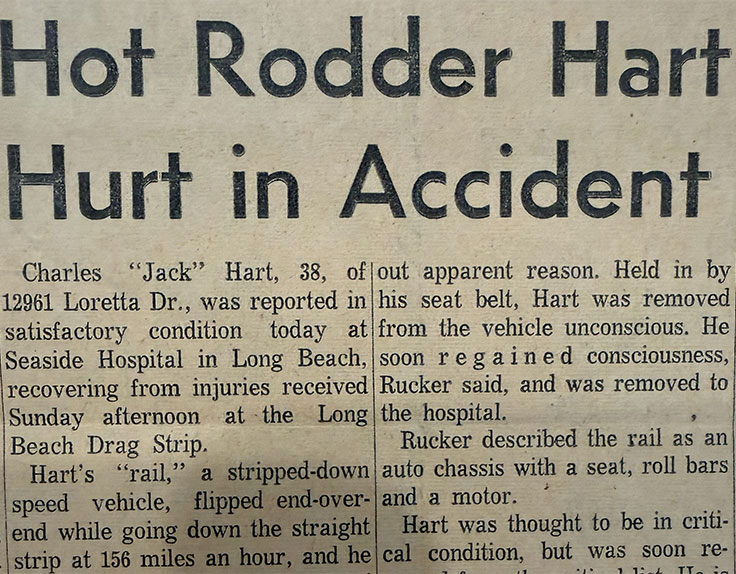
Just four months later, Hart, who continued to race after he joined NHRA, suffered severe injuries in a crash at Lions Drag Strip that badly damaged both of his arms, sidelined him for more than four months, and ended his driving career. When he returned to work, he became a dynamic force and quickly absorbed tasks beyond the scope of his advertising duties. With Parks still splitting his time between NHRA and Hot Rod magazine (Parks would not commit fully to NHRA until 1963), it was Hart and Parks’ future wife, Barbara Livingston, who ran NHRA headquarters in the early 1960s following the termination of Executive Director Jack Clark.
“Livingston was trying to reorganize the office, procedures, and workload,” Richard Parks wrote. “Hart stepped in and began assisting every facet of the office, eventually taking over the NHRA Racing Division as well as ads in ND. Livingston was the boss, but people looked to Hart for answers and, in effect, the two ran the HQ together. Barbara equated Hart in value to the organization with only Parks and National Competition Director/National Field Director Ed Eaton. Hart was taking on all the roles, even those not assigned to him; he was a take-charge guy and someone my father desperately needed. Parks began to rely on Jack Hart more every day until he was appointed the business executive manager; but whatever title he had, he was the boss when Parks wasn’t around, and that was often until after March 1963 … He was a charismatic leader, tough as nails, stubborn when he thought he was right, and felt only Wally Parks outranked him. He was loved by many and detested as well, but he tried never to make rash decisions, and he was loyal to the NHRA.”
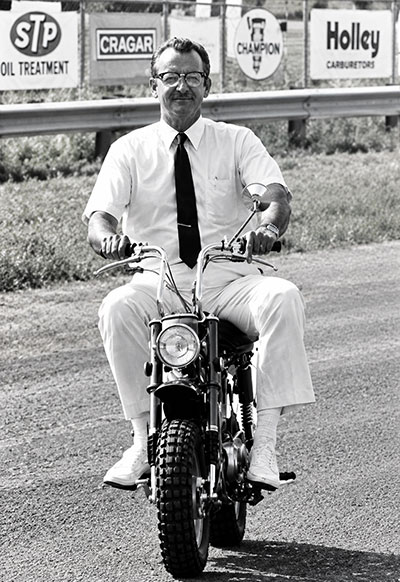
The scope of Hart’s non-advertising-selling duties was impressive, especially his coordination of the DDs. In one 1961 recap of his activities, the phrase “Hart wrote to” appeared 79 times. Remember, there were no email or video calls back then (that was stuff even the Jetsons would not envision for another year), and everything was done through snail-mail letter writing. I can’t imagine the sheer amount of time and effort that went into the correspondence that we routinely handle now electronically.
Hart quickly became one of NHRA’s most influential executives, rising to executive director in 1962, event director in 1963, and executive vice president in 1967. In those roles, he helped establish many of the operational standards and event-management procedures that continue to serve as the foundation of NHRA competition today. He was there to oversee the NHRA U.S. Nationals' move from Detroit to Indianapolis, the debut of the NHRA Winternationals, and the creation of the Top Fuel, Funny Car, and Pro Stock classes.
Hart’s responsibilities stretched across nearly every aspect of the organization. Hart played key roles in insurance programs, safety initiatives, track design and construction, technical regulations, sanctioning oversight, and industry relations. Among those highlights were standardizing technical inspections, creating a uniform checklist for vehicle safety inspections, and spearheading the formalized evolution of safety equipment requirements, drafting early versions of rules requiring specific firesuit ratings, mandatory roll cages, and strict chassis safety inspections based on vehicle speed. In 1967, he also helped launch SEMA's product evaluation program and became a driving force behind many of the systems that professionalized drag racing.
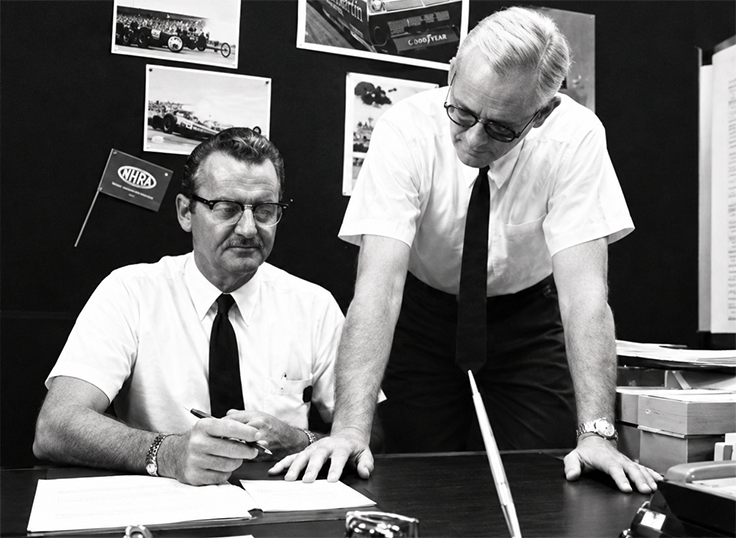
Whether coordinating national events, developing fire and emergency-response procedures, overseeing security, working with NHRA Tech Director Bill “Farmer” Dismuke to manage the ever-changing horsepower classifications and indexes, or compiling and analyzing competition statistics, Hart's fingerprints were on virtually every corner of the growing NHRA operation.
“The sport was still growing as far as timing systems, procedures, safety issues, and track construction, and he had a lot of big decisions to make,” said Gibbs. “I think he played a bigger role in the development of the sport than probably just about anybody I can think of.
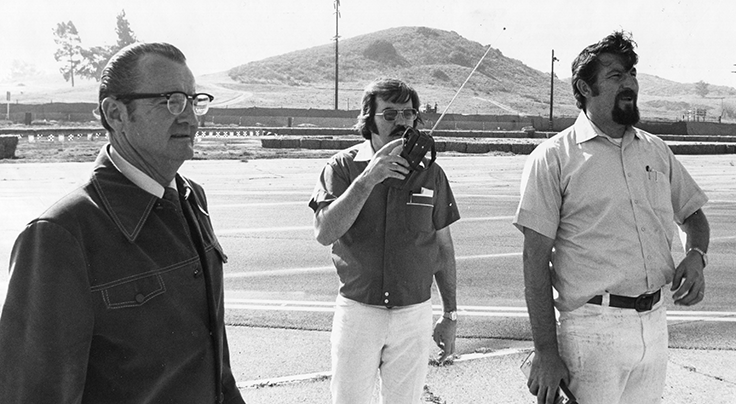
Gibbs joined NHRA in 1969 and quickly became Hart's right-hand man and, after Hart's passing, would assume the Competition Director role for which he remains well-known, and Gibbs had a front-row seat to all that Hart handled. While juggling calls from concerned Detroit bigwigs about how their cars had a disadvantage (I have to feel the fact that they all felt that way must have meant NHRA was actually doing a good job on parity) to dealing with emerging technical advances (including scary fuel additives), the sport’s very existence relied on being able to get and maintain insurance, as insurers cast wary eyes on a sport that went from 100-mph coupes to 200-mph nitro-fueled dragsters.
“He really had a lot to do with initial growth of the organization, and the insurance was a huge, huge issue to make the sport doable, and Jack was really at the forefront to provide good, adequate insurance,” said Gibbs. “Guys were getting hurt, guys were getting killed, and there was a period of time where insurance was almost nonexistent or companies that weren't that reputable. Jack poured a lot of time and effort into keeping the sport viable that way.
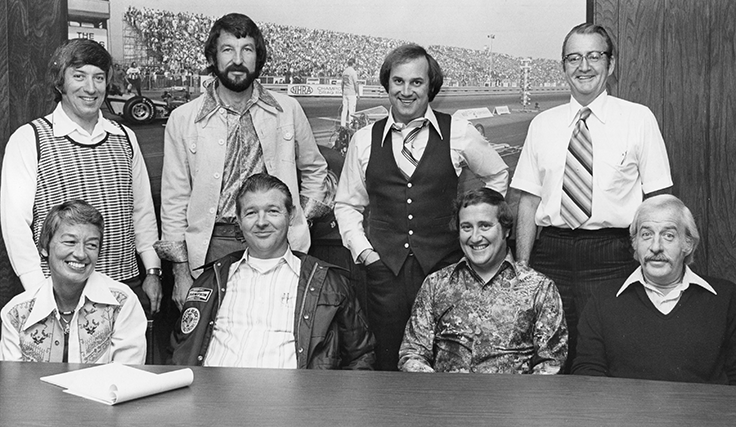
“He dealt with a lot of big problems as NHRA was starting to take off and grow. It was a pleasure working for him. We didn't agree on everything because at times we butted heads, but I'm glad I had the chance to work with him, and I definitely learned a lot from him, and, as time has gone by, I appreciate him more and more for the way he dealt with things.”
Hart, however, struggled with diabetes and, beginning in 1972, his health slowed him, and efforts were made to reduce the number of events at which he was active, pushing Gibbs into more of the action. Hart died Nov. 24, Thanksgiving Day, in 1977 at Doctor's Hospital in Montclair, Calif., following surgery to relieve an arterial blockage. He was just 55. The loss was a profound one felt throughout the NHRA, from headquarters to the pits.
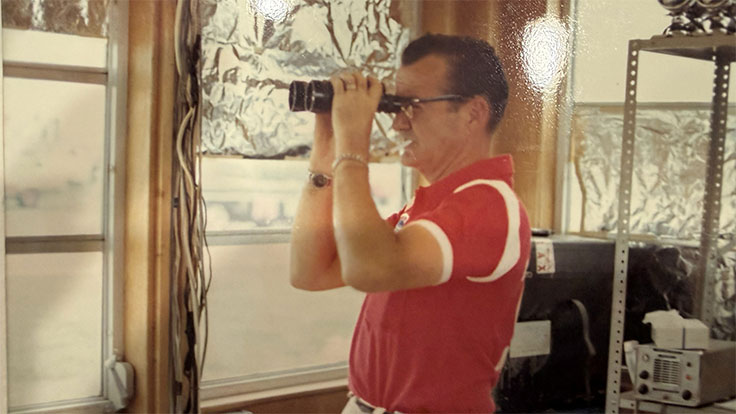
NHRA National Dragster’s tribute, undoubtedly penned by Parks, concluded, “He was a man of intelligence, strong conviction, and strength of character. Although many — both inside the organization and out — may have had occasion to disagree with Jack Hart over the course of the years, no one ever failed to respect him. He leaves a void which will never be filled."
Hart was posthumously inducted into the SEMA Hall of Fame (1978) and the International Drag Racing Hall of Fame (1991).
Gibbs also introduced me to Hart’s granddaughter, Angelique Adams Lazier, who used to accompany her grandfather to the races as a child. She’s also the daughter of Pomona Raceway royalty Stan Adams, and Hart’s daughter, Jackie, who was tragically killed in a motorcycle accident in 1972, when Angelique was just two, but she has many fond memories of her grandfather,
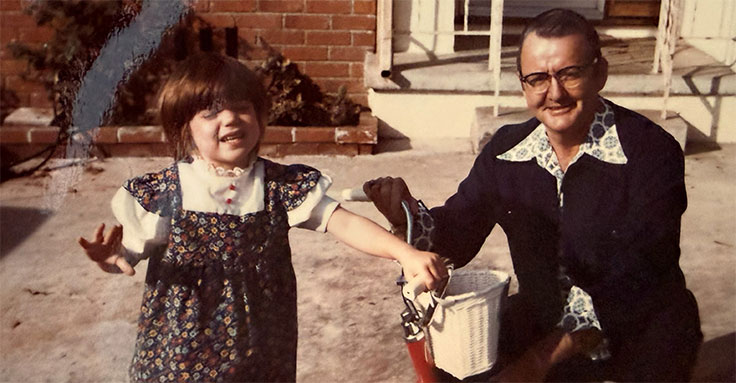
“I was very young, but I was at the dragstrip with him all the time, and he had such an impact on my life,” she reminisced. “I remember him always meeting with people, in the tower or with racers; he was always on the move.
“He was magical to me. I just remember him with the racers, and he was always fair but harsh and strict on the rules, and wanted safety, but to me, he was always such a big, loving teddy bear. It's funny because when old racers talk to me, they always say, ‘Oh, your grandpa was a son of a gun,’ but I don't think I've ever loved and respected a man more. And it was really great because all of those men and women involved in the sport were like my godfathers and godmothers, and it was just a big family.
“He just loved the sport and loved the people and the passion of it, and he was so passionate about everybody and everybody going home to their families, probably because of me losing my mother when I was really young. He wanted to make sure the drivers went home to their families, and that the safety was there because he knew the importance of that.”
Angelique’s name might be familiar to some of you as she was an actress on the television show Saved By The Bell, where she played Michelle alongside the likes of Mario Lopez, Dustin Diamond (aka Screech), and Tiffani Thiessen.
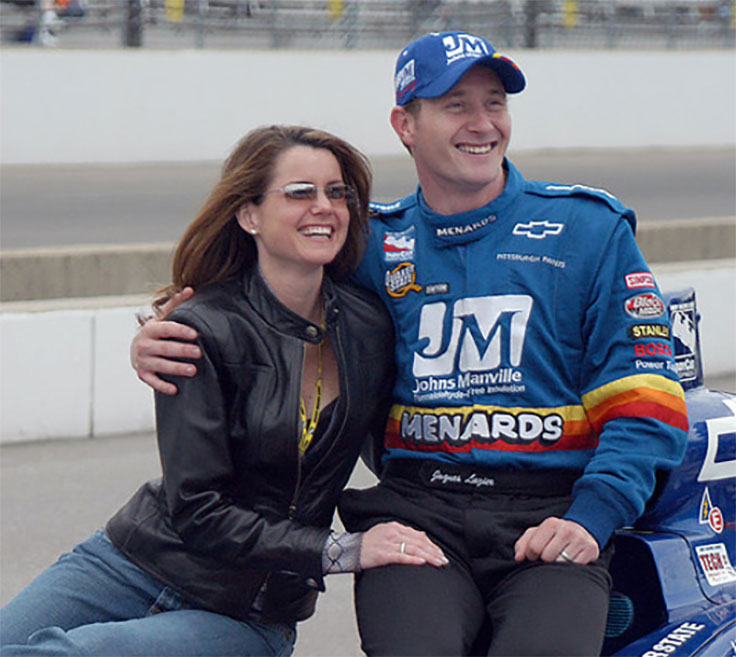
Her Lazier surname might also ring a bell with race fans out there, as she’s married to IndyCar driver Jaques Lazier.
“I went away to college and met a different type of race car driver,” she recalled with a laugh. “We sat next to each other in a business class randomly, and that’s how we became friends. When the teacher asked, ‘If this wasn't your major, what would you do?’ and I said, ‘I would drive a Top Fuel dragster.’ Jaques was sitting next to me, staring at me with his mouth open. He said, ‘Well, I was gonna say that I would be a race car driver, but it's gonna sound stupid if I say it.' So that's how we met. I asked, ‘What do you mean you race? I would know you if you raced,’ and he said, ‘Well, not that kind of racing. I do this kind of racing,’ I said, ‘Oh, you guys are the ones that go so slow you don't need a parachute to stop you.’
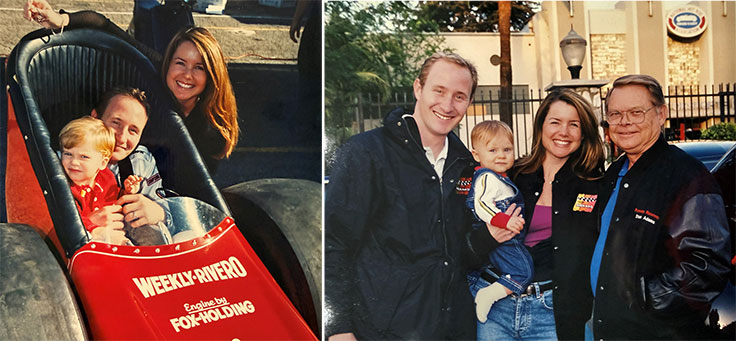
“My dad said, ‘I sent you to college to get you away from race car racing and race car drivers, and you went to college and met a race car driver.”
She’ll be out in person at the In-N-Out Burger Pomona Dragstrip for the Finals in a few weeks, where her grandfather’s memory and accomplishments will be recognized.
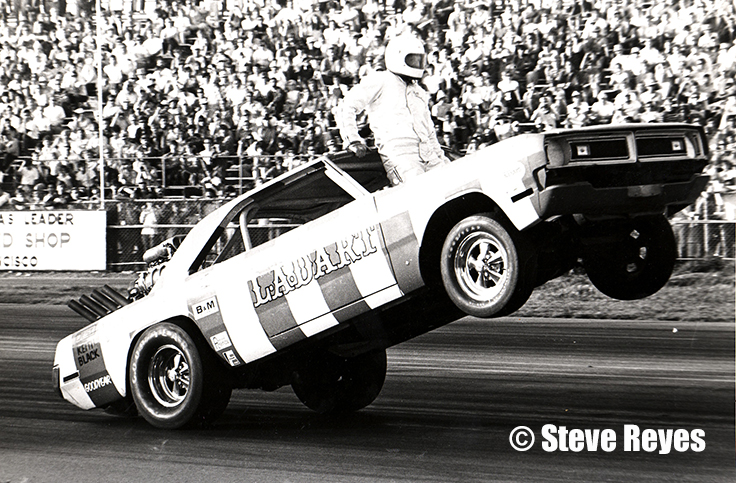
One of my favorite Jack Hart stories came from wheelstander great "Wild Bill” Shrewsberry, and it speaks to Hart’s ability to connect with racers while still keeping a firm hand on the rules decisions. Shrewsberry was called on the carpet in Hart’s office for standing up through the windshield of his L.A. Dart in mid-wheelstand at Fremont Raceway. Although the fans loved it, NHRA, of course, could not let it go unrecognized.
"Jack Hart called me into the NHRA offices and told me, very politely, that he knew what I’d been doing and that I couldn’t do it anymore, but to tell everyone I got my ass chewed out really good about it," Shrewsberry recalled with a laugh.
The classic velvet fist routine.
I hope you all learned something today about the strength and fortitude that it took to get us where we are, people who innovated, regulated, and developed the very foundation of NHRA. People like Jack Hart and so many others made this happen, and we should all remain grateful that they did.
Phil Burgess can be reached at pburgess@nhra.com
Hundreds of more articles like this can be found in the DRAGSTER INSIDER COLUMN ARCHIVE
Or try the Random Dragster Insider story generator