

-
10 rear-end advantages every drag racer should know

-
NHRA Tech: Donnie Bender explains RacePak data acquisition
-
Crew chief Donnie Bender explains the finer points of a nitro clutch

-
NHRA Tech: Donnie Bender explains the evolution of the nitro fuel system

-
Fuel System 101: The basics of how to keep your beast fed a healthy diet

-
-
Prepare for success: Tips for getting ready to start your racing season

-
Racing Technology: Donnie Bender explains barrel valves and flow meters (part 2)

-
Racing Technology: Donnie Bender explains the inner workings of a nitro fuel system
-
How the supercharger lubrication system helps nitro teams save parts
-
Reinhart Reveals: Alan Reinhart explains the inner workings of torque converters

-
NHRA Expertise: The mechanical advantage leveraged in Pro Stock clutch tuning

-
NHRA Expertise: The valvetrain secrets of a nitro-burning Hemi
-
The modern drag racing helmet

-
NHRA 101: Turbochargers in drag racing
-
When it comes to nitro clutch discs, it's all about matching their personalities
- ad
-
Rebuilding a nitro supercharger, Part 2
-
Rebuilding a nitro supercharger, Part 1

-
Tech Talk Tuesday: A close look at the iron cylinder liners in a nitromethane engine
-
Weld Racing's drag racing wheels—explained

-
The Toyota “Hemi” you never knew about—until now!
-
What is the Chevy DRCE Pro Stock engine?
-
NHRA Expertise: Inside Top Fuel beadlock wheels

-
Pro Stock engine builder profile: Joey Grose
-
Pro Stock engine builder profile: Frank Iaconio

-
Pro Stock engine builder profile: Warren Johnson

- ad
-
Engine Wars! F1 vs IndyCar vs Pro Stock vs NASCAR vs Top Fuel
-
Tech Specs: Inside Chevy’s NHRA Pro Stock engine—The 500-cid DRCE
-
NHRA Expertise: Torque wrench life hack for hard-to-reach bolts
-
NHRA Expertise: Build a custom transmission dipstick for any car using AN fittings

-
Show us what you’re working on!

10 rear-end advantages every drag racer should know
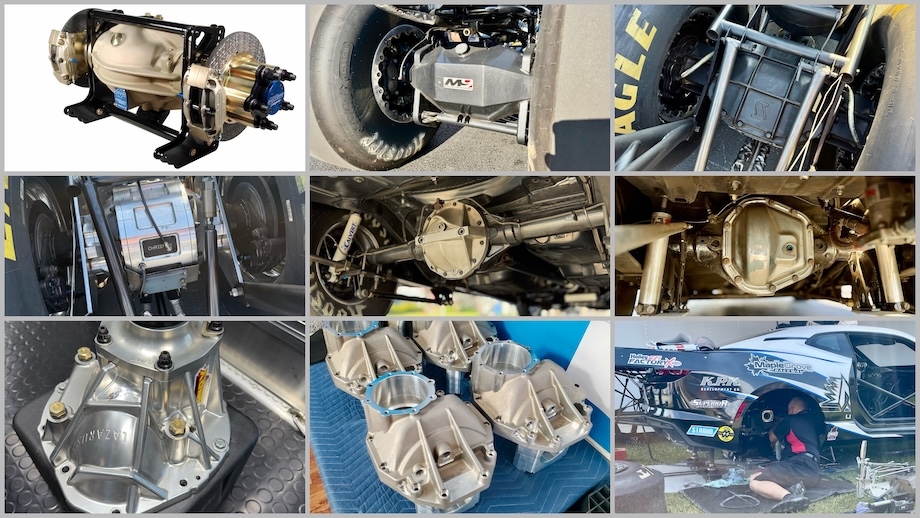
When it comes to drag racing, the path from horsepower to victory passes straight through your rear axle. You can make all the power in the world, but if your rear-end components can’t hold, transfer, and repeat it, your run won’t be quick and you cannot win.
For decades, racers have relied on companies like Mark Williams Enterprises, Moser Engineering, and Strange Engineering to build strength, durability, and efficiency into their driveline setups. NHRA National Dragster wants to share the real-world, battle-tested truths that determine whether your launch hooks or breaks.
These are the 10 most important rear-axle advantages every serious racer should understand, with direct input from the most trusted names in the sport. To understand what separates winners from the wounded, we spoke to three of the industry’s most respected experts: Mark Williams (Mark Williams Enterprises), Jeff Anderson (Moser Engineering), and J.C. Cascio (Strange Engineering).
“Lighter and stronger is every racer’s dream. But when it flexes and binds, or breaks, you lose everything you thought you gained.”
— J.C. Cascio, Strange Engineering
“Every drag racer has a theory. We don’t just have theory; we have what works.”
— Mark Williams, Mark Williams Enterprises
“You’ve got to consider all three forces: torque, vehicle weight, and dynamic shock loads.”
— Jeff Anderson, Moser Engineering
1. Gear oil: The unsung hero
The right oil offers cushioning under shock load and helps prevent pinion and gear damage. While synthetics shine in endurance and road racing, mineral-based oils have proven more durable in short, violent drag passes.
“We use Torco 85W-140. It has an EP [extreme pressure] compound in it, and it’s not synthetic.”
— Mark Williams
“The nonsynthetic mineral-based oil gets better gear life in a drag race application.”
— J.C. Cascio
2. Axle shaft strength and stiffness
Modern axles aren’t just thicker, they’re engineered. Williams’ shafts use tapering and undercutting to flex in controlled ways. Moser’s lineup uses proprietary heat-treating and material science to manage torque, shock, and fatigue. Cascio breaks Strange’s lineup into three tiers: induction-hardened street-strip axles, Hi-Tuf race axles, and 300M shafts for Pro Mod and Top Fuel.
“Weak links in your axle shafts cost races.”
— Jeff Anderson
“All our axles taper and undercut to allow flex in the right area — without taking a set.”
— Mark Williams
“Your axle must manage torsional, radial, and dynamic shock loads.”
— Jeff Anderson
3. Spline count: Size does matter
High spline counts spread load and reduce stress. At Moser, 35 spline is the floor. At Mark Williams, 40 spline is the norm. Strange uses application-specific data before recommending spline count. Bottom line: More splines equals more strength, if the material and shaft diameter support it.
“Get the largest possible spline you can fit. 40 spline is the big swing in drag racing.”
— Mark Williams
“We have cautious recommendations for spline count — it’s not just about horsepower, it’s weight, traction, and load.”
— J.C. Cascio
4. Spool selection: Steel, aluminum, or scalloped
Steel spools provide bulletproof durability. Aluminum spools save rotating mass but wear quickly. Cascio warns racers pushing for every pound of weight savings must inspect aluminum spools regularly or risk failure.
“Steel spools last. Aluminum spools are consumables.”
— Jeff Anderson
“Mass is your friend for durability, but Sportsman racers sometimes push parts to the edge.”
— J.C. Cascio
Pro tip: Scalloped steel spool offers a smart compromise between strength and weight.
5. Housing rigidity: Don’t let it flex
Whether you use an 8.8-inch, 12-bolt, Dana 60, or a modular 9-inch, housing rigidity directly affects performance.
“Through-bolt aluminum housings preserve alignment.”
— Jeff Anderson
“Angular contact pinion bearings prevent pinion movement changing the running pattern."— Mark Williams
“Today’s ultimate setup? A billet aluminum housing, billet center section, and 300M floater axles.”
— J.C. Cascio
6. Pinion angle: Set it at ride height
Set your pinion angle at race weight. Even a degree off can cause U-joint bind and broken bearings.
“Match your pinion angle to the transmission output shaft at race weight.”
— Mark Williams
7. Floater hubs: Maximum control under load
Floater hubs separate torque transfer from load-bearing — common in Pro Mod, Alcohol, and Top Dragster.
“Floater hubs eliminate axle bowing and toe changes.”
— Mark Williams
8. Gear material and surface finish
Use 9310 alloy for shock absorption. Micro-polishing like Supra-Fin reduces friction and heat.
“We use 9310 alloy and polish it with Supra-Fin surface improvement process.”
— Mark Williams
9. Oil volume: Don’t starve the bearings
Too little oil burns bearings. Too much causes drag. Trap oil where it matters — at pinion and gear teeth.
“Too little oil means burned pinion bearings.”
— J.C. Cascio
10. Service intervals: Don't just "set it and forget it"
Change your gear lube at least once a year. Check for cracks, wear, and unusual spline contact.
“Sportsman racers should inspect at least once per season or sooner, if something sounds off.”
— J.C. Cascio
Final word
If you're chasing e.t.s or national records, your rear axle matters. Gear life, consistency, and safety come from proven engineering, not shortcuts.
Rear-Axle Specs That Matter
| Component | Pro Tip |
|---|---|
| Gear Oil | Torco 85W-140 mineral-based with EP compound |
| Axle Shafts | 35–40 spline, tapered and undercut |
| Spool | Steel for strength, aluminum for weight, scalloped steel for balance |
| Housing | Billet or through-bolt aluminum for rigidity |
| Gear Material | 9310 alloy, Supra-Fin polish |
| Pinion Angle | Set at race weight |
| Floater Hubs | Eliminate axle flex under load |
| Oil Volume | Trap oil at critical points |
Sources
- Mark Williams Enterprises
866.508.6394
www.MarkWilliams.com - Moser Engineering Inc.
260.726.6689
www.MoserEngineering.com - Strange Engineering Inc.
800.646.7618
www.StrangeEngineering.net
Bonus! Inside a Chrisman 12-inch Top Fuel Rear End
Tired of Ford-based parts in your GM race car?
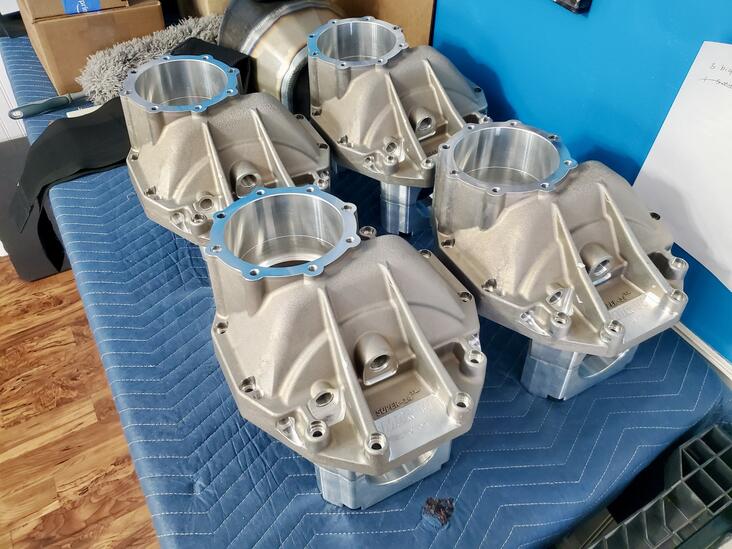
Hate the idea of swapping Ford 9-inch-based parts into your GM vehicle because your 10-bolt or 12-bolt axle isn't up to the task? Like the idea of a sheetmetal housing and a drop-out third-member to make gear changes easier at the track? Check out this option that comes to drag racing from the off-road world.
Since 1973, GM has offered a 14-bolt rear end that uses a massive 10.5-inch diameter ring gear (compared to 8.5" for the 10-bolt and 8.875" for the 12-bolt) and a robust triple-pinion bearing design. But drag racers never fully embraced it—because the original cast-iron and pressed-in-tube housing was designed for 1-ton trucks, not race cars.
Mercenary Offroad (MOR) changes that with a cast-aluminum 14-bolt dropout third-member, bringing decades of hot rod and off-road know-how into a battle-ready package.
These aluminum third-members are engineered to use the 1973–2018 14-bolt’s triple-pinion-bearing 10.5-inch gearset, paired with precision hardware and spools. They drop into MOR’s fabricated chromoly axle housings built specifically for modern performance applications.
Source
Mercenary Offroad
818.653.6637
MercenaryOffroad.com