

-
NHRA Countdown to the Championship hits halfway point in dramatic fashion
-
2026 NHRA Rookie of the Year of the year candidates announced

-
Teams of Langdon, Beckman, Anderson, Angie Smith lead Crew of the Year battle

-
Bandimere, Whiteleys to be inducted into Colorado Motorsports Hall of Fame

-
Drag Racing Association of Women opens applications for new board members

-
-
Rating the challengers for the 2026 NHRA Rookie of the Year award

-
Stampede of Speed brings Texas-sized showdown to Texas Motorplex
-
Watch the Division 3 Lucas Oil Series race from St. Louis for free on NHRA.tv
-
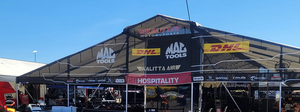
How Kalitta Motorsports elevates its hospitality experience with Deecell
-
Blockbuster stars set for Stampede of Speed Texas Music Festival

-
Unofficial Mission Foods points standings

-
The faces of prerace: See the Sunday intensity building at the Napa Auto Parts NHRA Midwest Nationals

-
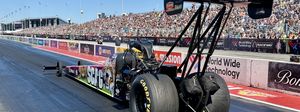
World Wide Technology Raceway sells out for sixth consecutive Saturday
-
15th annual NAPA Auto Parts NHRA Midwest Nationals Friday preview

-
Kelly Clontz welcomes back partner ArchKey at NHRA Midwest Nationals

- ad
-
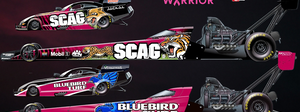
Scag Racing goes pink at NHRA Midwest Nationals for Breast Cancer Awareness
-
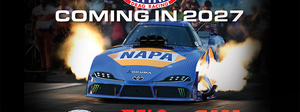
NHRA announces new media rights agreements with FOX Sports, The CW Network, and FloSports
-
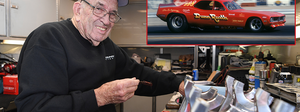
Funny Car legend Jim Dunn to be inducted into West Coast Motorsports Hall of Fame
-
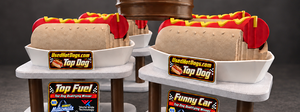
“Top Dog” competition highlights Friday night qualifying in St. Louis
-
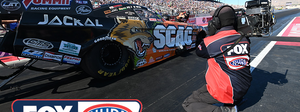
NAPA Auto Parts NHRA Midwest Nationals set for football-adjacent FOX broadcast
-
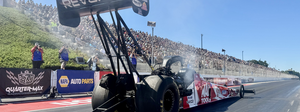
Sellout crowd at debut NHRA Nationals at The Rock
-
Last Driver Standing low qualifier bonus coming to NHRA Nationals at The Rock
-
September issue of National Dragster jam-packed with NHRA race results

-
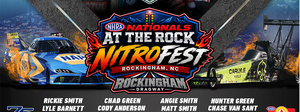
Rockingham NitroFest fan event kicks off NHRA Nationals at The Rock
-
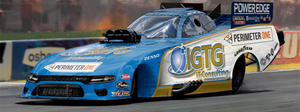
IGTG, Perimeter.One join Paul Lee Racing as primary sponsor at The Rock
- ad
-
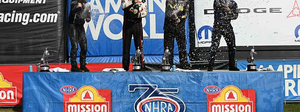
Langdon, Vandergriff, Coughlin, and Hall claim inaugural Michigan titles
-
Persistent weather postpones Dodge NHRA Great Lakes Nationals racing until Monday
-
Schedule adjustment for today's Dodge NHRA Great Lakes Nationals—Optimistic for 4 p.m. start time
-
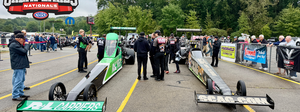
Saturday preview: Dodge NHRA Great Lakes Nationals presented by Mopar
-
Watch the press conference: Tony Schumacher to join Tony Stewart Racing as Leah Pruett steps out of seat for 2027

NHRA 101: An introduction to NHRA Drag Racing

A drag race is an acceleration contest on a track, or dragstrip, that begins from a standing start between two vehicles over a measured distance. A drag racing event is a series of such two-vehicle, tournament-style eliminations. The losing racer in each contest is eliminated, and the winning racers progress until one remains.
Founded in 1951, NHRA is the largest motorsports sanctioning body in the world. Its premier series, the NHRA Mello Yello Drag Racing Series, crisscrosses the U.S., making 24 stops in 21 cities during 10 months.
Top Fuel, Funny Car, Pro Stock, and Pro Stock Motorcycle are the classes in the NHRA Mello Yello Drag Racing Series. Top Fuelers and Funny Cars race on a 1,000-foot race course, and Pro Stockers and Pro Stock Motorcycles compete on the quarter-mile (1,320 feet).
Here’s a brief overview of the four classes:
Chassis: 4130 chromoly tubing; wheelbase can vary between 280 and 300 inches. Center-mounted driver sits in front of the engine.
Body: Attached to the chassis with quick-release fasteners, the lightweight multipiece body and cowl are typically formed of metal, fiberglass, or carbon fiber/Kevlar.
Minimum weight: 2,330 pounds, including driver.
Body: Attached to the chassis with quick-release fasteners, the lightweight multipiece body and cowl are typically formed of metal, fiberglass, or carbon fiber/Kevlar.
Minimum weight: 2,330 pounds, including driver.
Engine: The engine of choice is an aluminum version of the 426 Chrysler Hemi that cannot displace more than 500 cubic inches.
Drivetrain: Power transfers from the engine to the rear tires via a complex timer-controlled clutch system.
Drivetrain: Power transfers from the engine to the rear tires via a complex timer-controlled clutch system.
Fuel: Nitromethane (90 percent/10 percent methanol). Fed by two fuel pumps that can each deliver more than 100 gallons per minute, a typical engine will gulp 15 gallons of fuel during the burnout, staging, and a full pass.
Wings: The carbon-fiber rear wing, maximum of 1,500 square inches, exerts about 6,000 pounds of downforce on the rear tires. The front wings can apply as much as 3,000 pounds of downforce.
Tires: The rear Goodyear slicks are 18 inches wide and nearly 10 feet in circumference. The air pressure is at 6 pounds. The front tires have a minimum wheel diameter of 17 inches.
Brakes: Disc brakes measure almost a foot in diameter and are made from carbon fiber. The primary braking system is a pair of independently mounted parachutes that can produce up to five negative G forces of stopping power.
Brakes: Disc brakes measure almost a foot in diameter and are made from carbon fiber. The primary braking system is a pair of independently mounted parachutes that can produce up to five negative G forces of stopping power.
Performance: Top Fuel dragsters can cover the 1,000-foot racing course in less than 3.7 seconds at more than 330 mph.
Chassis: 4130 chromoly tubing; maximum wheelbase of 125 inches. Center-mounted driver sits behind the engine.
Body: Carbon-fiber replica of a 2000 or later model NHRA-accepted coupe or sedan of a type originally mass-produced by an automobile manufacturer.
Minimum weight: 2,585 pounds, including driver
Rear spoiler: Capable of applying 6,000 pounds of downforce to the rear tires
Engine: The engine of choice is an aluminum version of the 426 Chrysler Hemi that cannot displace more than 500 cubic inches.
Drivetrain: Power transfers from the engine to the rear tires via a complex timer-controlled clutch system.
Fuel: Nitromethane (90 percent/10 percent methanol). Fed by two fuel pumps that can each deliver more than 100 gallons per minute, a typical engine will gulp 15 gallons of fuel during the burnout, staging, and a full pass.
Tires: The rear Goodyear slicks are 18 inches wide and nearly 10 feet in circumference. The air pressure is at 6 pounds. The front tires have a minimum wheel diameter of 17 inches.
Drivetrain: Power transfers from the engine to the rear tires via a complex timer-controlled clutch system.
Fuel: Nitromethane (90 percent/10 percent methanol). Fed by two fuel pumps that can each deliver more than 100 gallons per minute, a typical engine will gulp 15 gallons of fuel during the burnout, staging, and a full pass.
Tires: The rear Goodyear slicks are 18 inches wide and nearly 10 feet in circumference. The air pressure is at 6 pounds. The front tires have a minimum wheel diameter of 17 inches.
Brakes: Disc brakes measure almost a foot in diameter and are made from carbon fiber. The primary braking system is a pair of independently mounted parachutes that can produce up to five negative G forces of stopping power.
Performance: Funny Cars can cover the 1,000-foot racing course in less than 3.9 seconds at more than 325 mph.
Chassis: 4130 chromoly tubing; maximum wheelbase of 105 inches. The driver sits in the standard passenger-car position.
Body: Pro Stock bodies are composite replicas of their two- and four-door showroom counterparts. All body components must comply with the shape of stock components. Doors must be functional and operable from inside and out, and headlights, parking lights, and taillights must be stock-appearing.
Minimum weight: 2,350 pounds, including driver
Engine: Restricted to a maximum 500-cid, single-camshaft, 90-degree V-8 of the same corporate make as the body. Air, fuel, and ignition are controlled via an NHRA-specified engine-control module, eight fuel injectors, eight coil-near-plug modules, and a throttle body.
Body: Pro Stock bodies are composite replicas of their two- and four-door showroom counterparts. All body components must comply with the shape of stock components. Doors must be functional and operable from inside and out, and headlights, parking lights, and taillights must be stock-appearing.
Minimum weight: 2,350 pounds, including driver
Engine: Restricted to a maximum 500-cid, single-camshaft, 90-degree V-8 of the same corporate make as the body. Air, fuel, and ignition are controlled via an NHRA-specified engine-control module, eight fuel injectors, eight coil-near-plug modules, and a throttle body.
Drivetrain: Five-speed manual transmission, via clutch
Fuel: Restricted to spec racing gasoline
Tires: Measuring 16 inches wide and from 102 to 104 inches in circumference. Air pressure is as low as 4 1/4 pounds on the rear tires and as high as 32 pounds on the front tires to reduce rolling resistance.
Brakes: Four-wheel disc brakes are used in conjunction with dual parachutes.
Fuel: Restricted to spec racing gasoline
Tires: Measuring 16 inches wide and from 102 to 104 inches in circumference. Air pressure is as low as 4 1/4 pounds on the rear tires and as high as 32 pounds on the front tires to reduce rolling resistance.
Brakes: Four-wheel disc brakes are used in conjunction with dual parachutes.
Chassis: 4130 chromoly steel tubing, maximum wheelbase 70 inches.
Body: Aerodynamically enhanced replica of the original body following many production dimensions, and it is made from either fiberglass or a carbon-fiber composite.
Minimum weight: With few exceptions, Pro Stock Motorcycles must weigh no less than 575 pounds (625 for 160-cid two-valve Harley-Davidson V-Rods; 625 for 160-cid two-valve Buells, Victorys, and EBRs; 600 for 113-cid two-valve Suzukis; 595 for up to 107-cid two-valve Suzukis; 575 for up to 107-cid two- or four-valve Kawasakis) with the rider aboard.
Engine: The majority of racers use the V-Twin style or inline four-cylinder Suzuki or Kawasaki. NHRA-accepted fuel injection is permitted on all engines.
Fuel: High-octane spec racing gasoline.
Tires: The rear slick is 10 inches wide and 26 inches in diameter and is designed specifically for motorcycle drag racing. The front tire is a lightweight, treadless design that aids braking. Air pressure is 5 to 6 pounds on the rear tire and 30 to 32 pounds on the front.
Brakes: Three aftermarket carbon-fiber-composite or steel brake discs, one or two on the front and one on the rear. Parachutes are not required.
Body: Aerodynamically enhanced replica of the original body following many production dimensions, and it is made from either fiberglass or a carbon-fiber composite.
Minimum weight: With few exceptions, Pro Stock Motorcycles must weigh no less than 575 pounds (625 for 160-cid two-valve Harley-Davidson V-Rods; 625 for 160-cid two-valve Buells, Victorys, and EBRs; 600 for 113-cid two-valve Suzukis; 595 for up to 107-cid two-valve Suzukis; 575 for up to 107-cid two- or four-valve Kawasakis) with the rider aboard.
Engine: The majority of racers use the V-Twin style or inline four-cylinder Suzuki or Kawasaki. NHRA-accepted fuel injection is permitted on all engines.
Fuel: High-octane spec racing gasoline.
Tires: The rear slick is 10 inches wide and 26 inches in diameter and is designed specifically for motorcycle drag racing. The front tire is a lightweight, treadless design that aids braking. Air pressure is 5 to 6 pounds on the rear tire and 30 to 32 pounds on the front.
Brakes: Three aftermarket carbon-fiber-composite or steel brake discs, one or two on the front and one on the rear. Parachutes are not required.