

-
Behind the Scenes with the winners of the 2026 Texas NHRA FallNationals
-
Weekend Rewind: 2026 Texas NHRA FallNationals
-
Five Things We Learned at the Texas NHRA FallNationals
-
After fourteen years, GT Tonglet returns to Pro Stock Motorcycle
-
Forty years later, Beckman has gone from fan to leading the Funny Car field in Dallas
-
-
First look at 2027 Pro Stock combination in Dallas exhibition passes
-
Langdon riding a four-race, 16-round win streak into Countdown's second half
-
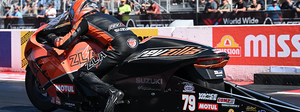
Gaige Herrera eyes Pro Stock Motorcycle championship opportunity in Dallas
-
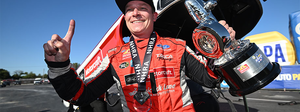
Funny Car’s Austin Prock thinking big for Texas-sized shootout
-
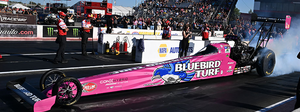
Top Fuel rookie Will Smith looks for dream weekend in Dallas
-
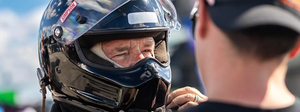
Plourd ready to complete bucket-list challenge with Las Vegas Top Fuel debut
-
From Dearborn to the dragstrip: Ford Racing's story began 125 years ago today
-
Behind the Scenes with the winners of the 2026 NAPA Auto Parts Midwest Nationals
-
Weekend Rewind: 2026 NAPA Auto Parts NHRA Midwest Nationals
-
Saturday in St. Louis: NAPA Auto Parts NHRA Midwest Nationals photo gallery
- ad
-
Could St. Louis bring out the best in Erica Enders once again?
-
Cameron Ferre: Still chasing Top Fuel greatness, just on his own terms
-
Ron Capps thinking big at NAPA Auto Parts NHRA Midwest Nationals
-
Top Fuel’s Shawn Langdon looking for fourth straight win of 2026
-
Behind the Scenes with the winners of the 2026 NHRA Nationals at The Rock
-
Weekend Rewind: The inaugural NHRA Nationals at the Rock
-
Five Things We Learned in Rockingham
-
New venues like Rockingham bring excitement for old pro Ron Capps
-
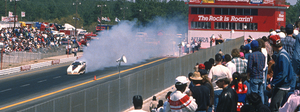
That was then, this is now: The Winston Invitational at Rockingham
-
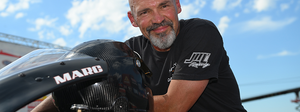
After a near-miss in Michigan, Ingwersen and crew are more inspired than ever
- ad
-
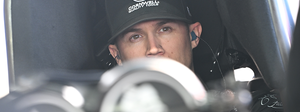
Jordan Vandergriff relishes first opportunity to race at Rockingham Dragway
-
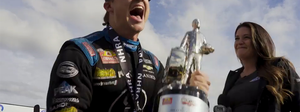
Behind the Scenes with the winners of the 2026 Dodge NHRA Great Lakes Nationals
-
Weekend Rewind: 2026 Dodge NHRA Great Lakes Nationals
-
Five things we learned from the Dodge NHRA Great Lakes Nationals presented by Mopar
-
Vandergriff and crew took aim at No. 1 in challenging Michigan conditions
A quarter century of crazy: 25 moments from NHRA Pro Mod’s first 25 years
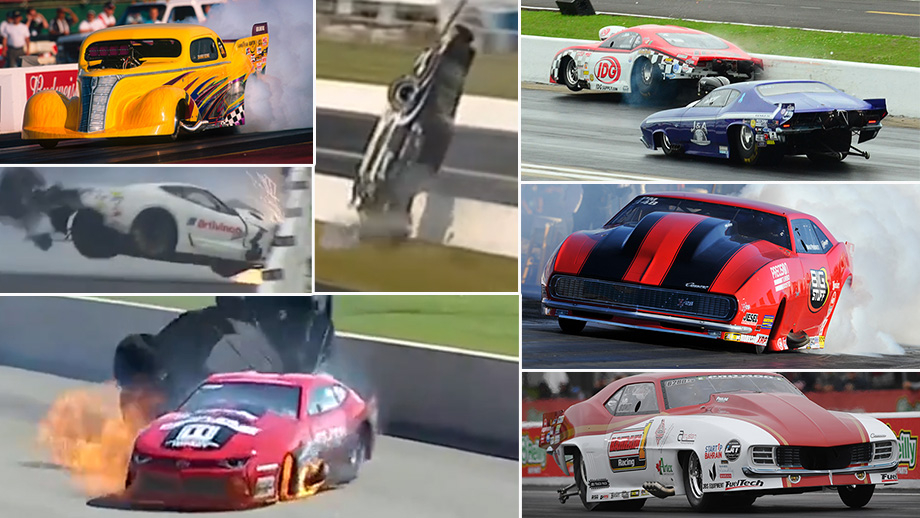
In the realm of NHRA Championship Drag Racing, Pro Modified stands as a unique pillar of the sport. NHRA did not create the class, the NHRA is now the last place the cars run the full quarter-mile, and it has been a category that has made its bones on a level of hair-raising action pretty well unmatched by any other. If drag racing in its entirety were a funny farm, Pro Modified would have its own wing, and it would be far, far from the others.
We say all this with love and admiration. It takes next-level skill tuning and driving these cars to succeed. There are more experts on various power adders in the Pro Mod pits than all others combined, and lastly, there is leadership in those pits, and that is why this class is entering its 25th season as part of the NHRA tour. The rebels, the wheelmen and women, the bombastic personalities, and the do-anything-to-win attitude define Pro Mod. Always have and always will.
Because of this 25th season in 2026, we decided to look back at 25 moments of NHRA Pro Mod history that display many different things. Some are defined by triumph, some by terror, and yet others by tenacity, but they have all contributed to the rich history of this indescribably neat category.
Today, let's take a look at Nos. 11-25, followed later this week by the Top 10.
No. 25: Jim Whiteley wins Houston 2016 from 17th
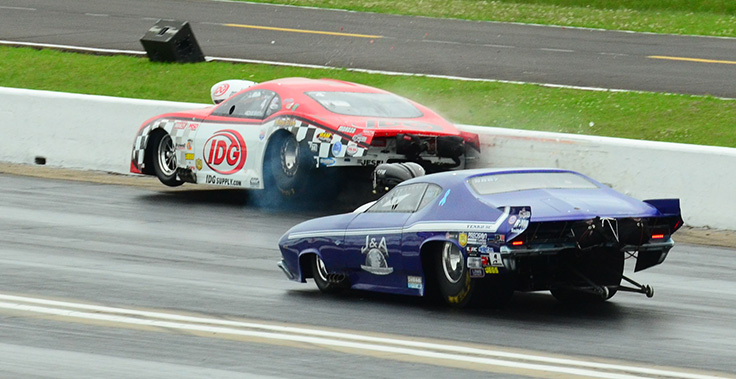
When Jim Whiteley watched as Rickie Smith careened across the dragstrip in the final round of the 2016 NHRA SpringNationals in Baytown, Texas, he may have been more astonished than anyone else in the house. Having missed the cut in qualifying by 16-thousandths and sitting 18th in the order, his weekend seemed over. Breakage allowed him to enter the field, and once he did, Whiteley carved through the rounds and into the final against Smith. Smith, who had been a tenth to a tenth and a half quicker all day, suffered massive tire shake and a resultant lane-swapping crash that handed Whiteley the win. He became the fifth person to ever win an NHRA national event as an alternate, company that included Clayton Harris, Tom McEwen, Ken Veney, and Michael Bartone. Not too shabby.
No. 24: Jeff Jones and the 2021 save to end them all at the Texas Motorplex
The C7-style Corvette was a dominant body in the Pro Mod class circa 2021. They looked fast sitting still, certainly cut through the wind going forward, but how did they do in reverse? It was a question no one thought we’d ever get an answer to until Jeff Jones lost the handle on his car and got it turned around backward at high speed. This breathtaking moment could have gone all kinds of bad, but in the end? Not a scratch. Incredible.
No. 23: The near miss heard ‘round the doorslammer world
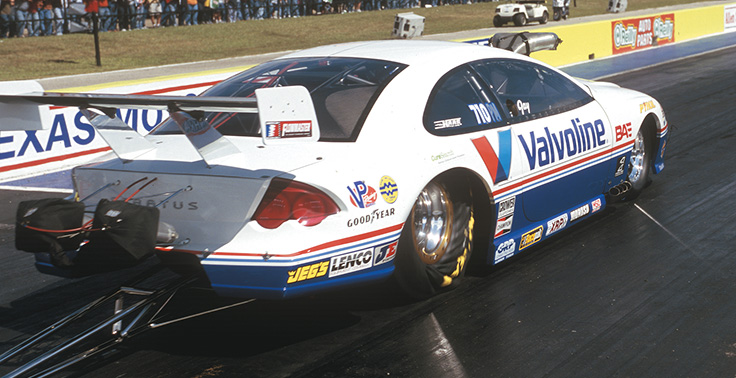
It was a Saturday at the Texas Motorplex in 2005 during a weekend that anyone who lived through it in person will never forget. The night prior, we all witnessed what was perhaps the most visually horrendous Pro Stock crash of all time, so when Saturday night came, we were all geared up for more positive outcomes. Thankfully, one racer was as well.
It was the event where Jay Payne nearly hammered himself into Pro Modified history. About two months before Oct. 8, 2005, John Zappia in Australia had made the first competition-legal, full-bodied drag racing run in the five-second zone. Mitch Stott had made the first five-second run period in testing back in 2003 with an outlaw setup, but the world was fixated on seeing the first legal U.S. competition run. In the final pair of cars, lined up next to Chip King, Payne laid down a picture-perfect effort.
The car was .996 to 60 feet, 2.626 to the 330-foot mark, 3.93 to the eighth-mile, and 5.057 seconds to the 1,000-foot block. The quarter-mile elapsed time? 6.000 at 239.23 mph. Just that close.
No. 22: The round that ate the cars
As any drag racing fan knows, Pro Modified cars can make even the most seasoned fans leap from their seats to watch things both good and bad. At the 2019 NHRA Heartland Nationals, things went haywire. Jeremy Ray, who had been one of the awesome stories of that and the prior season with a down-to-earth approach and high-achieving results, suffered a massive crash in the first pair of the first round.
As if that was not bad enough, two pairs later, Todd Tutterow and Steven Whiteley had an ultra-rare two-car high-speed get-together that left their cars in tatters, but thankfully their persons intact.
But the terror was not over yet as, during the final pair, Alex Laughlin launched and was leading his match against Mike Janis when his car suddenly hung a hard left, pancaking the whole side and forcing an incredible thrash to make the next race in Bristol. We all breathed a sigh of relief when this round was put in the books.
No. 21: Hang ‘em high, Harry
Harry Hruska’s turbocharged Camaro was one of the most entertaining cars to watch during its time on the NHRA tour. Before taking the seat himself, drivers like Bo Butner, Billy Glidden, Jonathan Gray, and Don Walsh all had the reins of this monster. Its calling card? Downtrack wheelies that had even these seasoned pilots questioning their own sanity. It’s most impressive run, though, was this one, which Harry was in the seat for. It may not have been the car’s quickest elapsed time, but an eighth-mile wheelie? Oh yes. People loved this car … at least watching this car.
No. 20: Sidnei Frigo leaves the ballyard in 2016
It was a day like so many others in Baytown, Texas. The skies were leaden, the tension was high, and Pro Mod qualifying was on the track. Sidnei Frigo had been the No. 1 qualifier at the 2016 NHRA Gatornationals in his turbocharged Corvette, so the expectations he had for Houston were high. He ran 5.81 in the first qualifying session, and in session two, he and his team poured the coals to their car. As he was ripping down the track on the extreme inside of the groove, he lost the handle, got into the timing blocks, and before anyone knew it, the car was flying over the top end wall and executing a number of rolls and flips in the thankfully sodden earth lining the track. The soft, wet ground certainly helped to minimize the physical impact, but the car was destroyed. Sidnei had an arm injury but was back at the track the same day this craziness took place.
No. 19: Brad Personnett wins Indy with turbos in 2010
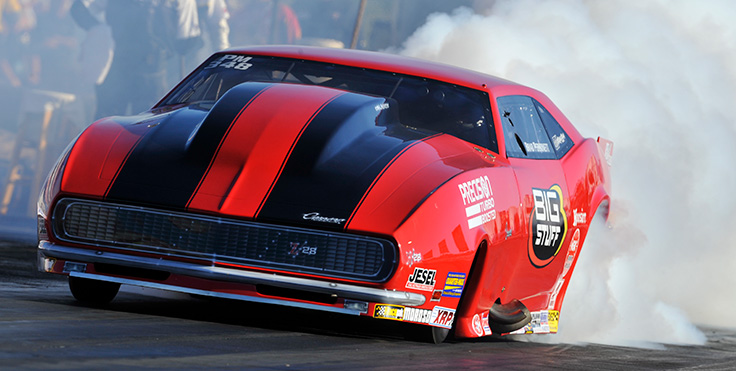
There have been many landmark moments with different power adders in NHRA Pro Mod, and you’ll see more as the list goes on, but here’s the first one we arrive at. The road to making turbochargers not just competitive but workable and winning devices at this level was a rocky and hard one. One man, Brad Personnett, was a leader, some would even say a pioneer in this regard. A brilliant tuner and rock-solid driver, he had set many records and loaded up other competitors at events before the 2010 NHRA U.S. Nationals, but it was that weekend where turbochargers in the NHRA Pro Mod realm were totally proven out. His second-round race against Danny Rowe carried a .014 margin of victory; his final-round single against a broken opponent was hard earned. His 255.39 top speed of the meet was mind-boggling for the time.
No. 18: Erica Enders sets the speed record on fire, literally
The 2019 season saw then-two-time NHRA Pro Stock champion Erica Enders double down in the doorslammer world. Elite Motorsports added a turbocharged Camaro to their lineup, and Enders was tapped to drive it. The car was insanely fast and proved that at the 2019 Summit Racing NHRA Nationals in Norwalk. Crossing the finish line with a recorded speed of 261.22 mph, it is still the fastest run in class history as of this writing in early 2026. That’s the good news. The bad news? The car was on fire, like a lot on fire. Blinded by the smoke and flames, choking on same, Enders managed to get the car stopped on track before escaping out the driver’s door as the blaze raged. A harrowing trip into the record books.
No. 17: Mike Ashley goes back-to-back in 2004 and 2005, first two-time NHRA Pro Mod champ
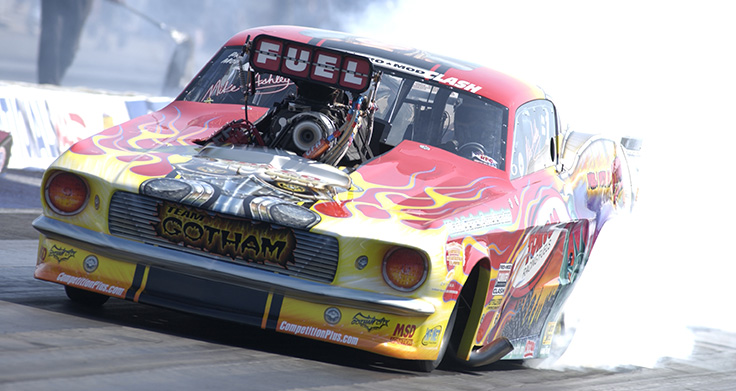
While the world revels at the performance of Justin Ashley on a seemingly week-to-week basis in Top Fuel these days, his roots come from the Pro Mod world. Justin’s father, Mike, was one of the NHRA Pro Mod class’s first huge personalities, and he had the driving chops to back it up. The 2004 title run was a close shave with Danny Rowe right down to the end of the season, whereas the 2005 title was a dominating one.
During that season, the team stacked consecutive victories in such a way that only a personal decision to attend a family gathering rather than race one weekend stopped the steamroller. They had won four straight when the decision to sit out a race was made, and they’d add another victory and three additional finals that 10-race season as well.
As he was racking up the 2005 title, Ashley was also moving into the world of Nitro Funny Car, where he’d eventually move his full concentration into and succeed as well.
The man once described as “the loud guy from New York” by his competition now watches intently as his son, the antithesis of loud, keeps the family tradition of winning alive.
No. 16 (tie): The ProCharger arrives in 2020, the screw supercharger in 2022
Up until the 2020 rulebook came out, Pro Modified racers in the NHRA could choose between nitrous oxide, turbochargers, and Roots superchargers. After a lot of work between the NHRA and ProCharger, the widely known centrifugal superchargers were added to the list of optional equipment in the class, and in no time, the world stopped. Robbed of a flashy debut at the Gatornationals, which were squashed when the pandemic became, well, a pandemic, it didn’t take long for them to win (once racing resumed).
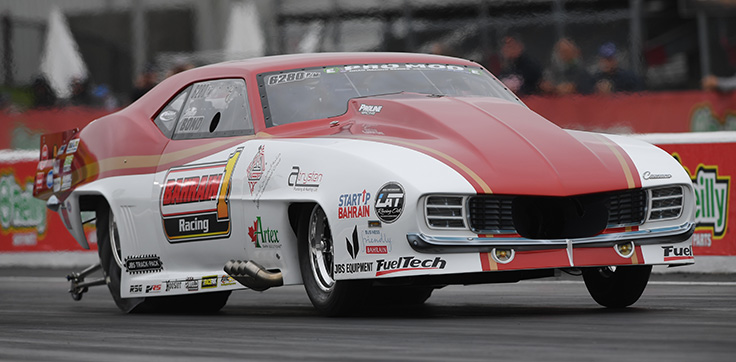
Justin Bond scored the first NHRA ProCharger win in Houston that year, running 5.707 seconds at 249.35 mph in the final to defeat Brandon Pesz. He qualified third at the event with a very solid 5.692 during that late-season weekend in the strangest year on record.
Bond’s win was proof that the centrifugal supercharger was a player capable of running with, and sometimes ahead of, the other alternatives in the category.
The final power adder frontier for NHRA Pro Modified to cross came in 2022 with the allowance of the fearsome PSI screw supercharger into competition. The screw design dates back to the 1930s and is a much more efficient way of moving and compressing air than the Roots supercharger that had been a stalwart in the class for decades by this time.
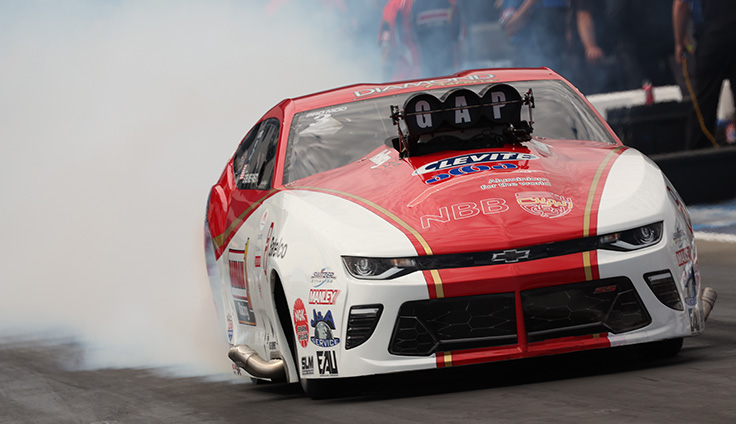
There was great trepidation about what was to come as the “screw-charger” has often been a singularly dominating force in drag racing classes where it is allowed. Few adopted the combination in 2022 due to various restrictions on it. “Stevie Fast” Jackson did, though. Slowly but surely, he was able to make more power, lower his e.t.s, and by the late part of the season, specifically at the fall Charlotte event at zMax, Jackson recorded the first screw supercharged Pro Mod win in NHRA history. Like the ProCharger, it is now a widely used unit among competitors. In the context of this piece, it should be known that Jackson defeated Bond in the final, running 5.715, 254.62 to Bond’s 5.745, 249.90.
No. 15: Tim Tindle’s terrible tumble at the 2013 U.S. Nationals
When longtime NHRA Pro Mod racer, former category rookie of the year winner, and multitime race winner Tim Tindle announced he was partnering up with Danny Rowe for the back half of the 2013 NHRA season, people saw it as a great thing. Tindle would be able to help Rowe’s title chances, Rowe would provide Tindle with top-shelf equipment, and the two would really take the fight to the class.
That was the plan, anyway. That plan came unglued on Sunday at the 2013 NHRA U.S. Nationals when, during the first round of eliminations, Tindle suffered what many have described as the “crash of the decade.”
As you’ll see, this one just never seems to end with the car riding the wall, being launched airborne, landing in the grass next to the track, and just flipping and rolling with fury. Tindle was transported to the hospital but sustained no serious injuries. Somehow.
No. 14: Danny Rowe puts the Roots blower in the winner’s circle first, circa 2001
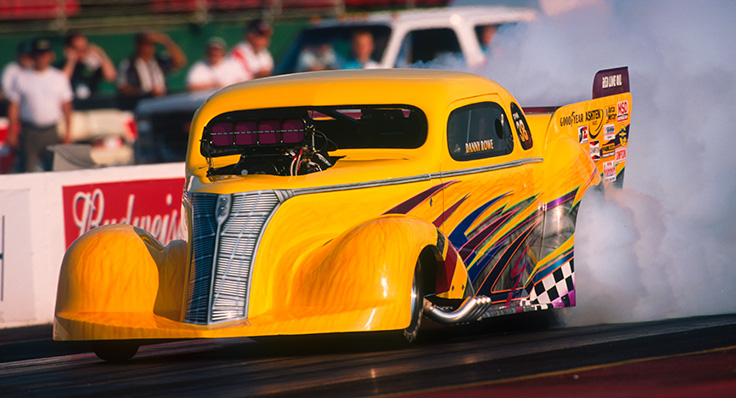
When it comes to the true Pro Modified traditionalist, there is no other power adder than nitrous, which is what the class was born and bred on. The second noise and wind maker allowed into the category was the Roots-style supercharger, and when the 2001 five-race exhibition series kicked off, those were the only two options allowed in the class.
Nitrous cars dominated the first three races, but it would be a hot weekend in June at Worldwide Technology Raceway that saw Danny Rowe hammer home the first supercharged win in NHRA class history with a 6.27/221-mph final-round win over a tire-shaking Ed Hoover. As we have seen, the menu of supercharger options has certainly swelled over the years.
No. 13: Against all odds, Lyle Barnett wins the 2022 U.S. Nationals
When the final round of the 2022 NHRA U.S. Nationals rolled around the corner, the names were not surprising, but the equipment may have been to some. Kris Thorne had been running roughshod over the competition that season in his ProCharged Jamie Miller-tuned rocket, and he sat opposed to Lyle Barnett in a turbocharged entry out of Elite Motorsports. Turbo cars were on the wane at this time in history, and beyond that, this one didn’t look all that great in qualifying, barely making the field in 15th.
In eliminations, Barnett stepped up. He beat Mike Castellana on a holeshot in round one, left on and outran JR Gray in round two, and then in succession, Eric Dillard and Kris Thorne red-lit, undoubtedly triggered by Barnett’s reputation, placing him in the winner’s circle.
It was an incredible win for one of the category’s hardest chargers.
No. 12: Mike Castellana and Frank Manzo hammer into the 5.60s in 2017
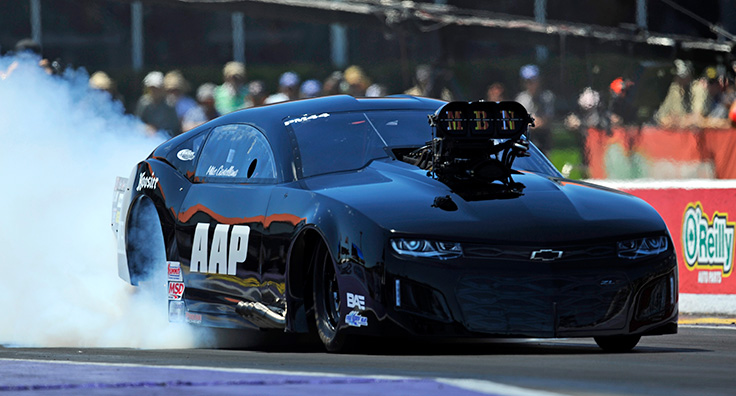
It was high noon on a beautiful Sunday at the NHRA SpringNationals in Houston. Second-round eliminations were set to kick off and Mike Castellana had a bye run because of a double disqualification coming out of the first round. With 71-degree air, a 103-degree race track, and 1,240 feet of density altitude, the stage was set for a fast round. Castellana’s tuner, Frank Manzo, sure thought so. He loaded the supercharged machine up with a hero tune.
With a .937 60-foot time, 3.746 clocking at the eighth-mile, and 5.685 quarter-mile elapsed time, it was the quickest run in the history of the class and the first legal run in the 5.60s in NHRA class history. What makes this one so significant to us is that when you look at where the cars run now and in what elapsed time bracket, you’ll notice it’s that 5.60s window where the premier machines cohabitate.
To give you an idea of just how nasty this run was, the next closest run that round in Houston was 5.793, more than a tenth of a second behind.
No. 11: ‘The Shadow 2.0’ wins the U.S. Nationals in 2018
Drag racing is a sport of cars and people. Most of the time, the people outshine the cars, but there are rare occasions where the cars themselves seem to take on some human qualities. Such was Steve Jackson’s mount in 2018 at the NHRA U.S. Nationals, a Camaro known as “The Shadow 2.0.” It was also a car that was never intended to see an NHRA national event.
Jackson had suffered a terrible crash earlier in the season at zMax Dragway during the NHRA Four-Wide Nationals, decimating his NHRA-spec Camaro. “The Shadow,” typically his outlaw car, was known far and wide for its winning exploits on both big tires as an outlaw Pro Mod and small tires competing in the Radial vs. The World category. The car, especially to diehard doorslammer fans, had achieved mythical status.
Converting the machine into NHRA legal mechanical specifications while recovering from the after effects of the crash, Jackson rolled into Indy with a talented group and seemingly no shot to even qualify. The car was kind of terrible, but on their fifth shot, they made it in.
Once eliminations began, Jackson locked in, and Jose Gonzales was in the other lane. Gonzales had been quicker through the first two rounds, but the gap was narrowed to almost nothing in the semifinals.
Both cars were shaking, rattling, and rolling on the final-round sprint, but Jackson would prevail with a 6.167 ahead of the 6.682 of Gonzales. Pro Mod fans of the world celebrated, and the legend of the Shadow 2.0 grew. The same car and driver would win the next Pro Mod race in St. Louis.
Next: The Top 10 moments