


The calculus that goes into picking NHRA Sportsman racing’s greats
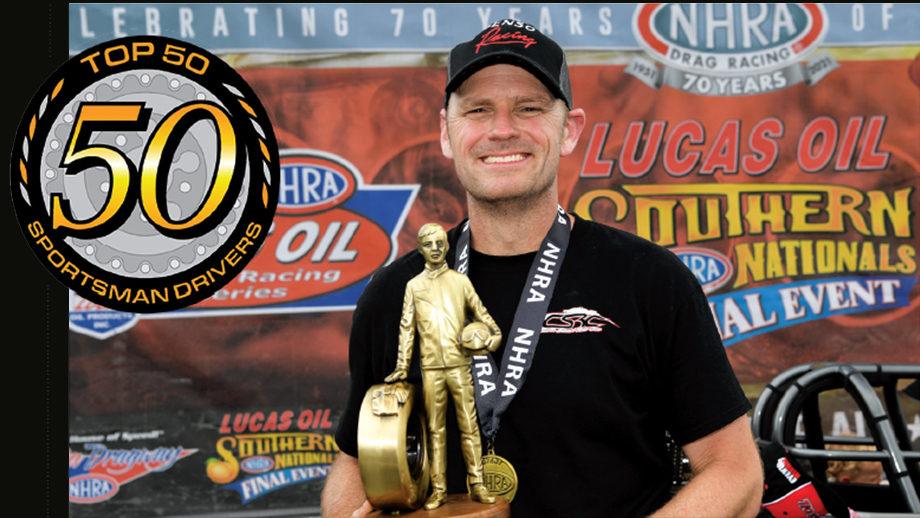
It was about two months ago that I got the text from Phil Burgess, the editor of National Dragster. In it, he detailed the Top 50 Sportsman Racers project, and he asked if I’d be willing to be a panelist. As I read the text, I was immediately flooded with a wide array of emotions. I was excited about the list as a whole — Sportsman racers deserve this recognition! I was honored.
While I’ve long considered myself a Sportsman racing historian of sorts, I’m not sure that I’m adequately qualified as a panelist (that feeling got even stronger when Burgess shared the list of panelists — it’s literally a Who’s Who of Sportsman drag racing). I was a little conflicted: I thought I could be considered as a candidate for a Top 50 slot myself, and I have to admit that the thought of writing my own name on the ballot felt a little awkward. But most of all, I had this overwhelming sense of responsibility.
While this list, or any list of its kind, isn’t necessarily authoritative, the fact is that, as panelists, we’re tasked with identifying the best 50 drivers to ever do what we do. That’s a pretty hefty responsibility, and it inherently means we’re going to exclude a number of talented and qualified drivers. On some level, this list will live on for years to come, as a reminder of the talents and accomplishments of these drivers, long after their on-track glory days have passed. In short, I felt this overwhelming responsibility to do my part to get it “right,” or as “right” as I could.
In the recent weeks, some of the Top 50 Racers have been released progressively: 10 honorees at a time. At the time of this writing, no one has seen the entire list (including myself). Every Tuesday, I get excited to see the next 10 drivers who have been included … And I know I’m not the only one. This rollout is exciting because it’s meaningful. In a way, it’s Sportsman racing’s version of the Hall of Fame!
I’m honored to have been a small part of a tremendous panel — it’s hard to imagine that the NHRA National Dragster staff could have assembled a more qualified group of judges. Joining me on the panel were Dan Fletcher, David Rampy, Peter Biondo, Justin Lamb, Gary Stinnett, Jeff Taylor, and Austin Williams. This wasn’t a situation where we all met in a room and hashed it out; we each submitted our individual ballots, and the ND team tallied the results.
Like each of the panelists, I was tasked with creating my own Top 50. With that came the difficult attempt at creating what is ultimately a subjective list, as objectively as possible. What should the criteria even include? How do national event wins stack up against division championships? Does a NHRA Summit Racing Equipment E.T. Series championship carry more weight than a JEGS Allstars win? How much should I value consistency? Versatility? Longevity? Dominance?
As you might imagine, the task was even more difficult than I anticipated. While I did speak briefly with two of my fellow panelists, I intentionally kept my process to myself. I didn’t want to influence any other voters, and I didn’t want them to influence me. As a result, I can’t speak to the process that went into ultimately determining the Top 50, but I did want to use this platform to elaborate a bit on my own process. As you read along, perhaps you can think of what factors you’d consider in determining your own version of the Top 50.
In my process, I began by compiling research. Along with the National Dragster staff, fellow panelist Williams was incredibly helpful in this pursuit, as he holds the keys to the most comprehensive Sportsman racing database I’ve ever laid eyes on.
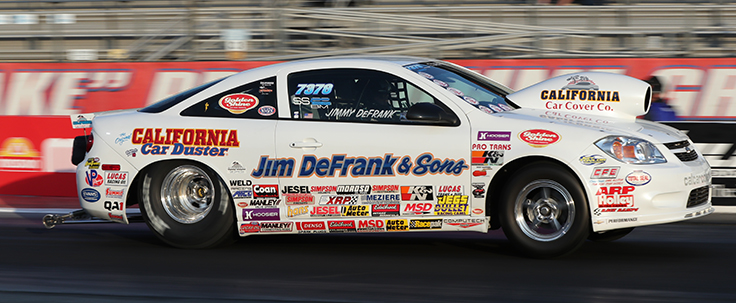
Before I get into that, I have to admit that I started my list where just about anyone would start their list. There are racers who simply have to be included, before we even get to counting stats. In my last column, I alluded to my own personal Mount Rushmore of Sportsman racing: Rampy, Fletcher, Scotty Richardson, Biondo, and Edmond Richardson. My list starts there. I decided that any racer who has won four or more world championships can’t be left off, so automatic spots on the list go to Taylor, Lamb, Kevin Helms, Jimmy DeFrank, Greg Stanfield, Stinnett, and Bruno Massel Jr.
I place a high value on versatility, so I also gave an automatic bid to the handful of drivers who have earned world championships in multiple categories (only four drivers — Scotty Richardson, Biondo, Rampy, and Taylor have won titles in three different NHRA Lucas Oil Drag Racing Series categories — and no driver to date has won championships in more than three). Put a check beside the names of John Labbous Jr., Williams, Jimmy Hidalgo Jr., Jimmy Lewis, Anthony Bertozzi, Mike Saye, and myself.
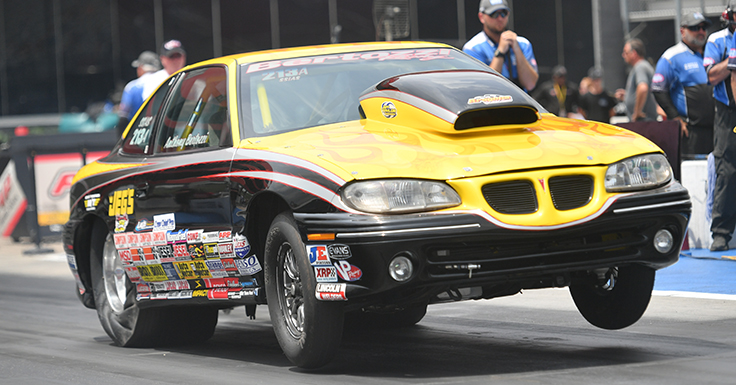
In the same vein, I gave an automatic nod to a foursome of drivers who, despite not owning multiple championships (in some cases not owning a single championship), have proven themselves in a group that I labeled as “kings of versatility.” For me, this group includes Tommy Phillips, Kyle Seipel, Jeg Coughlin Jr., and Jeff Hefler. Phillips is one of the winningest Sportsman racers in history despite not claiming a national title (he has finished second nationally six times in three different categories).
While Coughlin is obviously best known for his Pro Stock career — highlighted by five national titles — he also has a Super Gas championship to his credit and has earned 19 Sportsman national event victories across six different categories.
Seipel’s exploits are legendary. As the face of West Coast racing for decades, Seipel accumulated 10 Lucas Oil Series Division 7 titles, in addition to 12 Division 7 E.T. Series Finals triumphs (you read that correctly, it’s not a typo!) in the days before the NHRA Summit Racing Equipment E.T. Series World Championship was introduced.
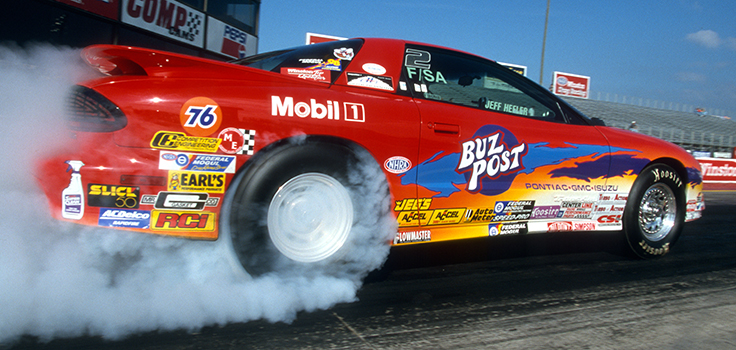
Hefler was the Stock eliminator world champion in 1998. Since the inception of the Summit E.T. National Championships in 2000, he has also earned the prestigious national crown more than anyone, accumulating four E.T. Series national championships across two different categories.
At this point in my list, I had a handful of drivers who didn’t fit the above criteria, but that I simply couldn’t imagine not being included in the Top 50. I’ll call them legacy picks: Sherman Adcock Jr., Sheldon Gecker, Steve Cohen, Mike Ferderer, and David Nickens.
That put my list at 29.
While I haven’t seen the final Top 50, I’d be shocked if each of the names I listed above is not included. I’d even go so far as to assume that most, if not all, of these racers are unanimous inclusions. With that said, that left 21 spots open on my list … And this is where it got tough!
I could literally make an argument for 70-plus racers to fill all those final 21 spots. In an effort to be as objective as possible, I created a scoring system; a rubric of sorts to help me quantify the accomplishments of these competitors. My system included separate weighting of Lucas Oil Series world championships, Summit E.T. Series national championships, division championships, national event victories, and JEGS Allstars victories, in addition to a small subjective score (used more as a tiebreaker).
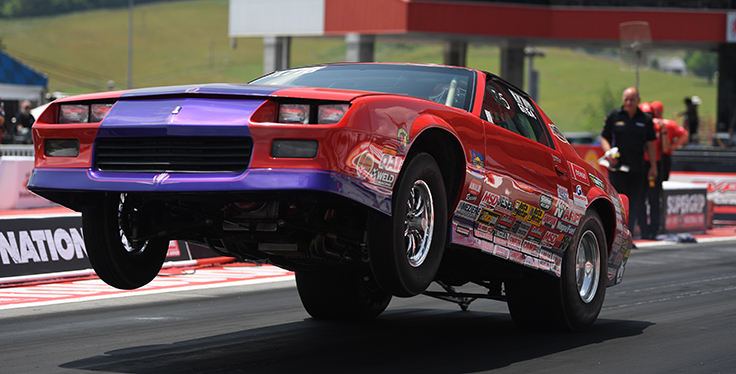
It’s through this lens that racers like Jeff Strickland (who had the highest score in my rubric among racers not listed above), Joe Santangelo, and Frank Aragona Jr. became obvious inclusions. In fact, I’d say that the next 10-ish names on the list were pretty easy to identify using this system.
That brought me to my final cuts. The last dozen or so drivers to make the list. And this is where it went from difficult to nearly impossible.
Christopher Dodd is still in his 20s and has a pair of world championships to his credit (he’s one of just four drivers to ever win back-to-back titles in the ultracompetitive Super Comp category). He’s had success in multiple categories, claiming three division championships and six national event victories. Lee Zane also has a pair of world championships to his credit, to go along with nine national event victories and two division titles. Matt Driskell has one championship (Super Comp) and has flirted with a second title in both Top Dragster and Top Sportsman. He has two division titles and nine national event wins.
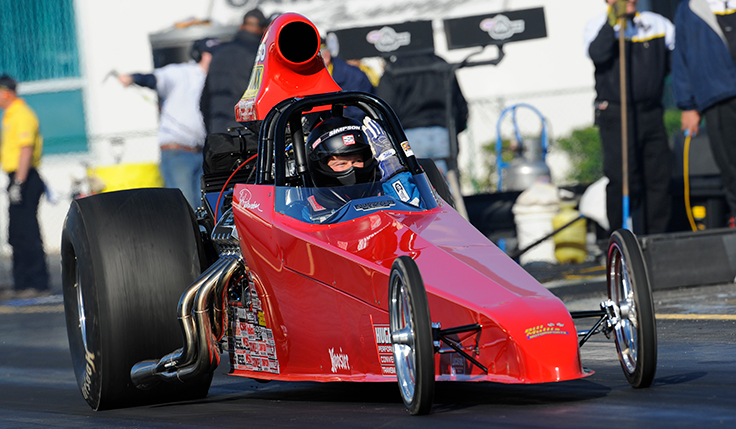
Ed Richardson claimed two national titles, three division titles, and six national event wins in a relatively short career. His accomplishments are hard to match, but he hasn’t competed seriously in nearly two decades. He stepped away from the sport long before Devin Isenhower took the wheel of a Jr. Dragster. Yet in less than a decade at Sportsman racing’s highest levels, Isenhower has accumulated a Lucas Oil Series championship, a Summit E.T. Series championship, and four division titles across three categories.
Five very accomplished drivers who have dedicated their lives to this sport and routinely displayed greatness. And yet there’s only room on the list for three of them. How would you differentiate them? Where would you draw the line? I told you it gets tough.
And that’s just a microcosm of the internal debates that I had time and time again. If I were a lawyer making a case, I could argue (in good conscience) for a dozen racers who didn’t end up on my list. And I’m confident that my fellow panelists had similar struggles — not necessarily with the same names, but among the racers hovering around their own “cut line.”
What’s more impressive, versatility or consistency? Do you have more respect for a driver who performed at a high level for three decades or a driver whose candle shone brighter than anyone before burning out after a short career? No matter how objective I tried to be, I realized that creating this list requires a degree of subjectivity. In their honest moments, I assume every panelist would agree. For me, often the deciding factor was a simple question: “Who would I least like to see in the other lane?” It was a simple question that didn’t often have a simple answer.
I submitted my ballot over a month ago, and in the days since, I’ve been waiting and watching with great anticipation. When each new segment of the list is revealed, I read the write-ups start to finish with great interest. I love this stuff — I can’t get enough.
And despite going through this exercise and realizing that, objectively, it’s hard to argue that I don’t belong on this list myself, I have to admit that when the second set of 10 was released, and my name was included … Well, it hit a little different. Even though I could have assumed it was coming, I have a hard time describing the feeling when I read my own name and saw my picture on the screen.
To be recognized in this format, by this panel … It was validation for all the years, all the energy, all the resources I’ve poured into this game. I gotta admit, it felt amazing. I hope each of the 50 honorees has the same feeling.